
How to Have Better Conversations in 2026 (RESEARCH BACKED) | Ep. 94
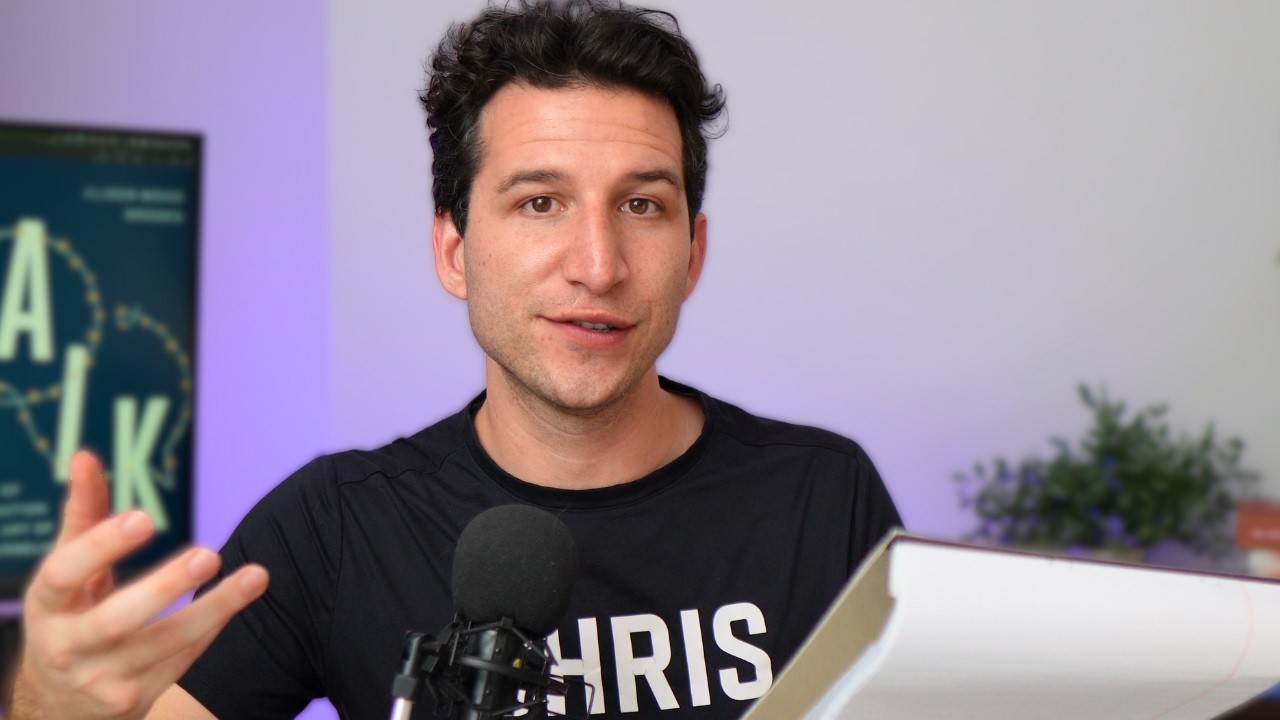







2026 can be the year where you change your life. In this episode, I will help you do that. 36 minutes of tools, tips, and lessons that will make your 2026 your best year yet. These lessons include: how to change the mood of a conversation by knowing a topic shifting tool, how to add levity to moments where it's needed most, how to ask a well-timed question that will make you remembered, and why sensitive topics aren't as dangerous as they seem.
This episode was largely inspired by TALK by Alison Wood Brooks.
An easy way to send me a message? Click the link here.
Have you enjoyed the podcast? If so, follow it, rate it, and share it with three people:
- Follow on Apple Podcasts
- Follow on Spotify
- Follow on Instagram
- Subscribe on YouTube
If you want to share feedback, have a great idea, or have a question then email me: talktopeoplepodcast@gmail.com
Produced by Capture Connection Studios: captureconnectionstudios.com
0:00
Welcome to the Talk to People podcast.
This is your host, Chris Miller, and today's going to be a big day because you are going to learn how to be even more effective in conversations.
More than likely you already have a value for communication or conversation, which is why you clicked this video.
And I think that's important and I'm proud of you for thinking that because I often view communication and conversation as a ceiling for the quality of our life.
0:23
It determines how well we can connect to those that matter most and in part determines the quality of life we get to live, how we can live life to the fullest.
I've been reading a book lately and it's a book that I'm going to talk to you about a lot in this episode, so I want to say it up front.
0:40
This book is called Talk.
It is based on a legendary class at Harvard Business School taught by Doctor Allison Wood Brooks.
The purpose of this class is to understand the science of conversation and the art of being yourself.
In this book, there is a four part framework that I'm going to relay to you so that by the end of this episode you're going to use this framework in any conversation you want to.
1:07
Now the goal here is not to turn you into a robot who always thinks through this framework.
The goal is to give you an additional tool to put in your toolkit so that when you are thinking about it, you could use this one, this podcast, and any other free resource or content that I create about communication and conversation.
1:28
The main purpose, the main reason that I do it is for my listeners and my viewers to build their toolkit in their off time so that they can be as good as they can be in their on time.
So the more you study and the more you think through things like this, the more you are going to pull it out, pull it out of the hat and be like, hey, that actually changed a conversation.
1:53
I wasn't expecting for it to change.
So you're going to be able to use this framework in 2026 because it's about the end of 2025.
But if you are listening to this in 2025, that means that more than likely you are subscribed to the Talk to People podcast channel on whatever podcast player you're on.
2:12
I'll be putting the video up on Spotify, the Talk to People podcast YouTube channel.
I just created a new one and now I have a separate Talk to Chris Miller communication commentary channel.
But that means you're more than likely subscribed.
So thank you for subscribing.
2:27
And if you aren't already subscribed and you do have a value for communication and conversation, you want to connect with those around you more, then be sure to follow this podcast.
Leave a review comment below.
If you're on Spotify, you can comment.
2:42
What do you think about this podcast?
If you have questions that come up, things that you'd like me to cover in future episodes, be sure to comment those as well.
So let's get started regarding talk, regarding a framework that's going to help you change and improve conversations for the rest of your life.
2:58
How does it start?
Well, any good conversation starts with what we talk is small talk.
Small talk is something a lot of people are nervous about.
I've created a lot of episodes regarding small talk.
For instance, one of my most successful episodes is how to start conversations and keep them going.
3:15
Feel free to check that one out, where I go through different ways to start a conversation, different ways to navigate small talk.
The truth is, small talk is incredibly important.
Small talk covers the barrier or covers this major gap between no interaction and interaction.
3:32
It's what gets the conversation rolling.
Think about it as a pyramid.
Small talk is at the bottom of the pyramid.
It's the most broad.
It's the biggest part.
Anyone could be a part of it.
The goal of conversation is to climb this pyramid.
Depending on how far you want to climb that pyramid, it's going to be due to context.
3:53
And for instance, if you're talking to a stranger at Sprouts or at Dillon's or Walmart, then you may be less likely to be like, hey, I want to ask that person about their purpose in life.
But if you're talking to someone at church or at work or if you're on a date, then you want to climb up higher on that pyramid.
4:11
So small talk is the base of that pyramid.
It's the most broad.
And then we have tailored talk, which is a little less broad, a little more tailored as in the name.
So it's going to be for less people, and then you go up to even more things like close talk and intimate talk.
4:30
So the purpose of small talk is to get us up that pyramid.
But we need to have small talk.
And a big part of small talk and getting up that pyramid is topics.
What's the topic of conversation?
So the very first part of it is going to be about the structure of conversation.
The topic of a conversation determines the structure.
4:47
What are you talking about?
The best conversationalists do two things.
They can choose good topics or they can make any topic better.
So topic, topic switching, topic preparation are two skills that I'd love for you to think about.
5:09
I would love for you to spend a little time on.
It's very simple.
Before any conversation, you go to think to yourself, what are certain topics that I could bring up?
And I mean any conversation.
Whenever you come home from work and you're about to talk to your husband, your wife, your boyfriend, your girlfriend, your fiance.
5:27
Whenever you go to work and you're about to see someone that you've seen every single day for the past few years.
Whenever you call your mom at home or you call your parents or you're talking to your kids, you show up to a community volleyball league or morning soccer pick up and you see people, the same people over and over again.
5:46
But think about what are topics that I could talk to these people about?
5 minutes is going to change your life. 5 minutes of topic prep, preparation.
Generally, preparation is going to be one of the best, best ways to improve in any communication act, public speaking, negotiation, interviews, group calls, coaching, you name it.
6:07
If you prepare just a little bit, it'll change everything.
That is exactly the case with conversations and topic prep.
So if you spend 5 minutes thinking to yourself, what are different topics I could talk to this person about, you are going to be much more sharp and you're going to give you and the other person on the other end a better experience because you're going to be more likely to find gold.
6:32
Which switches us over to topic switching.
Topic switching is being able to recognize when we need to change topics in conversation.
Three different things I want you to look for whenever latency in it's bigger.
So latency is how long it takes for something, you know, something to go from A to B.
6:52
That's latency.
So in conversation, we have conversational turn taking ping pong back and forth.
I say something, you say something, I say something, you say something.
If latency starts to get bigger and bigger, if it starts to take longer, if there's more silence between the conversational turn taking, that's a good note of like, OK, maybe we need to switch to something different.
7:09
If you hear forced laughter, you can tell the difference between forced laughter and belly laughter, right?
We've all been there.
Like, people start to do this airy laugh, take note of that.
And then the last thing is whenever people start to repeat themselves over and over and over.
So if you are hearing and recognizing these things, that's a cue to you.
7:28
I need to switch the topics.
Why switch the topics?
Because the topic we're currently at isn't giving us what we want.
It's not helping us climb this pyramid.
Honestly, you may not even be enjoying it.
So you're like, OK, we're going to switch this and I'm going to be brave and I'm going to be an explorer.
7:47
And I want you to think about exploration in this like a great conversation.
You show up, it's called a coordination game.
You're trying to coordinate with the other person, even if it's even if it's a stranger, but you are exploring.
You're like, what is it about these people?
8:02
What is it about this person that I can really come to enjoy and appreciate and value?
I want you to be thinking about that.
So topics, what's the topic of the conversation?
Are you prepared to bring up different topics?
And then can you switch topics whenever you need to switch topics?
8:21
I don't want you to fear switching topics.
Many people are like, oh, if I bring up too many topics, I'm going to be overwhelming or confusing.
That's not the case.
Studies show that people enjoy it when there's more topics in a conversation.
Why?
Because it gives them a chance to connect.
You're just sending out a whole bunch of different nodes to potentially connect with someone.
8:40
It's really important.
So topic prep, OK, think about that.
Prep your topics 5 minutes before any conversation and then get good at knowing when to switch topics.
It's going to be dependent on each person.
It's contextual, which makes communication hard, right?
8:57
Another big part that contributes to the structure of a conversation topics.
But the second part is questions.
Think about it as T for topics A for ask ask questions.
9:13
Questions are connectors.
If I had any superpower, I often answer this question this way.
Any superpower would be mind reading.
I would love to read people's minds.
And people always say like, oh that would be so scary and oh, I would hate to hear what people think.
I wouldn't.
9:29
I would actually be really interested and I know I'm not going to get that superpower.
Unless you all know of something, feel free to comment below on Spotify, on YouTube, or e-mail me at talk to peoplepodcast@gmail.com about how I can acquire that superpower.
9:44
But until then, I have something that's somewhat close to being able to read someone's mind, and that is the ability to ask a good question.
Asking questions is a superpower.
The best communicators in the world are the people who can ask great questions.
10:05
So generally for this area and how I want you to be thinking about moving forward, I want you to ask more questions.
If you were to take anything from this, ask more questions, ask more questions.
10:21
There's really no cap.
I think that let's see here, the study showed that was featured in this book, like 20 questions in 10 minutes was kind of a Max for a sales call.
But that's really contextual.
And if you can get a question in every 30 seconds for a typical conversation, then there's something odd going on, right?
10:44
So you really don't need to be nervous about asking too many questions.
You need to ask more questions.
Why?
Why ask more questions?
Well, one, questions are hard wired in us.
We are created for progress every single day.
11:01
We want to be better Questions allow us to dig up more information.
They also give us the opportunity to connect to those around us.
They give us things that we would have never known, right?
Like, oh, I'm so grateful I asked that question.
They unearth things, They help us discover things, and they give us opportunity.
11:22
Opportunity creates opportunity.
Questions signal interest.
If you're going on a date soon, if you know someone going on a date, tell them do not be a ZQ.
Say text them today, next week, Text someone you know going on a date soon and say, hey, whatever you do, I want you to have fun.
11:42
But do not be a ZQ.
And whenever they say what's a ZQ, you say 0 questions.
Oftentimes we focus so much and dates on being interesting.
Oh, I want to make sure I come up with this and I talk to you about my podcast and I just had a video go viral on YouTube.
12:02
Have you seen it?
And oh wow, I make my own beef Stew that features salmon, salmon and trout and carrots.
When honestly, the best way to perform well on a date is to be interested, to ask questions.
12:26
People who go on dates and they ask questions have a better time.
Studies show.
And anecdotally, if you can ask a lot of great questions on a date, you will be incredibly memorable.
You don't want to be a ZQ.
So what are some different things about questions?
12:43
The 1st is there four different types of questions I want you to think about?
The first is introductory questions.
This is typically how you get to the base of the pyramid, a small talk, what's up, how's it going?
What's good.
These questions are entry points.
They're questions that you typically want to have more at the front end of the conversation, less at the back end of the conversation.
13:05
Then you have topic switching topic questions.
So hey, what about this or what about that?
For instance, if I say hey, what's good, You're like, not much, man, how are you?
I'm like, I'm good.
Did you see that they're going to start charging at the gym?
It used to be free, but now they're going to start charging.
13:22
OK, We're getting into a topic, right?
It's no longer an introductory question.
Now it's a secondary question, Secondary line.
Then like, oh, man, no, they're going to start charging.
Yeah, they're going to start charging.
I'm going to have a hard time paying for that.
13:38
Yeah.
What about you?
I don't know if I'll have a hard time paying for that.
But you did just ask a mirror question.
And mirror questions are another common question that we see.
Mirror.
It climbs the pyramid, but sometimes they're not always that necessary.
13:54
This is something I'd love to relay to a lot of people.
Like if someone says, hey man, how's your family?
And I'm like, oh, my family's good.
There can be a temptation for me to be like, how's your family?
Which could be good.
It could be a good question, sure.
14:10
But don't do a mere question just because you feel like you need to do a mere question.
If you are genuinely interested in the other person's family or if you feel like in the moment it would really make them feel better, ask about their family.
But this is a trap people get into.
They always mirror what questions are because they feel like they need to.
14:29
They feel like there needs to be some reciprocity when truly that's not how you contribute reciprocity to a conversation.
You contribute by bringing, bringing who you are and bringing what's unique to you.
Yes, we do want to be kind and we do want to be caring about the other end of the conversation, which we're going to talk a lot about.
14:48
But mere questions can be a trap, but they can be helpful if you're really in a pinch and you just zoned out.
You can always say what about you?
Or I'm doing well, how are you doing right?
And then the last question, the master question, the thing that I really want you to get deadly at, that's a follow up question.
15:07
This is where the best communicators of all time shine.
The Oprah Winfrey's, the Sean Evans, the people who ask questions that end up on the Internet that delve into a conversation that would have never been able to happen if it weren't for that well timed, well tailored question.
15:27
So what makes a really good follow up question?
It's typically a thoughtful question and it's one that's pertinent to the context.
You have to be a very thoughtful listener.
You have to be pretty engaged to know what's being talked about and it's typically tagged with some type of genuine interest.
15:49
I don't know if I've already said that, but curiosity, if you can lead with your curiosity and ask follow up questions to go deeper, you're going to have incredible conversations.
I wrote down something that I want you all to know.
It's on page 66 of this book and it's about sensitive questions.
16:07
Often times we get nervous about sensitive questions.
Oh no.
What if I ask a question that's really scary?
OK, sensitive questions, it says.
16:24
Even in conversations, when we want to ask questions and we know it would be good to do so, we often feel afraid to venture one.
Why?
We worry that posing certain questions will seem too sensitive or intrusive.
But are people's fears of asking sensitive questions well founded?
To explore this issue, people compared people's predictions about how the questions would be received to reports of how they were actually were received.
16:48
So they took a whole bunch of questions and they asked people to rank them from most sensitive to least sensitive.
The least sensitive questions were things like, are you a morning person?
What season do you like the best?
What are your views on pop music, most sensitive included?
17:04
Have you ever had an affair?
What are your views on abortion?
How much do you get paid?
Have you had sexual thoughts about someone of the same sex?
Then the researchers asked people if they're willing to ask the Co workers some of these most sensitive and least sensitive questions and how comfortable they thought the other side would be when answering them.
17:24
So the results confirmed most people are unwilling to ask questions they think other people will be uncomfortable answering.
The participants were twice as willing to ask the question anonymously as they were, but even anonymously, they were still significantly less willing to ask a question if they thought it would make the person feel uncomfortable.
17:45
So the $1,000,000 question here is would their partners actually feel uncomfortable?
So they brought together pairs of people, some of them friends or strangers, to chat.
And in each pair, they randomly assigned one person to ask sensitive questions or benign questions.
18:03
After the conversations, they had each partner rate the conversations and the asker.
So between friends, people's expectations were dramatically miscalibrated.
Asking sensitive questions didn't just have fewer negative consequences, it didn't have any negative consequences.
18:21
People who received the sensitive questions liked the conversations and their partners just as much as the benign questions.
They actually caused more laughter.
They got people to change their phrasing, respond and ask follow up questions so friends can handle sensitive questions.
18:38
But what about strangers?
Again, they were wrong.
Asking sensitive questions had no negative consequences among strangers either.
And five experiments with over 1400 people, the researchers never found any evidence that asking sensitive questions is more dangerous than benign questions.
18:55
Questions that seem sensitive aren't actually received that way, a fact that we can't learn if we don't ask.
Of course, here's a little disclaimer that of course the author is going to include, and I'm going to include.
It's not that sensitive questions never have any negative impact.
19:13
It's that they don't have a negative impact nearly as often as we think.
And even when they do, the negative impact tends not to be as severe as we might imagine.
So people are stressed, like, oh man, I would ask that question, but I'm nervous.
Ask the question and exercise wisdom as well.
19:33
Like that question.
Have you ever had an affair before?
More than likely you're not going to ask certain people that question.
Or are you attracted to someone of the same sex?
Right.
Like you could, but if you're at work and you're trying to close a client, it's probably not the question to ask.
19:50
So exercise wisdom as well.
But ask the question.
Ask more questions.
What about open-ended versus close ended questions?
open-ended questions get 2 times the amount of words on average.
So if you have good open-ended questions, you're going to have better conversations.
20:11
And then what some people do is they turned open-ended questions into close ended questions.
For instance, I did this a lot on the podcast when I had my guests on, I'd say, So what was the biggest moment of your life?
Like was it a career or family thing?
20:30
I started asking the question, what's the biggest moment in your life?
But then I gave what's called candidate answers.
Candidate answers turned a close ended question into an or open-ended question into a close ended one.
Rather than me asking that open-ended question, what was the biggest moment of your life?
20:47
I then say was it a career one or a family one, which makes it a close ended question.
And we have a tendency to do this because it feels a little vulnerable to put out an open-ended question because the other person's like one.
They have to think about it because open-ended typically aren't that easy to immediately respond to.
21:08
But two, it just gives us a little more security.
It's like hedging something.
We're like, OK, let me make it easier for you.
Try not to do that.
Try to tolerate that feeling of uncertainty.
Be comfy with it.
OK, so topics and asking if you've liked this so far, be sure to put something down below on Spotify.
21:31
Tell me what you've liked about it.
Tell me something that's made you think about.
If you're watching on YouTube, be sure to comment something below.
And I mean, there's got to be someone in your life who also geeks out about conversation or communication.
Share it with them because there's two more parts I want to talk to you about.
21:49
This next part is important and it's something that I personally love.
And I may love it a little too much.
I don't know, it just depends.
That is the L of talk.
T was topics A was ask.
22:06
The L is levity.
Let me let out my dog real quick.
22:22
I told him, hey, don't let the door hit you on the way out.
And now he's sitting at the door.
Well, here he goes.
What's up buddy?
But you did leave the door open.
OK, so levity topics and asking is what determines the structure of a conversation, what you talk about and how you talk about it and how you navigate between the topics.
22:44
Levity determines the mood of the conversation.
Levity is what makes the conversations bouncy and what makes it fun for the people involved.
It keeps people in the conversation.
It makes them more memorable.
It makes them feel like they're going to or they're going to want to have another conversation with you, and there's a lot of reasons why you'd want that.
23:04
If you're a pastor trying to build a church, you want to have levity because you want people to feel good when they're at your church.
That way they show up next Sunday.
If you're someone who sells solar panels for a house and you go door to door, you want to infuse so much levity into a conversation because you want people to feel open and vulnerable to making a purchase decision.
23:24
Regardless of the context, levity is going to be important.
Conversation is not just about exchanging info.
I talk about this transaction based model of conversation and communication with a sender and a receiver and the sender encodes a message to where the receiver decodes it.
23:45
And by doing this they exchange meeting which is fancy and it works really well on YouTube.
But the truth is, how does that reason humor?
And how does that reason some of our most favorite people are just people who make us laugh a lot?
24:01
So let's look here.
I wrote down page 96 talking about levity.
Page 96.
I'm glad I'm reading more.
OK?
Huh.
24:21
Page 96.
All righty.
Well, let's see here.
Am I stalling on my own podcast?
I guess I am.
The earliest early 20th century German essayist Walter Benjamin wrote.
24:39
There's no better trigger for thinking than laughter, and that's not just because levity releases anxiety or tedium.
When we're happy and engaged, our mindset changes.
We widen the scope of our attention.
We consider more things we could do, which improves our creativity and the decisions we actually make.
24:57
Our bodies also feel it.
One good laugh can relieve physical tension and relax our muscles for up to 45 minutes and lower our blood pressure significantly.
Our recovery from stress, our immune function, our sensation of pain, our resistance to illness, even the length of our lives, all these have been shown to improve with frequent positive feelings.
25:20
Levity does more than just buoy us and unlock our best selves.
It reflects, reveals and reinforces authentic feelings of psychological safety and trust.
The belief that you won't be punished or humiliated for speaking up with ideas, questions or concern.
We feel safe when we and everyone around us brings a spirit of play.
25:41
Again, being able to add levity to a conversation is so incredibly important.
There's another really important theory Barbara Fredrickson came out with called Broaden and Build, which asserts that positive emotions evolved as psychological adaptations that increased human ancestors odds of survival and reproduction.
26:04
While negative emotions narrow people's focus towards specific urgent actions that are life preserving, like fight or flight.
Positive emotions widen the array of thoughts and actions called forth to play, to experiment, and to explore, inspiring more ideas, more flexibility or interpersonal interaction in longer lives.
26:27
These principles broaden and build underpin fun games, and they're exactly the things we need for good conversation.
So levity is so important.
I often think about humor.
This is something that I invested in a little early.
26:46
Whenever I first started studying communication.
College was like social experiments because I found Youtubers that were really funny and they were able to make conversations memorable.
Initially, it was at the cost of the other person.
Some of these social experiments were made the other person just feel weird and awkward, but they got a lot of laughs.
27:07
And I was into that for a little bit, but then I was able to figure out a different version that didn't cost the other person in the conversation.
Rather it just made the conversation fun.
And I invested a lot in that.
It was like, be weird, be goofy, be able to bring things up that put heat on you, you know, self deprecating things.
27:28
It's it's not necessarily you don't have to be the funniest person.
You don't even have to show up and be like, oh, I need to be really funny.
That puts a lot of pressure on yourself.
Humor is really tough because the most funny stuff is context specific.
It's like when you're telling someone, oh, you had to be there.
27:45
They did have to be there, and they won't ever be there.
That's why jokes are so important.
That's why like you need to hang on to really funny moments and you need to try and create as many as possible because it's like, yeah, we we won't be there, but we overestimate how poorly humor could go.
28:05
I got, I know I can be really nervous about if a joke will flop.
Oh my gosh, what if this joke flops?
Well, we overestimate how often a joke will flop.
And then we overestimate how much damage it'll do if you're not gentle and if you're really dumb of you could hurt some feelings.
28:22
But even then, honestly, even then you will bounce back.
I don't want you to be hurtful.
I think when in doubt, be gentle.
But we underestimate the positive impact of humor.
We underestimate how much that can change a conversation.
28:38
So many people that I know shouldn't say so many people, but I know people in my life who have out kicked their coverage.
Look at me, I've out kicked my coverage.
How did I do it?
I was funny.
There's a joke out there that the more you can make the person you're dating laugh, the more they're going to close their eyes and the less they're going to have to look at you.
28:58
So if you're worried about finding a really good partner in life or if you want to keep your partner around, keep them laughing.
Different ways to keep people laughing.
One's called the Seinfeld strategy that's focusing on really little things and doing it really funnily.
29:14
Like just think of if you've ever watched Seinfeld before, it'll be the most simple thing.
The stop sign had 7 edges, not 6-7.
Have you ever seen the stop sign with 7 edges?
There's a lot of different ways to do this.
Callbacks going back to something, hitting up one of your friends, hitting up a Co worker.
29:30
Like do you remember that?
Reliving a funny moment.
That's the nice thing about humor as it keeps on giving, Having funny stories.
Practice your stories.
Talk stories to yourself whenever you're in the gym, whenever you're in the shower, whenever you're trying to go to bed, And then just being weird, being zany, coming up with things that are off the wall.
29:49
It may cost you a little bit, but it's going to bring a lot to the other person in the room.
I want you to find the fun.
Find the fun in conversation.
So if you can inject levity, if you can ask great questions, and if you are thinking about the topics and you know how to switch around, you are going to be a great conversationalist and your life is going to improve for the better.
30:11
But there's one last thing that we have to talk about.
It's at the end, but it's one of the most important things.
That's the K in talk and that's kindness.
I want you to be kind in conversation.
Kindness is trying our best to put the other person's conversational needs first.
30:32
So this is spending time and being cognizant of what the other person needs from this conversation.
This is knowing that whether they need feedback or encouragement or ideas or a laugh, it's something I really value.
30:47
And that's being able to show others that they have value.
This is congruent with a big part of my philosophy in life, and that's that God's created everybody with so much value.
We all have something to contribute to the table.
We all wake up every day with an inherent purpose, with value to contribute to our world.
31:06
And if we interact with people and we don't bring it out on them, we are missing the mark.
We need to show up better.
So being kind is about being able to talk to someone and make them feel like they're the only person in the room.
How can you do this?
Well, there's two big things.
31:22
The first one is being a respectful speaker.
The second one is being a responsive listener.
So being a respectful speaker, what does RESPECT mean?
It can mean different things.
31:38
Different cultures have different meanings of respect.
But the big part of respect is being able to think about the other person first, making sure you are dedicating and investing time and being like, how are they doing?
Kindness helps people fill the void.
31:55
Kindness helps people fill that area in their life.
One of the best ways that people are expressing kindness and conversation is actually whenever they experience pain, whenever they walk through a really painful moment, because that equips people with the empathy response because they know what the other person needs because they've been there.
32:14
So I encourage you to lean into pain and not be ashamed of pain if you've ever had to experience something incredibly painful.
Pain bonds us because it helps us understand needs.
Page 135 it says, and then we're about to wrap this up.
32:31
We're about to land this plane.
Age 135, huh?
Yeah.
This is tough, she says This is particularly challenging when you're the victim of someone's disrespect.
32:48
I once had an executive ask me right before class if it was worth his time to stay for my session.
It was the first time I taught in the executive program at Harvard Business School, and I was the only female professor in the program.
It was a vulnerable moment.
I was really mad, wounded and outraged.
33:05
Did he think, based only on my appearance, that my session wasn't going to be useful in a context where, as a young woman, I have to fight for respect?
It seemed egregiously disrespectful.
Still, I muttered my patients and said, yes, you should stick around, it's going to be great.
Some months later, I was lamenting about this encounter with a colleague who had taught in the same program.
33:25
He remembered the executive and told me something I didn't know.
That executive had been picking and choosing sessions to attend because he had been diagnosed with a serious illness and needed to rest.
It wasn't about me at all.
It's a reminder of just how little we know about others and their needs.
33:41
We never know how far off our understanding of basic conversation can be in this uncertain world where no one is fully known in our illusion of understanding can be quite extreme.
It's best to give people the benefit of the doubt, to err on the side of respect even when it's desperately hard.
33:59
I love this because human interaction is so unpredictable.
And when you pair that with like an unfortunate tendency, we have to misread people's intentions, to attribute fundamentally negative things and positive things to people.
34:16
It is so messy, so erring on the side of gentleness, kindness, and respect is going to help you in conversations.
I knew a guy in college who always was complimentary.
Everybody he was so complimentary of, he shared so many compliments.
34:33
And guess what?
People love talking to him.
They loved it at first it was weird and then after that I loved talking to him.
I wish I could talk to him even more.
OK, so how can you be a really good listener?
Repeat.
34:48
People give him the non verbal cues, callbacks, follow up questions and the Netflix show nobody wants this.
She shares this trick of like, did you know that you could share the end of what people say?
For instance, if I say I have a podcast that talks about social connection, the other person says, oh, you have a podcast about social connection.
35:08
I'm like, Oh yeah, it's been really fun.
I've enjoyed it.
I've hosted it for six years.
You've hosted it for six years.
Yeah.
I mean, that's a fun little trick.
The big thing is just, are you paying attention?
You will know.
You can always shake your head like you're on a Zoom call, but you're actually playing something on the phone or on a different tab that's going to prevent you from having your conversations.
35:27
It can be a crutch, but if you've ever had to walk on crutches and you do it too long, you forget how to walk without them.
And I don't want you to forget how to walk without them.
So T come up with good topics.
A ask great questions, L have levity and K inject kindness and conversation.
35:44
If you combine these, you will have conversations that will change your life, that will elevate your career, that'll bring your family closer and give you opportunities that you would never have dreamed of because of your ability to connect with those around you.
If you liked this episode, be sure to like the podcast share and you could share it with someone.
36:06
I guess I, I feel like there's probably someone out there that would enjoy it that you know.
But the biggest part is that you just reflect on it and maybe spend 5 minutes preparing for topics or maybe spend 5 minutes thinking about asking more questions or just being more kind.
36:23
Be sure to put any questions you have below on Spotify or on YouTube.
And without further ado, I will see you next time.
Remember, life is better when you talk to people.