
How to Stay Close to Friends Who Live Far Away, ft. Kristen Kalinka | Ep. 34
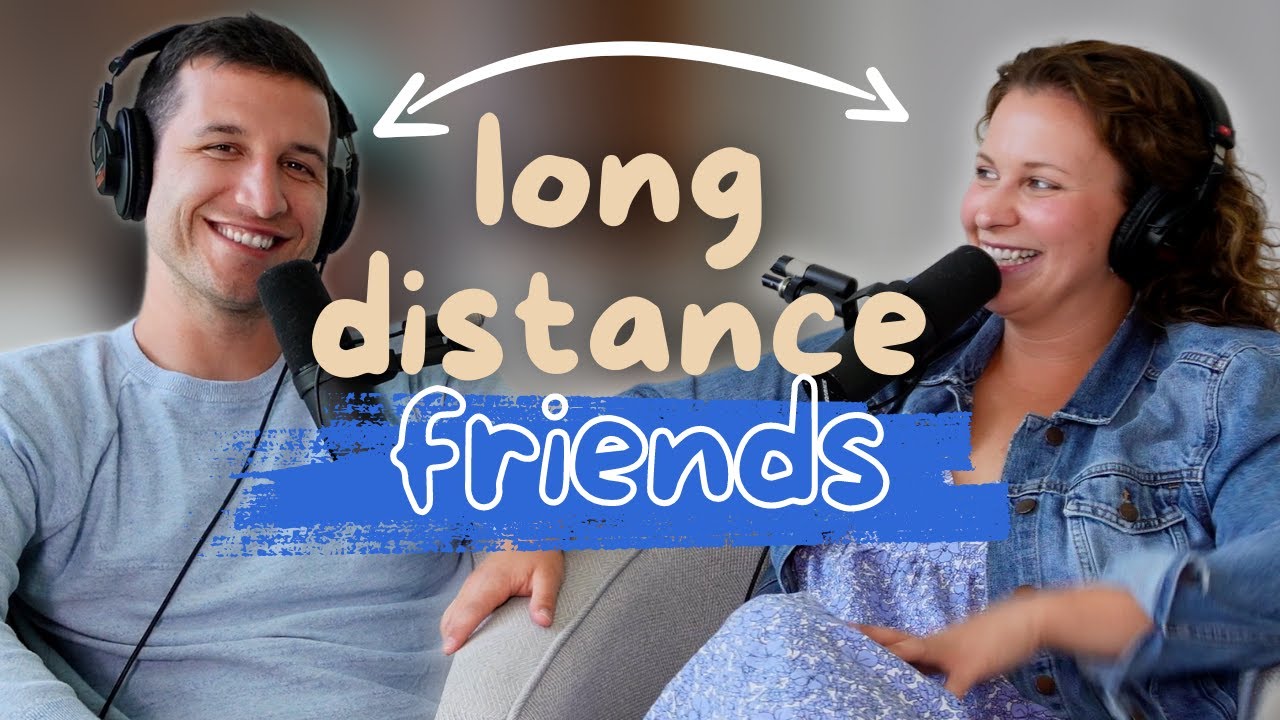
Kristen Kalinka is a friend, in particular, a long distance friend! The world has become an increasingly mobile and transient place. Because of this, our friends are moving everywhere, and oftentimes, it's easy for these friendships to go by the wayside. BUT, it doesn't always have to be that way. Instead, you can keep those relationships intact and fight back loneliness and regret. Now, Kristen also works for a big corporation where she's an Employee Engagement Manager and she sees a...







Kristen Kalinka is a friend, in particular, a long distance friend!
The world has become an increasingly mobile and transient place. Because of this, our friends are moving everywhere, and oftentimes, it's easy for these friendships to go by the wayside. BUT, it doesn't always have to be that way. Instead, you can keep those relationships intact and fight back loneliness and regret.
Now, Kristen also works for a big corporation where she's an Employee Engagement Manager and she sees a lot of human dynamics in the corporate world. Yet, we don't touch on that much. Rather, we chose to focus on friendships because we believe that will help out the world the most!
In this episode you can expect to hear about:
- how to navigate self-comparison
- what to do if you feel like you're growing apart from a friend
- how to make friends at work
- why we look at ourselves more than others on video chats
- when we're freaking out about our life plans
- how to navigate friend breakups
- one way to make people feel welcome
- what it's like to move back home
Stay true - be you! Life is better when you're yourself.
The Talk to People Podcast is a resource for personal development and building meaningful relationships. In a world grappling with the loneliness epidemic and friendship recession, we are here to guide you on a transformative journey towards overcoming isolation and cultivating a thriving social circle. With different guests, we explore the art of building relationships and mastering communication skills, providing you with actionable tips to become a better communicator. Through insightful conversations and fun solo episodes, we uncover the secrets to making friends and overcoming loneliness. Listen to feel better approaching conversations with confidence, even with strangers. Discover the power of asking better questions and gain valuable insights into how to navigate social interactions with ease. Through our storytelling episodes, we invite you to share your experiences and connect with our community. Together, we aim to overcome social isolation and create a supportive network of individuals seeking genuine connections. Tune in and embark on a journey of connection.
An easy way to send me a message? Click the link here.
Have you enjoyed the podcast? If so, follow it, rate it, and share it with three people:
- Follow on Apple Podcasts
- Follow on Spotify
- Follow on Instagram
- Subscribe on YouTube
If you want to share feedback, have a great idea, or have a question then email me: talktopeoplepodcast@gmail.com
Produced by Capture Connection Studios: captureconnectionstudios.com
Kristen: Later in their life are like, you're never gonna know what you're doing. You're never like, there's always something that's gonna hit you, and life's gonna hit you with eight balls. Like, it is. It's just like that. You don't they're never gonna have a plan. And if you have a plan, it's gonna change.
Chris: Well, hey there. I'm just putting the finishing touches on this week's episode of the Talk to People podcast. My name's Chris Miller, and if you're new here, let me just say this whole podcast is dedicated towards building your social fitness and helping you grow a better social circle. We believe that one of the most overlooked aspects of a healthy life is social connectedness, and this is something that we can change. So we talk about it. This week's episode features a friend of mine, Kristen Kalinka. Now, let's go to the book to see what all we discussed. You can expect to hear the art of being a long distance friend. This is perfect stuff because the world's become so mobile and transient. How to make friends at work great. How to navigate friend breakups and what to do if you feel like you're growing apart from your friends. How to deal with self comparison. And what if we're freaking out about our life plans and we don't know what we're doing? All of these things are applicable, and we wanted to focus on friendship because we all have friends. Kristen is a great long distance friend. Once, um, you move away, that doesn't mean you have to stop being friends. So without further ado, thank you for listening to the Talk to People podcast, and I hope you enjoy this episode. So you're officially live.
Kristen: Yay.
Chris: Yeah. Welcome to the dining room studio.
Kristen: Thanks, Chris, so much for having me. Honestly, it was such an honor when you asked. Um know, I've been listening since day one, and when Annie told me you were starting a podcast, I was so excited. Um, but if anyone listens, and everyone's new here, every time I listen to an episode, I always get at least one thing out of it. So hopefully today, someone can get something out of this. But thanks so much. It's an honor to be here.
Chris: Of course. You have been a heavily requested guest by previous guests and by listeners.
Kristen: Wow.
Chris: Yeah, so it's like as I've gone more into this, I've learned the creator needs to think about the audience. And if my audience is saying, we want her, we want her, then I need to make sure I get so.
Kristen: And it worked out.
Chris: Yeah. And your rate wasn't too high. I mean, it did put us two years behind in our savings, but I think you're worth it.
Kristen: Thanks, Chris.
Chris: Yeah, I'm looking forward to it. Who's been your favorite guest? What's your favorite episode so far?
Kristen: I think Dr. Hall. He was one of your first guests. Um annie's Connection, correct. Yeah. Um, there was something he said in there, I think towards the end of the podcast about being always continue showing up. And I think I read immediately I was resonated with that. So that was one of my favorites. I love when you and Annie come on together. It's so fun, the energy.
Chris: It's been really cool. Jeff hall, he's the guy who I want to be when I eat my academic. Like, I hope one day I can get to the point where I'm able to navigate this concept of social connectedness and the importance of relationships the way he can. Because I'll listen to his podcasts. He'll be a guest on some big podcast or go get interviewed by the Washington Journal. And it's like, oh, my gosh, that's what I want to be able to say. So oftentimes I'll regurgitate some of the stuff he's saying because it's so good. And what I've been learning is it's okay to copy as long as you maintain your personality. Totally. Don't try to be someone you're not. But if somebody's doing something really well, then it's okay to, uh it's like copying Michael Jordan's jump shot. It works for a reason.
Kristen: Yeah, 100%.
Chris: You know what I mean?
Kristen: Always stay true to yourself.
Chris: Stay true. And one of the things I heard, one of the reasons why people are so excited for you to be a guest on the podcast is what they've coined you is one of the best long distance friends.
Kristen: That's an honor to have that.
Chris: What do you think about that?
Kristen: Um, I moved away, uh, post grad, like, 2018, after yeah. So I've always lived in my hometown, and so I was always close by. Um, but I think when I finally moved away and I moved to Boston, I just think I try to make a very mental note that just keeping up with friends and it's like you know what I mean? I don't know. And it just became a great habit. But I think in college, because I stayed home in my hometown, I went to, um, a small liberal arts college literally a mile down from my parents house. And I think I always try to make an effort to go and see me and Annie when they were in Kansas. Um, try to do that once a year. But I think when I finally was in the hot seat when I moved away, I think maybe I was I don't know, maybe homesick. I never thought I was, but I just made effort. I think that's the biggest thing.
Chris: Yeah, totally.
Kristen: My roommates actually would laugh. They're like, you're always on the phone. You're always not in a mean way. But they were just always like and I was catching up. I also have, um, three other sisters. So yeah, I'm one of five. And I have my older brother. My sisters, I would talk to my mom all the time. Um, so I talked to a lot. I don't know I try my best. I think, as life gets. That was four years ago when I moved almost five. And I think I'm realizing more and more as more things start coming up, it's just life gets in the way and it's hard. So it's like, I'm really trying to make an effort keeping up with friendships. And every friend, though, is different. Yeah, every friendship is different.
Chris: Yeah, every friend is different. One of the guests we had on Dr. Amri Galat, did you listen to that one? He was Israeli. He was a professor of social psychology, but he talked about relational disposability, which is whenever we view relationships, like any tangible good, and we'll look at them and be like, oh, we can just replace that. So all the relationships I have in Kenosha, Wisconsin, or in Lawrence, Kansas, when I move, I'll just get new ones. But the thing is, it's actually way harder to rebuild friendships, especially if they're deep relationships. So when people move away, it's like they have to start over. So, m one of the things that I was excited to talk to you about is, particularly with long distance friendship, like, how could people become better long distance friends? Because sometimes moving doesn't always mean the end of a friendship.
Kristen: Never.
Chris: Yeah. Did you ever fear that to be the case?
Kristen: Never. I'm very blessed with my friends. I grew up with the most amazing people all my life. I don't know, I have a couple of people from grade school that I'm still transitioned into those high school friends. Middle, uh, school, high school. And I know they say sometimes when you graduate high school, especially, and as you get older, sometimes your friends start trickling off and some of those friendships. But our group was very a really great group of people. I mean, I think I recently was talking to I forget, just, uh, an acquaintance, and they were asking specifically about all these of our high school friends that were in this group. And I was just listing off, like, oh, my gosh, this person's doing great. And it made me really emotional because I was like, I'm surrounded by the most amazing women and people in my life. And, uh, that I just can't I mean, it's a blessing. And it's awesome that when you're older, as we get older and you grow and evolve, that your friendships are growing and you're still friends with that person, but it's grown and evolved, and then you still have things in common. It's fun.
Chris: So you moved away and I moved away. I went to North Carolina for a few years, and I remember there being moments of feeling homesick, and I know you had mentioned it earlier, you're like, yeah, I think I was kind of homesick. And in the moment, it's kind of hard to determine that we're feeling homesickness. It's like we'll feel sad or we'll feel, like, not as excited about what's going on or we'll feel overwhelmed. That's a really big deal. You're in a new town and you feel overwhelmed. Oftentimes it's because you don't have that social support and then you begin to miss the one that you did have. So you were really good at reaching out to people whenever they moved away. So whenever you moved away, was there ever a moment where you're like, man, I wish more people reached out to me because I know that I reached out to so many people.
Kristen: Yeah, I definitely had those thoughts, but I think it was actually Mia's mom. I vented to her about this and she was like, yeah, but I think people also expect you to. That's just their expectations and they're kind of like, oh well, I know I'm going to catch up with her. So I try not to take it personally because again, life just, it's so busy. I mean, the weeks are going by, the days are going by. I mean, we're already halfway through summer and it's just like I think what I try to do now is I try not to expect that from other people. I just continue to show up and be the friend that know, can be. Mhm. And again, every friendship is different. I talk to like weekly all the know. Mia and Annie are definitely honorary sisters in my book. And then I have, um, a really close friend, Marissa. Shout out to Marissa. Um, one of my day, you know, maybe we catch up like every other month or every month, but every time we catch up and every time we see each other, it's like no time has passed. But again, I think having those being blessed with those deep friendships that it's like your social battery is actually your cup is being filled when you see them. It's not like your cup is being drained, at least from my understanding.
Chris: Yeah. It's fulfilling and rewarding.
Kristen: I think it's because it's like you do have those really deep connections and they know who you are, you know who they are. They've seen all different kind of stages of the person. You've already definitely not the same person since middle school, high school, college and as. So you're supposed to evolve. You're supposed to grow. I'm still growing. I'll always keep growing.
Chris: We're growing right now.
Kristen: Yeah. This is awesome.
Chris: Yeah. And you are particularly growing because this is completely new to you. Mhm, right. Like sitting down and being on a podcast.
Kristen: This is really new.
Chris: Were you feeling nervous?
Kristen: Yeah. But I think I told you this earlier that I'm like, you have the gift of making people feel very comfortable and you're very attentive and just I feel good. I mean, I think I was getting a little nervous.
Chris: Sure. And my angle is that, uh, you should get nervous and we all should get nervous. I get nervous before this and I've done, uh, getting to the point to where I've done plenty, but still being here and being under the camera and under the lights, yet at the same time it's like this what we have going on. And I feel for people who are like, I don't want to talk to people because of the nerves, because I don't know what's going to happen. And there's so much uncertainty there. I feel that whenever I'm sitting down doing a podcast, I don't know if I'm going to sound super witty or be super smart or say the right thing or smile at the right time. And I have to turn that analytical thing off and tell myself, what could I learn from Crisco? Because I know I can learn a lot. So that being said, how do I get to the point to where I'm actively learning? I would suggest people to have that same approach whenever they're going out to the world wanting, uh, to talk to people. It's like, what could you learn? That's always one of the best places to be. They call it intellectual humility, seeing the people around you as individuals who could intellectually contribute to you and to not like being I'm better than everybody, right? Yeah.
Kristen: What I was also thinking, too, is like, you just got to be true to who you are. And then, uh, I think that's also how friendships also are formed, when you can just be you. And if those people are supposed to click and you click with them and they and it reminds m me of one of your guests. I don't remember it was the snack.
Chris: Yeah. Keonte.
Kristen: Keonte. How he said how he just practiced talking to strangers and now he's just like, yeah. And I'm like, see, every time I listen to an episode, I get something, if not more out of it. One thing at least. And that's definitely from the episode I got something out of that.
Chris: You're really good at being yourself. Would you say so?
Kristen: Yeah. Sometimes I think I'm to myself and I can't put a mouth I'm like, oh my God, just stop talking. Um, but I'm trying to learn to be more slow down sometimes, like think before I say because I've had a tendency my life to just ramble and then afterwards my mom would be like, why did you say that? Why did you say that? You know what I mean?
Chris: Because you would get yourself in trouble.
Kristen: Yeah. Or just like you say something you're not supposed to say and you're like, Why does not stop that? Think before you say so that's respond don't react.
Chris: Yes, totally. But being yourself can be hard. And there can be moments wherever people feel like we can't be ourselves. Because they'll be like, you're so over the top, or you're annoying, or I feel like you just need to chill out.
Kristen: Mhm.
Chris: And I've had people say things like that to me or it'll be on the other side of the house, like, you're too calm. I remember I was driving once and this one person cut me off and I was just like, kept going. And the person sitting next to me was like, oh my gosh, I do not know how you didn't blow up on that person. I would have blown up on that person. And to me, I wasn't even thinking about it. I was like, all right, he's in front of me. Okay, I've got to make sure I don't hit him. All right, we're going to keep going. But they couldn't process. So since we're wired differently, sometimes people will be like, hey, quit being like that. Which is uncomfortable.
Kristen: Mhm. Yeah. But also there's tendencies where I need that feedback. So my sisters are very well, really good at this, and something that's also shaped me into someone I am. Um, our families always just, like, hold each other accountable. And so, again, if we handle situations that maybe we shouldn't have, it's just maybe saying in a respectful manner. And I have to do the same when I say to my sisters, like, um, oh, maybe should I handle that differently? But I think, uh, relatively as we get older, we're not necessarily getting too much of that feedback, but it's some feedback sometimes. Good.
Chris: Yeah.
Kristen: Like, for me, some of my feedback, my sister gives me sisters. So I need to be more of an active listener.
Chris: Oh, wow.
Kristen: Yeah. So something I'm really mindfully trying to check myself on. Um, but everyone needs to work on things. Everyone. No one's perfect. And I think that's, like, again, people should hold each other accountable in a respectful manner. And I think, again, I'm the person I am because of the people I've surrounded myself with. My family, my parents, sisters, everything.
Chris: How do you improve active listening?
Kristen: Okay, well, one, not looking at my phone when people are talking to me, so that's a big one. Being more present. Again, I definitely have to be looking at each other in the eye. And, uh, then working from home, that's a skill I ended up losing. So I have to mindfully. I, uh, go in the office now once a week into Chicago, and I really have to be, like, making sure I'm getting now that skill. But like, when you're working from home and just looking at people on screen and you're actually looking more at yourself and not at them.
Chris: Yeah, you do that too.
Kristen: Oh, yeah.
Chris: It's so funny. I will put the screen of where I am nearest to the camera.
Kristen: Ah, yeah. No, I do that too. I do that too. Yeah.
Chris: Because I find myself looking at myself the whole time, talking. Yeah, it's the funniest thing. And it's not even our it's the camera and the projection that the camera is producing. But we're talking to this person who we know, who we could be incredibly fascinated by. Yet, uh, we look at the little tiny box of ourself even for FaceTime if you double I know.
Kristen: So anyway, that's another thing. Okay. Like, not looking at my phone, like being more present. Um, listening while they're talking and not thinking, okay, what am I going to say next? And actually, they'll just say, listen to me. That's all they said. Just listen. And I have to be better at that. Um, and I'm working. So they're going to be listening to this and probably roll their eyes and laugh. But I mindfully am trying to be a better listener.
Chris: That's great.
Kristen: So again, something I need to work on. Always been working.
Chris: Yeah. So that's what you're working on. What's kind of like your superpowers?
Kristen: One of my strengths is actually relationship building. Um, so at work, we do an assessment called the Clifton strengths. My theme that I lead with within my top ten strengths is all relationship building. The six through ten.
Chris: No way.
Kristen: So that's what I lead with. And that 100% makes sense.
Chris: What's your number one?
Kristen: My number one is, um, consistency mhm, which I'm very routine, but I also have my creativity side that ends up I get so much down to a routine sometimes. Then I'll get into a creative rut. So I need to find that balance of being a little bit more free flowing. But also, I'm a list girl. I'm checking things off. I got my list on my computer. I have it on my planner. Sticky notes. It's like, I need that. But then sometimes I find that week go on and I'm working on a project, and I'm like, oh, I'm in a creative rut.
Chris: So consistency. What's your number two?
Kristen: Communication. It's either communication or discipline.
Chris: Wow, that's a good mix up. Communication and discipline.
Kristen: Yeah. And then activator is in my five, top five. And then from six through ten, it's like positivity, empathy.
Chris: Are they all in relationship building?
Kristen: My six through ten are are your six through ten? Yeah. So within the Clifton strengths, it's 34 strengths.
Chris: Right. And then there's subcategories with, uh, the yeah.
Kristen: It has, like, five themes. It's like strategic thinking, influencing. Yeah. So my superpower is definitely making people feel welcome, I feel. I hope, at least. And I think that also goes into just I think I've always just been myself. And there was times as a kid I was maybe a little to myself, but I've grown into a totally different person. At least, I think I am not that little girl on the tennis court throwing a racket@the.net and screaming. And so I hope I'm a little.
Chris: Bit because you were competitive.
Kristen: Yeah, I was so hard myself and know, self critical. Yeah. Just making a scene, clearly.
Chris: Speaking of the Clifton strengths, guess what my number one is? Or man, I need to take it again. I haven't taken it in years. But back then, guess what my number one was. There's so many, though.
Kristen: So many.
Chris: Yeah, it was in relationship building. Though I'm pretty sure it was positivity.
Kristen: Okay.
Chris: And I had positivity. Do you know connectedness mhm? Do you know what that means in Clifton strengths? Because that was one of my strengths.
Kristen: Um, I would have to have my cheat sheet pulled up in front of me. One thing that my agency is doing really well at is really trying to people have understand their mhm like so I'm really trying to understand at least my top. But then our weekly suggestions or challenges for, say, like last week, it was like, uh, I challenge you to ask a colleague or ask someone about their strengths and have them talk about it. Because the more you start understanding your strengths so that's something I should be working on, your strengths.
Chris: Because belief connectedness positivity. And then one strength I always wanted to have I was kind of envious was woo.
Kristen: Oh, I think that was one of my low ones. Yeah.
Chris: Winning others over.
Kristen: Yeah. I feel like I need to double check that. Unless it's in my 15, I can't anything that's like, past my ten, I haven't memorized.
Chris: Yeah.
Kristen: So I should look at that.
Chris: But relationship building is your superpower.
Kristen: Relationship building is my superpower. I think making people feel like I think maybe to backtrack when I said maybe I'm a little to myself. Maybe that's why people feel comfortable around me. Because then I can just when I'm spitballing things and then people claim some people say I'm funny, but then I think I have my sisters who are like, you're not funny. Um, you're being an idiot, or what they all say.
Chris: But to people who aren't your sister.
Kristen: Yeah, people laugh. I don't know, but I think sometimes they just say things and then I'm like, oh, I didn't realize that came off funny. Also, I'm sure my facial expressions, I don't know if they're maybe under control right now, but say yesterday, right?
Chris: Whenever you say yes, your eyes go up if you don't know who's wanting you. smise when you say yes.
Kristen: Hey, um, I first heard about the smise on, um, america's Top Model Tyra Banks smise.
Chris: I've been watching this woman on TikTok I mentioned to you a little bit, but she does poses.
Kristen: Oh, yeah.
Chris: She's a posing coach. So she'll have all of these videos. What to do in this, what to do in that, what to do in this. And you know how Barbie is a big thing right now, mhm. And Margot Robbie is doing all of the like, they dumped $300 million into marketing Barbie.
Kristen: Wow.
Chris: So they have hundreds of brand partnerships, but they're doing a lot of those big red carpet events. And she goes down and breaks down all of the Margot Robbie pauses and all this poses. And it's fascinating. There's a whole science behind it, like what to do with your shoulders and your head and you look this way and you look that way. But I've been watching that just generally because I'm curious. And then also because I wonder if it could help me at all. Like on the camera. Uh, it's wild, the stuff that people can get paid for because she's getting this is full time. Full time creator. Everybody's so interested in it. How do you make people feel more welcome? Because it's the superpower. Yours superpower.
Kristen: At least I hope so.
Chris: No, totally. And I ask this question, it's really vague, but one of the things I've learned is ask vague questions because you get to take it wherever you want. And then the other thing is you've already answered it like you yourself.
Kristen: I m was going to say too, I'm a hugger. So maybe that breaks. Sometimes not. But then again, maybe it's like reading the room. I mean, ah, I will say I could be a little shy, not shy, but maybe I have a wall up when I first meet people. But once I start feeling comfortable and then maybe I say something and someone laughs and then maybe if I'm just being crisco myself, um, but I'm a hugger. I feel like, I don't know, just being myself, just looking at people and I don't know, I've come a long way, but I think it's who I surround myself with. Like, my friends are very welcoming, actually. All my friends are very welcoming. And I surround myself with people that have made me a better person.
Chris: And I've seen that, which is a big achievement.
Kristen: Huge. That's what I'm saying. It's such a blessing to have everyone in my life. I have very deep friendships from 7th grade even. Actually one of my friends that I've reconnected with, that we've always been friends. But my oldest friend, we've been friends since, uh, preschool and we share the same first cousins. But she also lives back in Wisconsin. So when I move back, we've been hanging out a lot and it's just so fun. And, um, we always laugh. I'm like, where are each other's oldest friends besides our sisters? But, um, I have very deep friendships that just make me that they've always made me feel comfortable and I don't know. And even my friendships later in life, like in Boston, all my friends I met in Boston, all of my friends I met are actually whether people I live with, so my roommates, um, or everyone I met through work. And I'm very grateful for that because that's hard to come by. Especially it's making hard making friends as an adult. Um, but all my friends have always were super inclusive. Especially me moving out there and not really knowing. Besides, my roommates were great. They were very inclusive in making me feel welcome. But I think when it comes to answer the question, going back my superpower, I think just making sure people feel welcome and myself and inclusive and comfortable.
Chris: Yeah. Do you have many work friends?
Kristen: Yeah, actually, a lot of my friends have left. It's a little sad, but that's life to different companies. Yeah. And they're doing awesome in their careers. But I still have friends within the agency. But we had a really good core group, uh, right before COVID Yeah. Then we all started kind of like hanging out. We're around the same age and, um yeah, we would, I don't know, go out. That's kind of how we started becoming really good friends. And then COVID hit. So we all go out right. On Thursday nights. Thursday nights was like, kind of our thing because everyone worked from home on Fridays. This is pre COVID. And so it's kind of hard to kind of get to know someone really deep down when you're like drinking and it's loud and things like that. But it was still they're great people. But I felt like I didn't start becoming really close with these girls until COVID hit. And instead we were using our time to go on long walks or just go and watch movies together.
Chris: Interesting.
Kristen: Yeah. And that's how I felt like that's when I started getting really close with them, because then I think I started opening up and being more myself. So that took a while. That took a while. So those were my later in life friends.
Chris: So do you think it took not having the alcohol or do you think it was just, I don't know, after length of time?
Kristen: A mixture of both, I think just quality time.
Chris: Mhm.
Kristen: Yeah. I mean, don't get me wrong, we still also went out and we still do. Don't get me wrong, we were a good time. But I feel like when I got really close with them is during COVID Yeah, because I got in the walks. Uh, they've been so inclusive with me meeting their families because their families live in Boston. And it's just like then you kind of, I don't know, everyone's just so I'm just very blessed with people who I surround myself with. And someone recently told me this and that made me feel a little emotional. Um, but she said, who you surround yourself with is a mere reflection of you.
Chris: Yes.
Kristen: And I just was like, wow. And it brought me back to your wedding when we were getting ready, um, for all the listeners. I was in your wedding, you were in weding. It was a very big honor. And that afternoon we were gal getting ready with Annie and it was the most peaceful, calm, everything. And it was like, everyone in that room was so close to Annie. It was just like that was like, oh, wow, that's like such a reflection of Annie. And I'm like, oh my God, but Annie's such a great person. She's awesome. And then I'm like, wow, you're also a good person, Kristen. You're great in my head. And I'm like to have really great friends is a lot. It says something. I don't know. I'm blessed to have. Everyone in my life that's m what.
Chris: I've been thinking is, you've said multiple times, I have such good people. I have such good people. And it's like, there's a reason why. You know what I mean?
Kristen: I hope so.
Chris: Yeah. It doesn't just happen because a lot of people that you talk to don't have that. A lot of people I talk to don't have that. Meeting your work friends families, that's rare.
Kristen: I know. They're the best. They're the best.
Chris: Not everybody does that. A lot of people. It's just hey.
Kristen: Hi. Uh, well, it's funny because they're not really work friends. I mean, now they all left my agency, but they're my friends. Friends forever. And I don't know, it's something to come by, because you're always going to have friends in different stages of life. Right. So I had my friends growing up, and I'm still very close with them, and it's awesome. And I'm very blessed to have those group girls. Um, and then college, and I had my college friends and my tennis friends, and then I moved to Boston, and it's like, yeah, you have your roommates, and those are my friends. But then to make friends through know, until then, actually become really good friends is like, that's huge.
Chris: How do you do it? Do you message them? A like, how do you get to the point to where you're seeing their family? Because I've had work friends, but I don't know if I've ever met their families before.
Kristen: Yeah, so shout out to Dialla. Uh, my friend Dialla is Syrian, and she was raised in Saudi. Um, but she and her sister went to school out, um, at Bu boston University. No. Yeah, boston University. Because there's Boston College. Boston University, bu. And her parents were living over there, but her dad actually came to the States to go to school at um um, and her mom's from Texas. But the story is her parents now live back in Boston because her and her sister live there. And when he found out that had friends that went to Kansas, he was like, oh, my God, I have to meet her. And then I don't know how it all came about, because they used to live all in the same apartment complex. DL um, and her parents and her sister. So I think it was one night he just came up when we were like we had, like, a Galentine's, um, brunch or something. And he's awesome. He's the best.
Chris: Did you say Go ku?
Kristen: Yeah. He loved it, though. He was so funny. And so, I don't know, over time, it was kind of like we've had dinner over there. We went to a Red Sox game one time. And then my other friend, Isabelle, her parents live in Massachusetts, and she's always welcomed me over to her mom's house. I don't know, I would usually go meet her there, sometimes at her mom's, and we'd go on walks or have coffee talk in the little an. I mean, that's an honor. Yeah. Their families are always just so welcoming and then one of my roommates I live with for all four years of living out there, um, her name's Emily and she was very welcoming and her family's become basically another honorary family. So I don't know, I just always kind of been brought into that, I guess. I never really thought about that until now. I'm talking it through.
Chris: Yeah, it's rare because I worked for a big corporation for a while and I never went to anybody's family's house.
Kristen: Wow.
Chris: And then the year before that I worked for another big corporation. Also didn't go university. I didn't really a little bit I did. That's something I need to do more of and that's something that our society western United States, we don't do that well. We'll move after college, we'll move and go live by ourself or go live with like a roommate, which I prefer the roommate over by yourself. But you don't live with your family. And that's one of the cool things that I think you've been able to do is there is no guidebook for how we navigate life. After college, they say get a job and then you find a partner and then you build a family. But it's like, well, what job do I get? What partner do I get? When do I build a family? Where do I live? There's all these questions. So being able to navigate that at your own space, at your own pace, in a way that feels good to you, mhm, which is one of the things I love because right now you're in Wisconsin, you were in Boston, you've been myself. We all have our little curvy bendy paths and it's interesting when we reflect on that.
Kristen: Yeah, I mean, I'm still working through that, um, trying to appreciate the season of life I'm in and to also stop comparing because yeah, it's just not everyone's on the same trajectory and same playbook. Um, I'm still fighting through that. So it's hard. But then there have really good days and I'm like, yeah, it's totally fine. And we're moving and grooving. This past week I was like, I feel really happy where I'm at right now. There's a reason why my season's like this. There is a reason. And I followed my gut to go back to Wisconsin and there's a big reason. I have to trust that and to trust my know part of you feel.
Chris: Like you were not living up to what you should be living up to by um, coming back home.
Kristen: Yeah, it was kind I made my move to Boston. It was a very snap, very reactionary. I moved within three weeks, like literally put my two weeks in. My roommate at the time, Emily yeah, they had a place lined up.
Chris: Did you have a job already?
Kristen: No. So that's kind of like all divine timing in a way. Um, no job lined up. I just trusted that it was going to work out. Uh, and my parents were like, oh my gosh, we're not supporting you. You have to really figure this out. And I thankfully landed where I work now. My first day was September 27, and I moved out there September 1. So I literally got an interview same month. Yeah. And the reason why I got hired, though, is because they were filling a role for someone that was going on maternity leave. So I was a temp. I was BJ from the office. I was temp. Um, but they kept me, they stuck me around. And so I got hired on six months later, and now here I am, m I'm still there with them, and they're amazing. And everyone I work with is the literal best. I would take a lot of pride in my agency, but, um, I don't know where I was going with this.
Chris: Well, you were talking, just saying how.
Kristen: Oh, when I moved, it was just I was just like, I never moved. And if I don't do it now, I'm never going to do it. That was my mentality. I was like, I have no strings attached. Just do it. And I took a chance and it.
Chris: Was great because you're what, 24? 23.
Kristen: 23, yeah. And I met all amazing people. And that was a great period in my life. Those four years, it was actually very and COVID hit, but it's really taught me the past four years, I feel like I've done a lot of my growth. I'm always growing. I'm still growing. But I'm totally different person than I was even like, last year. I'm a totally different person. I was, I feel like, as everyone should be, in a way.
Chris: How so?
Kristen: Um, well, what I want out of life is different. I'm starting to really start, like, as you get older, and now I'm kind of like, freaking out. Like, where does where do I see my life kind of going? But I think that's why I moved home, to kind of slow down, because I was kind of up in this city life cycle. And it just kind of came to a point where, what do I want? Where do I want to live? Where do I want to move? How do I want to move? Where when? It's just like it made the most sense to just take a step back. And I thought about it for almost a year, like, over six months, definitely. So I know that wasn't a decision I just instantly made. It wasn't something how when I first moved out there, this was something I really thought about. And I trust my mom's gut a lot. My mom's never wrong and she never is.
Chris: Mom knows best.
Kristen: She knows best. So I don't know, I just kind of was like, I got to follow that. And when I was getting a lot of support from my siblings, even from my brother and my parents. They were like, no, you're totally doing the right thing.
Chris: So you were thinking about it for a while. Was there a moment that pushed you over the edge?
Kristen: No. I mean, I think I had my meltdowns though, of like, where am I going and what am I doing? And thankfully, um, I have a lot of great mentors and people in my life and a great support system that every single person was like, people, even from later in their 50s, are like, you're never going to know what you're doing. There's always something that's going to hit you, and life's going to hit you with eight balls. It is. It's just like they're never going to have a plan. And if you have a plan, it's going to change. Uh, in a way, something's going to shake it up and it's just the way how you handle it. And you never really know. So that's something I'm still understanding, trying to understand. Because I think when it comes to the consistency, my strengths, um, I think when I'm not have this reassurance of.
Chris: Something, yeah, that's hard because your strength is consistency, meaning you are able to maintain a pattern of behavior over a period of time. Yet due to that, you also would like to have some predictability, mhm. And it's hard whenever you don't know what the future looks like, mhm.
Kristen: And then you freak out. And then it's like, okay, come back to Earth. You're okay. Everyone goes through this. And again, I still talk to some of my friends that are a little bit older than me that, again, if someone's trying to buy a house and they're trying to do this, they're like, I have no idea what I'm doing, or I'm freaking out because I don't know this. And everyone goes through it. I'm starting to really see that more often though.
Chris: And I love that you're talking about it because everyone goes through it. And guess what? They don't talk about it.
Kristen: Yeah, I think because we all think people have their shit together. Sorry, am I allowed to swear?
Chris: No, go for it.
Kristen: Okay.
Chris: Yeah, um, I haven't had many people swear, so it's kind of like well.
Kristen: I won't say like, any F bombs.
Chris: Or anything, but feel free to no. My approach is people can swear. I don't. But that's just my personal style. There are some people who are really good at it. Some people know how to cuss at the right moment, and it adds effect.
Kristen: Well, that's what I'm saying. I think, uh, not everyone has their shit together.
Chris: M?
Kristen: And when someone is being vulnerable and opening up and being honest and true, and you can relate to that, you're like, wow, okay. And if you do have your shit together, kudos to you. Just wait, just wait. The eight ball is coming.
Chris: It's about to roll in the pocket. It just got hit by the queue and it's rolling in the pocket. I just lost a game of pool a couple of hours ago because I.
Kristen: Hit oh, you're playing at Pioneer?
Chris: Yeah, I hit a ball in the pocket that I wasn't supposed to when I was going for the eight ball. Hearing you talk about this is so relatable m. And the reason why is, like you said, whenever we feel like we have our stuff together, it's temporary because there are moments where we don't feel like we have our stuff together, and it's so convincing that we don't. And then there are moments whenever we feel like we do. And that's really convincing. I was listening to this podcast and they said, don't make any decisions whenever you feel like you have your stuff together, or whenever you don't make decisions in the middle. Because it's like whenever you graduate from your master's degree, though, a lot of people be like, this feels great. Let's go get a PhD.
Kristen: Annie.
Chris: Yeah, because they're super high. Right. And Annie was thinking about getting a, um, PhD well before master's degree.
Kristen: Exactly.
Chris: But the feeling of, uh, man, this is really nice to climb this mountain. Let's go climb one that's twice as tall. And then once we are a quarter of the way up the mountain, we're like, what were we thinking? It's hard to make decisions whenever we're at the high high, and then at the same time, it's really hard to make decisions when we're at the bottom. Don't decide what you're going to do with your life whenever you're in a depressive state, whenever you're in a spot where you can't leave your house, it's like, let's get stuff together. Let's get consistency back up and running. Then let's make decisions. So coming home from going out and moving to the big city, I'm sure there were feelings that what were the feelings of, um, coming back?
Kristen: Of coming back feeling like a failure or feeling like you don't really know? I'm comparing. Comparing. There are certain, uh, things that it's like, wow, I don't have that. But again, taking a step back, if I'm going to have that mindset, then I'm not going to have it and I'm not going to create that. So it's like, now I'm really I am a positive person. And I have to remind myself that, uh, and that's why even more so lately, it's just remind myself, all the blessings I have, that there's a huge reason why I moved home. There's a huge I mean, like, I'm never going to get this time back from my parents because a lot of people moved home during COVID that's right where their leases were up or they moved home. I didn't do that. I still stayed out there.
Chris: Did you think about.
Kristen: I mean, I when I moved out to Boston, I had no plan. I was like, I don't know how long I'm gonna be out there. Maybe I'll be out there for a year. I was out there for four, but it was a good chapter. I like to look at my life in chapters. Kind of high school was four years. College was four years. Um, Boston was four was four years. So that was kind of like my quarter.
Chris: In 20 years, you'll be the president for four years. No, it's another chapter that I'm looking forward to. You mentioned feeling like a failure in self comparison. What do you do when you're in the middle of self comparison? Like, how do you go crisco, get out of this?
Kristen: The gratitude.
Chris: Oh, the gratitude.
Kristen: Like, really putting forth gratitude. And I can't take total, um, what's the right word?
Chris: Like, you're saying you don't have it 100% figured out?
Kristen: No, I'm saying, uh, people have helped me get to this mindset. I can't take 100% credit for it. Credit. I have a lot of people in my life that are like, gratitude is the biggest thing. Appreciation. And one of my coworkers shout out to Aaron, um, he always says this appreciate you. He doesn't even say, sometimes I appreciate you. He just appreciate you, appreciate you. And just to think, appreciation. Really putting forth gratitude and appreciation. So, like, for example, the other day, my dad was putting together this toy. We're fixing something for my niece Reyna. And I just went over there I don't know, just nonchalantly and started helping him. And then it was just him and I working together. In my mind, I thought, okay, this is kind of like a little core memory, like fixing something with my dad. Just little things that I started appreciating. And I was starting to really open and recognize that. And I'm like, I'm going to look back on this and be like, I used to always help my dad help work on things. Uh, another thing is I've been really grateful for my friends coming out here. I was really obviously leading up to this, really looking forward to it, because every time I'm here, it's like time. I, you know, spent time with Annie this morning, and I'm just really grateful for my friends and the people that I surround myself with. So anyway, yeah, I just think the big thing is trying to change your mindset and put forth gratitude and appreciation. And that helps. That's been really helping and just really appreciating the season. And my sister said recently when I had kind of thinking, I think I was kind of in the dumps of, like, I don't know what I'm doing and I have no plan because I still don't have a plan. She was like, you really need to appreciate the season of life you're in, because if you don't water your grass, it's not going to grow.
Chris: You better water that grass.
Kristen: You got to water that grass.
Chris: Why do you think you would have felt like a failure?
Kristen: I think because I didn't have certain things at least that I thought I would at this age, being married, um, buying a house, maybe starting a family. Because it's like we grow up in the Midwest. And that really is kind of a mindset I grew up in that was going to happen. And I did go to a big city though. And people are getting married later in life and it's different. I don't know. All my friends were always single. All of them, I think only now, recently, some of my friends started getting married. But I don't know, I think that's how I started feeling. Like you don't have these things, so it just gets in your psyche that it's like that negativity. Like if you don't have these things, you're not successful, you're not worthy of it or whatever. But it's like, no, I am worthy of it. And it's just going to happen. What's going to happen? My brother in law always tells me that your life's never going to be at the same path as someone else. There's always going to be something and you're always going to be maybe comparing yourself a little bit.
Chris: But yeah, I feel that way too, with this podcast. I'll, uh, feel that way. There's these two teenagers and they made this podcast. They made a podcast at the same time that I was making mine. A month ago. I was watching their posts and they made this post saying we just surpassed 100,000 downloads. And I was like, what? I'm nowhere near that. And there was part of me, I was like, mhm, what's going on? And then I'd see them do Instagram ads. And then I would see them do these posts about being on jets. And it became clear to me that they had a lot of money and that they were using the money to grow the podcast. And just recently I saw that they signed with some big publisher. So now they are partnering with agents to book their guests. And then whenever they do have guests on, more than likely they're going to be these high profile guests because those guests will have agents and they'll be on media tours and all this stuff. And it really makes me think to myself like, wow, that's so interesting. We started at the same time. And then they are well beyond me whenever you think about metrics. But then I've had people reach out to me who started before me. And they're asking me questions like, hey, how'd you do this? How'd you do that? And it's so funny how we get caught up in this because it's not transparent. What's transparent with those two teenagers is they'll put this Instagram post up saying, oh, we have this many downloads. It's like, oh wow. And the people who you see who are your age and they're married, that's transparent because you saw those wedding pictures and they looked so happy. But all the stuff that isn't visible is stuff that you may have already figured out and they're trying to. And that's the funny part about the human experience is that, like you said, we're never the same as somebody else. We may have gotten ten grand, we may have 10,000 more dollars in our bank account, yet we may also be grieving because a loved one just got diagnosed with ALS. And it's like we have no idea, uh, what people are going through. But it's so funny that we still compare ourselves.
Kristen: I know. I think it's also like our digital age that we live in. But yeah, to piggyback off that you never know what's going on in someone's life or behind closed doors. And sometimes you could even be someone's closest friend and maybe not know if they're not being totally honest or truthful. I don't know. Everyone's going through stuff. Everyone. And I have to remind myself that too, that it's not just me, but I'm in my lifeboat and my boat's floating and it's going and it might be at different stops, but it's still flowing.
Chris: It is flowing. Mhm. So what would you say to someone who's like, man, I'm 26 and people are buying houses but I'm not.
Kristen: I'd be like, oh my God, you're 26, you're fine. I'd be like, oh my gosh, at.
Chris: What age are they not fine?
Kristen: I don't know. Maybe ask me in a couple of years. Um, no. Yeah, that's the thing I have to remind myself is what would I tell someone? What advice I need to be taking my own advice. And my advice would always be like, you're fine, just keep chugging along and putting effort and doing you. And I had to remind myself that too. I'm getting better at it. I hope.
Chris: So, like, you asked me, what would you tell a friend?
Kristen: Yeah. I said, well, what would you tell a friend? And think about it that way.
Chris: And I was like, Well, I'd say this to a friend. You're like, well, say it to yourself.
Kristen: Yeah. Because your brain doesn't the subconscious is so powerful, but we need to be more positive with it because if we're just feeding it negativity and anxious thoughts and it's like start spiraling, it's more like you could turn it around and really start they say sometimes you have to just be a little bit delusional when you're manifesting. It's more just like really believing what you have.
Chris: Yeah. So what does that look like for you whenever you're talking about manifesting? How do you do that?
Kristen: Oh my gosh, I'm no pro. I'm no pro. My sister Grace is super spiritual. Um, she's taught me a lot. A lot of other people have taught me a lot. But from what I'm learning is that because there's manic manifesting. Manic manifesting is like when you're doing all the things, you're saying your prayers, you're meditating, you're doing your things right, but nothing's happening. And it's because you're not actually surrendering to God's. Plan or to universe. Um, you're not letting go. You're actually holding up roadblocks. So something I'm trying to learn is to really let go and flow and be at ease and just trust. Trust. So again, so I think I said this to my sister like a month ago sometime. She said the same thing. You just got to trust. And I'm like, how do you trust? How? And I think it's just like, we finally let it be. I don't know how you let it be. Just really believe that it's going to happen and it's going to work out.
Chris: Um, with manic manifesting or I don't know anything about here. I remember there was a moment where I had just gotten dumped. I was sitting on my front porch, bawling, crying, and my mom was next to me and I was pouring my heart out. And she told me, you just need to let go and let God.
Kristen: Yeah, it's so true.
Chris: It is true. And in the moment, I was like, seriously? Yeah. You got anything else? I need something more constructive than that. Because whenever we hear that you just need to trust, you just need to let go.
Kristen: You just need to you're just like, okay, but how?
Chris: Right? Totally. It's not in our heads. It's not practical. Yes, it is the truth, but practically, I wonder what that looks like. I know it depends on each situation we're in, but it does raise the question, and I'm curious. HM. I wonder what things like that look like. Let me think about this. Whenever I think about the word manifesting, what it takes my mind to is it's really hard to know what we want, like, what we truly want? Like, people will ask you, what's your dream job? Do you have a dream job?
Kristen: I think I said this to Annie earlier, that maybe later in life I could see myself doing something with whether it's a boutique or some kind of business. But I don't know what that looks like. But I don't know if I have a dream job. I have a lot of skill sets.
Chris: Right. It's hard.
Kristen: And I am very creative, but I'm also very organized and I think maybe a little jack of all trades.
Chris: Yeah.
Kristen: But I want to be in more of something that's, uh, a creative like I could see that.
Chris: Creative industry.
Kristen: Yeah.
Chris: So you're a renaissance woman. You can do a little bit of everything.
Kristen: I hope so.
Chris: Yeah. That's your goal.
Kristen: Yeah.
Chris: So with that being said, it can be hard to know what your dream job is. And I know me for a long time. I would always answer, I don't really know because it's hard to know what we want, what we really want to do. Whenever we're dating. Maybe someone's attractive, maybe someone makes us laugh. But it takes a really hard time for us to learn, what do we actually want inside of a party, our.
Kristen: Partner um, do you want to build your life with?
Chris: Right. What type of life do I want to build? Whenever you're house shopping and you go right? You go and you look at all these houses and you will walk in the house and you're like, I don't really like that. But it's like, well, what do I want in a house? And your Realtor will ask you, what are you looking for? And you're like, HM, what am I looking for? And we begin to see it's really hard to know what we want. And it takes a long time, it takes a ton of life. And we learn, like, OOH, I didn't like that job. OOH, I didn't like that guy. OOH, that girl was not cool. Like, trial and error. And we start to dial things in. And then once we get to that point, we really know what we want, then if we truly believe that, and if we shape everything around that, we do start to see things come about, which is so interesting, but it's like a big perspective thing, and there's a lot of things that contribute to it, but it's fascinating.
Kristen: Yeah, I've learned from friendships, from being actually a bad friend in the past. And, uh, when they say friend breakups, I've had that happen to me, and I was like, I couldn't really wrap my mind around it. And obviously you're young and you're immature and you're just like but then when that friend was basically like, you're not being a friend to me, I can't have you in my life, and cut me out. Uh, because she was putting up boundaries, which it's like, wow, no, great. No, you need to do that. And that was kind of devastating. But also, you're in high school and it's just like, whatever. But then it came to a point where I just one day apologized, and she was like, that's all I wanted you to say. And then now, we were still really great friends, and I'm very grateful to have her in my life, but she's taught me that specific scenario, that situation that you can't yeah, I was an insecure person, and I would project. Um, and I didn't treat people all the greatness because I wasn't treating myself great, because that's how I was feeling inside. I wasn't feeling great about myself, and I was projecting and I was hurting people in the process of it. And that specific scenario is like, you can't treat people that way, but what does God do? God will continue bringing other things in your life if you're not going to learn your lesson. And it happened to me again, in a situation with a person, and now more than ever, it's like, no, I know that. And that's just years ago, right? Like, over ten plus years ago now. But it's really shaped me into who I am to be a better friend and to, um, treat people with respect. But. Also, it's because I've grown to really love myself. I hope at least I do. And, um, that's projection, it's like how you feel about yourself is how you treat others. And, um, just be a good friend, and it's okay to make mistakes, and it's okay that demit you've made mistakes and be accountable for them. I think that's a big thing, is just being accountable. I mean, sometimes you got to go through that humility, uh, which in the moment is like, do I really have to face this? But I think at the end, it makes you stronger again. There's a lot of gifts of the Holy Spirit humility, charity. But yeah, that's what I've kind of learned. If people can ever come out of it, is that I mean, listen, I have really great people in my life still that know me from when I wasn't probably the nicest person and when I would project. So it's just like, I don't expect people are in my life for a reason who they're meant to stay there, but it's like, I'm sure people in the past are like, oh, my God, she's the worst, or she's not a nice person. I have to remember that. Okay, well, they knew me at a.
Chris: Different time, so friend breakups. Yeah, friend breakup.
Kristen: Yeah, I know, right? It happens.
Chris: Do you think that's cool? Is it okay to break up with the friend?
Kristen: I think it's okay to recognize when you're not growing, but it's not necessarily a break. Sometimes people don't need to have an official, like, you're not my friend anymore. That was more just a situation that happened. Luckily, we're all friends. We're good now. But I think as you get older and you grow apart, sometimes you're not going to grow with your friends. And again, some people you surround yourself with is a mere reflection of you. So there was a pier period in my time in my life that I just wasn't my best self. And I don't know if I'm really growing with those friends. And that's okay. That doesn't mean that we're not friends. They're always going to be in my life some part. And when we see each other, pick up where you leave it off. But that's why I'm really grateful that I have my deep, deep, deep core friends that I have.
Chris: And you created boundaries for those relationships.
Kristen: I think so. Or maybe they created boundaries with me too.
Chris: Yeah, but they went, uh mm hmm.
Kristen: But I've just learned a so I think my sister Grace said this months ago. She's like, you just have so many friends in a good way. She was saying it positively it's a lot to keep up with, but I just try to just be myself and be natural. And one thing to be a good friend is like, show up, shout out Dr. Hall, continue showing up, and, um, continue showing up. Just be yourself. Be a good person. It's okay to make mistakes, but I'm just grateful to have everyone and all the support I have for my friends in my life.
Chris: How are you signing off?
Kristen: How am I signing off? I guess that's how I'm signing off. Um how am I signing off? Just be you, be true.
Chris: Be you be true. No one could have said it better. Well, thank you for being here.
Kristen: Thanks, Chris. This was so wonderful. I hope to be invited back someday.
Chris: Oh, number two.
Kristen: Yeah.
Chris: Guess what? I like that. I like that. I wonder if it'll be, like, in its own studio. We'll see. Regardless, this is great.
Kristen: Yeah. I love it. You're an awesome job. Hey, boom. Proud of you.
Chris: Found it. Be you be true. And we will see you next time.
Kristen: Bye.
Chris: And that's it for this week's episode of the Talk to People podcast. Again, thank you for being here. If you enjoyed it, like it, subscribe rate and talk about it. Talk about the Talk to People podcast. We believe that life is better when you talk to people, so use this as an assignment and go talk to somebody. Connect with them. Share your story and listen to theirs. Have a great week, y'all.
