
What It Takes to Make Mental Health Support Reach More People, ft. Ebrima "Abraham" Sisay | Ep. 33
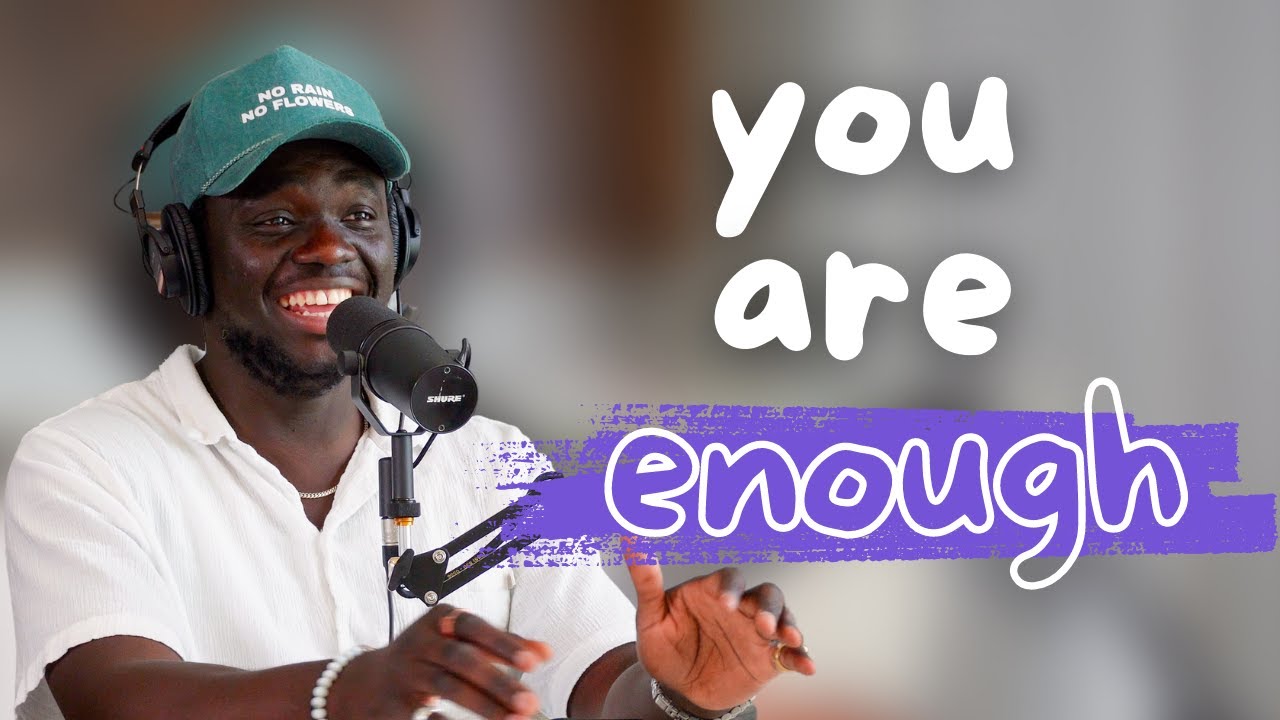
Ebrima "Abraham" Sisay is a mental health storyteller and currently the Founder & CEO of Freedom Project - A multicultural Social Impact Agency. Previously, he worked as a fractional marketing & distribution executive for tech startups and distributed content for local KC and national brands like Yoobi, Marvel, Mobility Design, Marknology, etc. His goal is to help guide a billion people from surviving to thriving! He is a friend, an inspiration, and a fellow soccer fan. I had ...







Ebrima "Abraham" Sisay is a mental health storyteller and currently the Founder & CEO of Freedom Project - A multicultural Social Impact Agency.
Previously, he worked as a fractional marketing & distribution executive for tech startups and distributed content for local KC and national brands like Yoobi, Marvel, Mobility Design, Marknology, etc.
His goal is to help guide a billion people from surviving to thriving!
He is a friend, an inspiration, and a fellow soccer fan. I had a blast in this conversation!
In this episode, we talk about many things including:
- the different views on mental wealth in U.S. vs. Africa
- how Abraham first decided to get therapy
- why you may need to drop your therapist for a better one
- the process of building a mental health helpline during COVID
- ways to predict burnout so that you can catch it before it gets severe
- virtual therapy vs in-person
- a Netflix-like platform that will be used to give millions of people access to therapy
- why One Piece is as successful as it is.
Abraham is a great example of someone who has a dream and is going after it. I encourage you to assess your dream today. Think of one step that you can take to put you closer to that dream.
Want to contact Abraham, see his socials, or view his projects? Check out his guest profile here: https://www.podpage.com/talk-to-people-podcast/guests/ebrima-abraham-sis/
The Talk to People Podcast is a resource for personal development and building meaningful relationships. In a world grappling with the loneliness epidemic and friendship recession, we are here to guide you on a transformative journey towards overcoming isolation and cultivating a thriving social circle. With different guests, we explore the art of building relationships and mastering communication skills, providing you with actionable tips to become a better communicator. Through insightful conversations and fun solo episodes, we uncover the secrets to making friends and overcoming loneliness. Listen to feel better approaching conversations with confidence, even with strangers. Discover the power of asking better questions and gain valuable insights into how to navigate social interactions with ease. Through our storytelling episodes, we invite you to share your experiences and connect with our community. Together, we aim to overcome social isolation and create a supportive network of individuals seeking genuine connections. Tune in and embark on a journey of connection.
An easy way to send me a message? Click the link here.
Have you enjoyed the podcast? If so, follow it, rate it, and share it with three people:
- Follow on Apple Podcasts
- Follow on Spotify
- Follow on Instagram
- Subscribe on YouTube
If you want to share feedback, have a great idea, or have a question then email me: talktopeoplepodcast@gmail.com
Produced by Capture Connection Studios: captureconnectionstudios.com
Abraham: Okay.
Chris: Rapid fire. Question number three is, if this happens, drop your therapist.
Abraham: Oh, um, if a therapist is dismissing what you are going through hundred percent, drop them. Because they're therapists like that. They'll cut you off and try to dismiss the things that you were saying.
Chris: So so if they're dismissive, drop them?
Abraham: Yeah, definitely. Because it doesn't make sense. You're job is to help me understand and validate those feelings and help me navigate, not just saying, well, no, that's not what's happening.
Chris: Good morning. Good afternoon. Good evening to you. My name is Chris Miller, and welcome to the Talk to People podcast, a weekly show where I sit at this roundtable to talk to a new person about how they improve their life with better conversations, relationships, and community. The whole thesis of this show is that life is better when you talk to people. And as you talk to people, you become socially fit. And this social fitness is going to align with your overall health, your outlook on life, and the community around you. This week, I had the privilege of sitting down with Abraham Issei, a man who really needs no introduction. If you're familiar with Kansas City, then more than likely you're familiar with Abraham. Abraham founded the Freedom Project, which is a cool organization that highlights the importance of mental health. He is a filmmaker, he's a content creator. He is a speaker and a natural friend. In this episode, you can expect to hear about the dangers of burnout, the importance of therapy, how to find a therapist that fits you, something that may indicate it's time for you to get a new therapist, and how to build a team that supports you, while also allows one another to pursue their own goals. And before we hop in, if you haven't already, go ahead and review the podcast. Rate the podcast on however you're listening, but then if you want, share it with someone who you think is going to need it. Other than that, let's hop in. Okay, well, you are officially live in the dining room studio. Just like that, right? And you have a different hat today, so let's start there.
Abraham: Yeah, so, uh, this, um, I actually got it from my girlfriend. She, uh, bought it as a gift, uh, because of my space that's always up and down. Uh, so it's acting as a reminder for me to always remember that there'll always be up and downs. And without rain, there can never be flowers. And the founder of this company, he's also someone within the community in Kansas City who's always working on all these amazing things. And he has this, uh, one of the designs is the no rain, so flowers, but he has multiple designs, but this is the one that everyone knows him with. Uh, and one thing that he does is he brings in a bunch of kids from the inner city and they actually make these hats together which is acting as a hub for just a space for them to meet other people. So sometimes we bring people like me to come in and talk to all these kids just to make sure that they're out of trouble. But instead they're seeing other people that are doing something positive. Uh, and that's one of the reasons why I like to support him. His name is Clark. Um, we call him Big Clark. Uh, and then the company oh yeah, like strong dude. His company is called, um clever, uh, I believe Clever. I think it's clever fool. I should know this because I buy the product. Uh, but if you look up Big Clark, you always see him everywhere. He does his cinematic shots of his videos. Super talented.
Chris: Wow.
Abraham: Yeah. So look him up.
Chris: It's funny because whenever I met you, I went and we were hanging out talking and it's almost like a lot of the people, you know, they have a business venture, but they're also skilled at capturing content.
Abraham: True.
Chris: Yeah, it's like, typically those two people are different, but I've seen a lot of hybrids lately.
Abraham: Right.
Chris: It's almost like if you want to survive or succeed in the digital content space, you have to have a business. But also be really good at creating content big time.
Abraham: Because nowadays we are all consuming content right now because you were shooting videos. There's so many of these videos out there. But people gravitate to content like this where you can hear authentic stories and people sharing things that can help someone else. Watching on how to do XYZ. Uh, at the end of the day, if you're not creating some form of content that people can see, it's really hard to penetrate into any space. So, uh, uh, usually when I meet people like that, I like to go all in because I know how hard it is, uh, to the setup to actually find the guests, uh, uh, to editing all the videos and then having to manage the business side of it. Like earlier we were talking about sponsorship. If there's any company watching, you need to sponsor this. This is really dope. There's a space for water jump on board. This is my commercial.
Chris: Right.
Abraham: Um, yeah, sponsorships, they're really difficult to come across. Uh, so I like to go in and help out as much as I can and share if there is people that I know that could participate or be a guest or sponsor. So, yeah, I mean, it's out there. There are people out there just creating with no strategy as to what to do. Uh, so whenever I meet people like that, I like to go in and help out because I see myself in every person. That's a hybrid, as you said.
Chris: Totally. Uh, because that's what you've been doing. Because currently mhm, let's talk about your projects and we'll just kind of go from there. But we'll start with the Freedom Project.
Abraham: Right?
Chris: And that was founded in 2017. 2017. How old were you?
Abraham: Officially? It was founded in 20.
Chris: But you were working on it prior.
Abraham: To but I was working on it as a side project. And I never really wanted to do it full time because it's mental health. And back then, um, I was holding back myself to share my own story. So I felt like I was just talking about mental health by using other people's story, but I was afraid to even share my own story until, uh, 2017 to 2019 is when I started telling my own story. And then that's when I started seeing people that knew me back then will say, oh my God, this was happening to you. We didn't know. And then some people are like, this also happened to me. And I'm saying, oh crap, I should do this full time. This is like, impacting other people on a daily basis. But, uh, here I am withholding my story, uh, and not sharing why I'm doing what I'm doing. And the moment that happened, that's when things changed. Like, moment I started talking about my why, the reason why I was talking about mental health and how I was impacted, how people in my circle were impacted. Uh, I decided, okay, it's time to do this full time. And that's how the Freedom Project became an actual thing. And the name Freedom Project came from a show that I was watching, I think on YouTube or somewhere. And then this guy was, uh, freedom in America is a toxic version of what freedom really is. And I was like, that's deep. Like, oh my God, okay, how can I use this to make sure that, uh, I can communicate that to people? That one sentence. But then using the word freedom as a project, which infinitely it's always going to be in progress. The fun will be in the process as we're figuring out what really is freedom. Uh, but the goal is to talk about mental health. Uh, so kind of like masking mental health underneath freedom because everybody want to be free, right at the end of the day. Uh, but we don't necessarily know how do we get to freedom? Uh, which to me, uh, it starts with your mental health. Because if you have a crappy mental health, you don't project any positivity towards people. You don't care whether people are free or not. Uh, to you, you are just in a bad state, and you project that wherever you go. So that's why I decided to use the word freedom. I think I'm eventually going to rebrand it to something else, but I want to accomplish that first and then rebrand it to something simple. Because Freedom Project sometimes comes with a there are some drawbacks as to some companies where when they hear Freedom Project, they're like, what is this, some far right movement? And they see me, they're like, oh, okay, this is weird. What is this, some far left? I was like, It's not political at all. Uh, but even though we work on legislation now, sure. Uh, but I figure out if we can accomplish anything we need to pass, uh, now, you know, Freedom Project, it keeps changing. To your point, hybrid. I feel like I'm projecting the things that I do into it now. And all the other people that I come across, they're all hybrids. So Freedom Project does films, documentaries. Now we're doing legislation events to bring in all of these people that we meet on a daily basis in order to make change. Uh, yeah.
Chris: Why wouldn't you? Especially if that's naturally you right? Because it's that whole entire idea of it takes us a while. I know with the podcast, I would talk about building relationships because that's crucial for mental wellness, having good people in your life. That way you can endure the bad days and enjoy the good days with the social infrastructure. It's crucial. But it took you a while to start talking about your own story. Similar to me. I'd be on the podcast asking people questions, and I'd be like, I'm grateful they're not asking me that question.
Abraham: Right. You're like, thank God.
Chris: Yeah. Which is so backwards. And then I went to go guest on a podcast, and they were asking me questions, and I was like, wow. It gave me a lot more grace as, like, a host, m. But also, it encouraged me be you right. Share your stuff, mhm. And for you, what was it, therapy that gave you the courage to start sharing what happened?
Abraham: No, it was my ex girlfriend.
Chris: Oh, nice.
Abraham: Because she was always, uh, demanding for me to open up. And back then, I didn't understand what that meant because, again, I grew up in West Africa, and the relationship that I had with my parents was more like a general and his son. Yes, sir. Uh, no, sir. That's the environment. Uh, no, my dad. But my mom as well, she doesn't really have the language, uh, to help me navigate. Even though she was very graceful, she was always there whenever something would happen between me and my dad. Uh, after the fact, she would come and apologize because she can't really do anything. Because the dynamic of my family back then, it was like the dad was everything. He was God.
Chris: He was in West Africa, most of.
Abraham: The patriarch, the dad is up, and then he decides what we're going to do, all of the things. And the mom is kind of like the supporter, kind, uh, of like Batman or Robin. Batman sometimes will always override whatever Robin wants to do. So that's the dynamic that I grew up in. So, communication wise, I lacks the skills. And I also had a really bad stutters, uh, due to all the suppressed emotion. I actually had to stutter due to a bunch of trauma that I experienced as a kid. We can get into that. I don't know what your audience mindset, like, state of mind is. Um um so me having all that baggage, going into a relationship with someone from the US. The first white woman I've ever dated, and she always wanted to talk about being yourself. And I was like, what the heck? What do you mean, be yourself? Leave me alone. But then she was very demanding that I'm using demanding in a positive context, because she was like, if I want to spend the rest of my life with you, I need to know who you are. And I was like, I don't even know who I am. To me, I'm just here to study because my parents told me. So she kind of inspired me to get that out of me, like, wanting me to share who I am and tell me she would always tell me who she is. And I was like, I know who you are, but I don't really know. Uh, even down to me dating her came from the fact that she was the first person who said, I love you. And to me, I was like, this is weird, because I've never been told by my parents that I love you. I've never even heard my parents tell each other I love you. So to me, someone saying I love you was i, uh, didn't even realize how big it was until I heard her say that. And I'm saying okay, what is this? What do you mean, I love you? It was such a big gesture for me when that happened. Uh, and, uh, that was the reason why I even decided to date her, because of that, because it kind of sparked my curiosity and opened new avenues for me to explore who I am, because now someone else loved me, and they gave me this space to be myself and was always asking me questions about me. And I was like, I've never had anyone be interested in me at all. Uh, but, uh, then over time, obviously, she got burnt out because I was as stubborn as a rock, because it takes me a while to process things, and I don't know who I am, but she wants me to talk about who I am. And she did her best. And eventually, she kind of gave me an ultimatum and said, you either go see a therapist, or I'm out because I'm tired. And I'm just like, okay, cool. So I literally went to therapy with the mindset of, like, can you tell me how I can get my girl back? And then the therapy, uh, therapist back then, I remember she would always laugh whenever I would say that, and I was like, no, I'm serious. I want to get this girl back. She's the first person who made me feel this way and gave me access to all of these things that I've never experienced before. How can I get my goal back. And then therapists will always just tell me, uh, well, cool. We're going to work on that. But first, tell me about your childhood. I was like, what are you talking about?
Chris: You're like, two different subjects.
Abraham: Oh, yeah. My brain was automatically like, no, I want to talk about this girl that I've been dating, and I want her back. And she was like, no, tell me about your childhood. And then little by little, I was like, well, I grew up in Africa. How was that? I was like, I don't know. It was Africa. What do you want to know? Can we go back to this girl that's going to leave me? And I would say things like, she's probably dating someone right now, so hurry up. That's why now I talk about domestic violence, because of that. The things that I discovered while in therapy, understanding me having this expectation on her, uh, and then feeling like she was mine because she made me feel this way. Uh, uh, and over time, true therapy, I was able to learn that even the reason why I dated her is not because I love her. I love the idea of being with her because she made me feel loved for the first time ever. And now I expected her to love me all the time. I expected her, uh, to be my everything. Uh, and while in therapy is when I learned that all of my behavior led to her leaving, because down to her giving up friendships to be with me, because I would feel uncomfortable whenever there are other people that I don't know. Even her hugging people was weird to me because back in Africa, I've never experienced that before. So I was able to learn all of that in therapy. And I was like, so I'm the problem this whole time? Are you telling uh, so that's why foundationally, um, with the Freedom Project therapy is such a big, uh, concept for people to seek whenever I talk about mental health, because to me, it works for me. But, um, I'm talking about in a way that even though it works for me doesn't, uh, mean that it will work for you, because you don't understand how to access therapy. For example, whenever you break your arm and you go to the hospital and, uh, without knowing what doctor to speak to, you have to go through the whole intake process before you see the actual doctor. You have to figure out, how did this happen? Blah, blah, blah. But you could be at a skin doctor and not know that that's not the right doctor, but you see them anyway. And you pay for all of those other extra things that you're doing. Insurance would pay for it. If you don't have insurance, you have to pay for it. And then you go see the doctor and realize, oh, that's the wrong doctor. And he's like, oh, well, I don't do this. How about you go to these other doctors that actually practice with, uh, your bone and be able to put a cast on it? But all that time wasting is what's happening in mental health. People will go and see the wrong therapist. Uh, that's basically talking about family or dysfunction, but they're dealing with something else, like trauma or PTSD. They're not talking to someone who is specialized, but they've spent the whole time going through the intake process. They get burnt out. And sometimes a lot of therapists, they don't have continuum of care, so they don't really share who to go see, because to them, oh, I'm not the right therapist. We've done three sessions, but this is not working. And usually the patient will say, I'm out, and they build that stigma over time. Uh, so that's why with Freedom Project, the goal is to educate people on how to see a therapist. Not just go and see a therapist. Go and see a therapist. A lot of people say that, but they don't tell you who to go see because they don't even know what you are struggling with. You, the individual, don't know what you are struggling with. And then you just go to BetterHelp, BetterHelp. Can you sponsor this? And then they go and just see a therapist who is not specialized, uh, in what you are dealing with, because you don't know what you're dealing with. Therapist has to talk to you different times before they actually know how to properly diagnose you. So it takes time. So that's why I'm trying to get rid of that space through the Freedom Project by making sure that whenever you pick up a phone to speak to a therapist, it's the right therapist for you. Same, uh, with healthcare, uh, I'm trying to apply, uh, uh, the same standard to mental health care, because that's how it should be. It's just that there's so much stigma to get to that, uh, so, yeah. Uh, I kind of lost my chin.
Chris: No, that's a great point, and I hadn't thought about that. But you're right, because for a lot of people, going to see the therapist is like, okay, I've done it.
Abraham: Yeah.
Chris: And it takes a long time to get there. Right. Particularly for you. You were saying to get the therapist took you a while, and then you show up, and therapist is laughing at you.
Abraham: Yeah, I know. I still take that personally, and we can talk about this, but the event that just got canceled, I took it so personal because the guy laughed while we were on the phone. And maybe it was just not like.
Chris: You don't have to name them, so I can understand.
Abraham: Yeah. So the Kaufman Center event that I put together, it's, uh, a big event. Like, 500 people, 30,000 people registered online to watch it. We had people all over the US. Flying in. Even representative from wondermind selena gomez's mental health agency. All these people were interested in coming. And I was ready to host one of the biggest things that happened in the Midwest. And then they even got, um know, I remember talking to the guy, trying to tell him, hey, this is really important for the community, blah, blah, blah. And at some point he laughed. And that really hurt me. I literally told him, I'm going to get off the phone now and I'll call you back. Because I had practice with therapy. And whenever things hurt, get me personally, I get off the phone. Because sometimes it's not even about that. It's because of something that happened, uh, a long time ago that triggered that. So I literally got off the phone. I said, I'll call you back. Give me like an hour. I'll get back to you. I literally get off the phone. Sat down, like, why the heck this bother me so much? And I started processing. And I'm saying, okay, I'm not going to call him back in an hour. I'll call him the next day. Actually, I ended up emailing. I'll call him one day now because I'm still I'm not ready to talk to this guy.
Chris: Yeah, it's still an open case.
Abraham: Yeah, it is. It's still open. Uh, whenever I get to it, I'll get to it. And then, um, I'm going to make sure I'm in the right headspace to talk to him. Because to me, when people laugh, it literally gets to me. It's the only thing that can break my shell or the fedora that I use.
Chris: Yeah. Have you seen those? Memes with Michael Jordan? And it says and I took that person no.
Abraham: I actually did a photo of me doing the same thing in a documentary. And I put it on my Facebook and I said and I took it personal. Yeah.
Chris: His stories are so funny. It's like someone beat me in pool. And I took that personally. And then he trains for three years and then came back beating everybody. But that drive.
Abraham: No, same here. I take a lot of things personally, but quiet. And then I actually because at the same time, I respect them for being able to do that. But I'll go back and train and learn. Even film. I shot a video a long time ago, and a guy thought it was garbage and some random people on the Internet. And I was like, okay. And I went back and learned. And I came back. Now I produce documentaries, films that are like 60 person crews because of that person said that even though I've kind of gotten over it, I said, kind of. Because every now and then I was like, right, this video is not good.
Chris: Enough because you're still fairly competitive.
Abraham: Oh, yes. Very competitive. I had an older brother who was always telling me that I was garbage. So I always had to try to be the best all the time.
Chris: In soccer.
Abraham: Oh, yes, soccer. Um, so, uh, he was, like, two grades above me, and then I actually skipped two grades and I went above him.
Chris: Play with his team?
Abraham: No, just to show him that I'm better than you. I skipped two different grades and I was above him. And he hated that.
Chris: School in general?
Abraham: Yeah. School. Yeah. I was like, you know what? Because I felt like he was making it difficult for me because every class that I go to with the same last name as my older brother, he was the bad kid in school. Quote, unquote bad whatever, that he's just active and then I'll be going after him. And then they're like, oh, that's a notice he say. And they'll always expect the words. So I felt like I was always rewriting the identity portion of our last name. I come in and I get the good grades, and they're like, oh, he's actually a really good kid. But then I always have the expectations from the teachers of all the damage that he caused. And then I was like, okay, what can I do? And I literally went and I, uh, remember, um, in grade six or something, uh uh, because in Africa, I don't know whether it's the same in the US. We kind of grade students based off of hierarchy from the first position all the way to whatever, uh, the number of people in class. So, I remember, uh, 6th grade, the first term, actually, fourth grade, the, uh, first term, I was, like, number 22 in class. And then the second term, I went second, and then the third term, I went first. And then that's when they skipped me to 6th grade. And then 6th grade, I also had, like, first position in each and every term. And I didn't go to seven, I went straight to eight. And that's when I went over my brother, which was awesome. But that also had an impact to a kid's mental state, if you keep skipping them over and over again because they're not, um, in the same age group anymore. They're like two age groups. And I was a lot smaller. So that's when I started experiencing bullying. Like, those kids will bully the shit out of me.
Chris: Because you're small.
Abraham: Yeah, because I was smaller and I skipped two grades automatically. I'm a nerd to them, and they expected me to do all these things.
Chris: A small nerd.
Abraham: Yeah. And then I was younger. Like, a lot younger than all of them. So, to me, I kind of look up to them because they're these big kids that are cool, and I'll just carry their backpacks and follow them all over the school. But then they would tease me all the time. But to me, I don't really care because I'm saying, I'm hanging out with the cool kids.
Chris: At least I'm here, right?
Abraham: No, exactly. But, yeah, that's the story of how.
Chris: I'm very competitive and you and I have mhm. So I was in my brother's footprint shoes.
Abraham: Shadow.
Chris: Yeah. I had to match his performance because he was the wiz kid up until about high school. And that's whenever he started falling off. But I had a weird moment with my older brother. And I don't know if it's similar for you, because I know we've mentioned it a little bit, but my older brother ended up being diagnosed with schizophrenia. And there was a moment where me, as a younger brother, I m almost had to transcend him and be the older brother to take care of him.
Abraham: Right.
Chris: So it was like, this really weird thing. I always wanted to be competitive and overtake my brother, but then it hit a point to where I was actually caring for my brother and acting as the older brother, which is really interesting.
Abraham: Yeah, I did experience that, because, uh, at some point, we also found out that my older brother had, uh, a severe mental delay, um, with him. But we had no idea. And this is something that I didn't even know. I remember he would always get sent to the mental facility because of his behavior was so different from everyone else. And this happened also during, uh, while he was in high school. Maybe I've contributed to this because I was always like, we would fight all the time, but that's what siblings do.
Chris: Yeah, totally.
Abraham: Uh, uh, but at some point, he was admitted to the mental hospital because he had a fight with my dad. Just attacked him. And then also, uh, at some point, my mom had people in the house and he just showed up and walked past them, didn't say anything, went to the bathroom, picked up a bucket full of water, came back down with a towel, and just started taking bath in front of everybody. Wow. And that's when they actually admitted him to the mental facility, because usually they take him to the hospital and he get admitted, and the doctor is like, we don't know what to do, because no one even considers to check his mental state. To them, just the term he's crazy started coming up a lot more, uh, to a point that even other kids in the neighborhood will tell me that your brother is crazy, he did this. And everybody'd be laughing, and I would laugh too, because I don't know how to react to that. Totally. I don't want to be the one that get cast out, too, because my brother is being cast out. So I didn't really have the resources or to know how to navigate all that. And, uh, out of nowhere, I became the older brother because I have six, uh, other siblings that are, uh, younger. So now I became the person that was like the older brother, even down to family expectations. Even me coming here to the US was for me to study and, uh, then go. Back and work at my dad's company. But that was all for my older brother. But now that he's no longer in line, everything came down to me. Uh, so, yeah, I was dealing with a lot of expectations. I didn't really know how to handle it. And to me, that kind of annoyed me. The fact that he's no longer responsible. I was like, what the heck, man?
Chris: Like your cop out kind of, yeah.
Abraham: Growing up, um, it was something that I battled with for a very long time. But I didn't have grace for him until when I actually went, uh, and saw a therapist and learned about mental health. And I was like, wait, that's what my brother was dealing with. So this is what he's dealing with. And no one told us about it. Uh, and even till today, he still experienced it because I talked to him a lot and he always changes his number because he thinks someone is spying on him and listening to him. Uh, and now he's a lot older. He's always also moving from I don't even know where he is, honestly, but somehow he always figures, uh, out how to call me, which is crazy. It's something that I'm learning as I'm navigating the mental health space and learning about myself and having that grace for him in turn. And down to even my family. Because even till today, they don't understand why I'm doing this. Me sharing my story includes them in a very big facet. And that also is not, uh, the best, uh, time to have a conversation with them because at the end of the day, they're part of my story. So, uh, there's the weird gray line, when do I stop so hard.
Chris: Because it's your story.
Abraham: Yeah.
Chris: So you should be able to share it. And I feel the same way. Talking about my brother or my family. I recently had my mom on and she was talking about being a family with alcoholic. But the alcoholic is my dad. So it's like, I don't want to talk bad about my dad. Yeah, but that's part of my story. Right. Or like my brother, I don't want to talk bad about my brother. So, in Gambia, was therapy popular?
Abraham: No, not at all. Maybe now, because it's been almost eleven years since I left. But back then, therapy was not a common. Like, there's not people that specialize.
Chris: Was it done by the pastor?
Abraham: Yeah. Uh, usually is the imam because it's very heavy in Muslim and Christian, uh, and usually the church or the mosque. Uh, super, like religious. And sometimes they'll give you stuff for.
Chris: You to get the demon out.
Abraham: Yeah. Literally pray for you. It's so intense. So that was my reality. Whenever you hear someone has a mental issue in Gambia, it's usually a very bad negative connotation that comes with it. And usually the picture that I see, I saw growing up is some guy in the corner or a lady in the corner with really dirty dreadlocks. They have some kind of something that is sniffing on, similar, uh, to Skid row in Los Angeles. Yeah, it's really bad. You see, like, a woman naked running around the block. People are laughing, literally. This was the image of mental health for me. So that's why when my ex told me to go see a therapist, I was offended because then I was like, I'm not crazy. What the heck do you mean see a therapist? So I went and saw one because to her, it was so serious that she wanted to leave. And I'm saying, well, uh, if this person says he loved me and wants to leave, I don't want that. Because I've never had anyone told me that they love me and then want to leave. That's weird. So that was the reason why I went and seeked, like, a counselor. And I was able to learn all of these things about myself. And one thing led to another. Now it became like a full time thing. That's all I do now. Um, I'm always out there just figuring out how to pass a bill or to do an event where I can bring all these individuals that can help make that a possibility when it comes to legislation. And also do all these videos and put it out so that people can know how to identify who to talk to when they go see a therapist. It, uh, sounds simple, but it's not.
Chris: No, it doesn't sound simple.
Abraham: So much going to it.
Chris: It sounds really like you have a lot going on. And it's good that you learn about mental health, because if you didn't have any knowledge of it, then I imagine you like many people, if we don't take care of it, we get crushed. And all of our ambitions, all of the things you're currently working on, all of the projects go by the wayside, and we don't know why. It's like, why don't I have the energy to do this? Why don't I feel hopeful? Why don't I feel like I'm able to conquer this? When really we are very mentally unstable and we have to reestablish stability. So I'm grateful that you have all the knowledge, particularly because you could also and I imagine you think about this all the time, but culture really dictates the way, like, expectations and relationships. So whenever you move to the west, you have this girl talking all about self disclosure and sharing your story, and you're like, no, that's not something we do.
Abraham: Right.
Chris: So, like, learning how to do that. And then once she says she's going to leave, you're like, oh, man, fearful. Because mhm, this unlocked a new thing in your life. And she was the one who had the key. Right?
Abraham: Exactly.
Chris: Yeah. It's like the key holder leaving. Like, no, don't take the key. But therapy, m gives you the words and the knowledge to be able to understand that it's up to you, right? And unpacking all of that.
Abraham: I know it's super powerful. That's why, literally, with my friends, uh, um, whenever they come to me and want to talk about something, and I was like, it sounds like you need to go see a therapist, bro, and I can help you. And I'll literally send them because I know them. They're my friends, so I can tell not diagnose them, but I can tell this will be a perfect fit, someone to talk to. And I have text messages of friends, and I'm, like, sending, like, a five.
Chris: Different therapist or therapist.
Abraham: No, exactly. I'll send them, like, five different therapists. I was like, all right, this one don't specialize in this, but I think they can talk to you in this capacity. This other one will be perfect because of their background. And your background makes very well. I will literally do all of that and then match them. And then eventually, they will tell me, yo, that was awesome. I felt like I was talking to my mom or a friend. This is awesome. Thank you. I'm actually building a software now because of that matchmaking. Because during COVID I, uh, actually sat down in my bedroom. I created a little office space there where I became a call center for mental health. So basically the nine, eight, eight. I was doing that during COVID because all the videos that I was doing over the past, since 2007, I always put my phone number, and I've never changed my phone number, 816-739-6498. And then I've also put an email info@alcombascs.com, and no one ever responded to it. And I was like, no, I'll never use this. And COVID came. It was going crazy. The phone is in my back, uh, somewhere. Uh, and, uh, I have to turn it off after five and put it do not Disturb. Because even till today, I will still get people call that number and say, hey, I was watching this video that you post on YouTube, and I heard someone in the video talking about dysfunction. And it sounds like something that I'm very familiar with. Is this what I'm experiencing? Can you help me find a therapist? It got so big that I hired a call center to help me reroute those calls. It was crazy during COVID which also impacted me and my because back then, I had a three year old and doing all I would just be on the desk, and he would just be there. And I was like, this is bad. Let me get some help. And now that help, I decided to build a software where we can match people to a therapist using things that they already do, like entertainment streaming. People are always streaming. The reason why Facebook is so successful, uh, Netflix, is because they understand human behavior. They understand why we watch something. That's why when they recommend something, 98% you're like, how the heck do they know this? Because you've spent so much hours on their platform clicking this, doing this. All of those have some tracking code, some utms that's listening to you. It's like a therapist. Those technologies, uh, constantly watching your watch history, or if it's Facebook, seeing how you're navigating those platforms, and then, uh, using all of those data points to find the perfect. Like, that's why we keep seeing the things that we like on social media. And then they're saying, oh, the algorithm. How does he know me? Someone is spying. There's thousands of algorithms on this platform. It's not just one. And they all have different purpose, because we are telling those platform what we want without even knowing it. And they're building algorithms to make sure that they match those behaviors. So, I'm using that same type of technology to create it for mental health, where I'll build a streaming platform, mix, uh, it with, like, Elearning, uh, because that's what's been working on during COVID all those e learning videos that I would share. People would call and want to see a therapist. So imagine if you had a Netflix that looks like Masterclass at the same time, but whatever you're watching, instead of Netflix saying, Are you still there? We say, we found a perfect therapist for you, or the perfect, uh, counselor for you. Down to spirituality. I've broken it down to spirituality. Uh, uh, actually, I call it, uh, spiritual wellbeing, mental wellbeing, emotional wellbeing, and physical wellbeing. But they'll always just get bigger the more we know who the individuals are and how they're navigating the platform. And in true that, we will match them with it. If it's a spiritual person, we'll match them with a therapist who has that background, because they'll more likely open to that person. If it's someone who is very big on physical wellbeing, then we'll match them with a therapist who has that background. So, in the platform, I'm building the marketplace, where there's a bunch of therapists that are signing on. Um, uh, and that's why I'm about to go on a tour all over the US. To individually meet therapists as I'm traveling all over the US. Talking about suicide, uh, and also trauma, uh, because I was able to get T Mobile to jump on board, and we're still talking about details, but I'm putting it out there. I'm hoping they will sponsor a whole tour bus, uh, because I did music in the past, and I toured a little bit, so I have an experience with how impactful touring is. And, uh, I want to use that experience to apply, uh, to mental health, where we can meet people in every state that we go to, and then do the Listening series, which is an event that I do, where I give away people mental health starter kits in a box. But we use music from Kendrick Lamar J. Cole to talk about trauma and then the T Rex walk is a T Rex costume focused on suicide awareness.
Chris: Which got on the news.
Abraham: We got on the news when I did like, I even got someone from New York reached out, and they're like, hey, we saw this. How can we bring it to New York? So I'm using all of those interests and presenting to T Mobile, hey, I have this happening. We have no plan for PR. We just knew it's going to work. And we did it. And it worked. And then now we're getting calls from New York. We got calls from Boston. We got called from, uh, I believe, uh, uh, like Chicago as well. And I was like, how can you help us take this on a tour? And this is what T Mobile can get out of it. And they're like, this is awesome. We would love to be a part of it. And so now we're just, uh, working on the details, figuring out how it would make sense in their budget. They literally told me, we are a 30 billion company. We can do this. I was like, cool. I just need 0.2% of your marketing budget. That's like $8 million. But to them, 0.2 is like nothing compared to how much they spend like $22 billion on marketing. Sorry. $2 billion on marketing. Uh, it's like crazy.
Chris: T Mobile.
Abraham: Yeah. T Mobile. Just us.
Chris: Wow.
Abraham: They spend $2 billion in marketing, and they have a $30 billion company, so they can do that. It's nothing to them. Uh, I'm hoping with all of these things that I'm doing, traveling all over the US, meeting counselors, hiring them to be part of the Listening series, we will build that relationship, number one, and then telling them the platform that I'm building and why they need it on that platform. Instead, they'll be a partner, uh, uh, on the platform as well. And I'm actually building an equity pool to give away to all those therapists as they jumping on board.
Chris: For the platform?
Abraham: Yeah, for the platform. Because at the end of the day, I want to build a solution where we can actually have longevity with those therapists and actually help them be successful, but then also giving them the space to be able to have their own schedule, do their own things, even down to the film premieres that I'm building. Now, as a sample, the goal is to have a Grammys. But for therapists, for doctors, nurses, therapists, all the healthcare people, they'll be getting awards based on how they worked, uh, on the platform, how many people they've impacted on all of that. Every year, once a year, we're going to do a big film premiere, uh, of a film that's about to be on the platform or a film that got very successful. And then we will bring all those therapists and give them awards. That's the goal for it's.
Chris: A just like Netflix. You hop on and there's entertainment for you to consume. And are all of these movies or TV shows related to mental health in some way?
Abraham: Or is it every movie is related to mental health? That's what I was able to find out. Like, writers are writing about stories every day. And depending on how weird or whimsical the stories are, at the end of the day, they're writing about their own individual stories.
Chris: It's like Batman related to mental health.
Abraham: Batman is traumatized as heck.
Chris: He lost his parents.
Abraham: Yeah. And the reason why people into Batman, it's because they can relate to that in some capacity. So those data points can tell the AI or the algorithms that, hey, this person has been watching Batman. He's watching all of this Avengers stuff. Like, there's something telling us that maybe that's a pattern as to their behavior and how they consume content. And then we're going to have a soft intro as to nudging, uh, because every person's Netflix account is different. So your account on forum. Actually, the platform is called Forum. Uh, it's almost done. I'm just taking my time. Yeah. Rummforum. And with that, it's going to start nudging elearning videos underneath your recommended because of those films that you keep watching. And those elearning videos will be a master class type videos where you're learning about if you keep watching videos about trauma or drama, all of this trauma drama, there's likely that something in your subconscious is making you watch all those videos without you even being aware of it. Uh, and through that elearning, they'll be more open to even speaking to a therapist. And I think we're giving them 14 to 30 days, uh, as we learn about them. And eventually we will open the connection with therapists. Like, hey, we noticed you've been watching this. Here's a therapist that matches who you are. We would pay for the first three sessions. So every subscription that comes in 3% will go into a nonprofit that I created, uh, with one of my old time, uh, clients. I probably shouldn't say old time clients because she would get offended. Yeah, longtime client. And her goal was to always build a nonprofit where she can help assist people. She says assist all the time. And so we build a nonprofit where all of the subscription 3% will go into that nonprofit as a fund for all the people on the platform whenever you want to use a therapist. Uh, we will cover up to, like, three months of sessions. And then if you feel like this is for you, then you can continue your sessions. Uh, and then the therapy fund will act as an insurance eventually, where half of that will cover half of your session.
Chris: The subscription.
Abraham: Yeah, exactly.
Chris: So you pay a subscription fee, and then you would get access to therapies the entertainment.
Abraham: Yeah, the entertainment.
Chris: And the elearning.
Abraham: Yeah, and the elearning. Everything is combined under one platform.
Chris: And then how do you categorize which therapist would be best for what.
Abraham: Oh yeah. So I'm actually hiring the therapist to work on categorizing. Because um, it's so wild when it comes to category, how vast it is when it comes to therapists. They're therapists that are literally focused on film and entertainment. So they're actually coming on board to help me create all of those different categories in order for us to perfectly match people. Because that's not my specialty at all. So I'm bringing all these individuals on the journey to help us properly categorize all these different people and all different categories when it comes to film. Because film is always categorized. Even when you purchase mass films, they will tell you, okay, this film is categorized as a drama. This is kind of a thriller Sci-Fi. So they already have the categories already. And then we're using the therapist and their specialties and their modalities. Um, it matches perfectly with film stories. Like a therapist, uh, can go down to even entertainment. Uh, they have experience in that. And there's a category that's entertainment. So we will use all those categories and their specialties. Like right now, if you go to psychology, uh, today, and you just type a therapist, they'll show you all of their categories. It's so packed when it comes to data all those platforms. So they already have a system out there that's already working.
Chris: It's just not like their system or BetterHelp system. You can go.
Abraham: I mean, I'm not sure whether BetterHelp will open because they're VC funded. They're very big. Uh, so that's less collaborative aspect, uh, to that. But uh, eventually in the future, who knows, we could eventually acquire them. I'm saying acquire because it makes sense. Uh, uh, or they can even build a streaming platform because they already have the market size or everything. Or they can end up acquiring Freedom Project depending on what their business model and who's running it. Because I don't want it to become a big ass VC firm where a VC driven company. Uh uh, so that's why I'm also why not funding it myself. It just depends on the VC company. Because if I find someone, uh, who has the same belief that I do, and then has the same, um, drive towards human longevity, then I'll probably be open to letting them coming on board as a investor. But I haven't met that person yet so far I've talked to usually I get approached by investors a lot, um, because I'm always everywhere in Kansas City. So they're like, want to know what I do. And I'll tell them that this is amazing. But to me, usually I talk to them, uh, while I'm testing them the same time. I tell them all the cool stuff and then tell them all the heavy stuff and see which one they gravitate to. If they dismiss all of the other things that are actually the backbone of the platform, then I don't even continue that conversation.
Chris: They're like, Netflix software?
Abraham: Yeah. They're like, oh, yeah. How can we be involved?
Chris: And they're like, yeah.
Abraham: And then all the heavy story. They can't even handle it. So I usually dump them all on my story, too, just to see how they take it. And then it's like, if they can't, I'm like, uh, yeah, this is not going to work. This is not the right person.
Chris: Good for you, though. Some people would just take it and be like, try and introduce what your true heart is, and then this is all virtual therapy. What's your thoughts on virtual versus in person therapy?
Abraham: Um, I mean, I've tried both and it always worked for me. I think at the end of the day, it's down to the person and how they're open to trying that. And that's why I feel like the education not even feel believe that the education is so important. Because usually people are going to charge because someone forced them to do it. And if you force someone to do anything, they will go into it with stigma. They don't care. They'll probably try to prove you wrong, that this doesn't work. And that's why to me, in my process, even, uh, though I was forced into it, but I went into it with that drive to get someone back. Then I found all these other things and I was like, wow, this is amazing. Uh, but not everyone experienced that. Maybe I'm just a very open minded person personally. So sometimes luck played in me being where I am today. But I've worked my ass up, like, constantly trying to figure out, chasing, like, learning. And that's part of my personality. Whenever I put my mind to something, I'll make sure I achieve it down to, like, me and all the brother me skipping two graves just to show him that I can do this. Um, uh, but when it comes to other people trying therapists, I want to make sure that with Forum or Freedom Project, they can go into it with their own, like, hey, I'm going, uh, into this because I want to better myself, not because someone is forcing me to do so. Uh, and that's why the platform is designed in a way that is nudging. You can watch your films. You can do whatever you want. We're meeting people where they at and simply introducing Elearning, uh, as a recommended video. You may like this, and if they like it, then we're like, all right, actually, you want to talk to your person. And even the way that I'm, um, adding therapists, I'm, like, localizing the whole process. If you want to meet a therapist, we will only match you with therapists in your own community as well. So that's an option to do virtual or in person, uh, because at the end of the day, I want to be able to give people the option that works for them. Not what I think would work for them. So that's the problem in Facebook. They just recommend stuff that they think will work for you, but sometimes becomes a bottle because you were just like, oh my God, this is annoying.
Chris: Look at this guy.
Abraham: He's like, you need therapy or therapy.
Chris: I can tell. I wonder what so with COVID one of the big impacts of COVID was it revealed to us how important the healthcare worker was. The nurse, the doctor, the nurse assistant, you name it. And I think recently, after COVID, what the after effects of COVID is revealing to us is how important mental health is to us. So COVID had a lot of healthcare workers leave um, healthcare because it was so hard and they were so depressed. But then it also had a lot of kids say, I want to go to med school now because I realized how important a doctor is. So now that after COVID, we're seeing that effects of loneliness or just not being around people or not having proper mental health. I wonder if people are like, OOH, I need to be a therapist. And it's like, how do we get more people to be therapists? Because if more people seek therapy, which I think they should, then we're going to need more.
Abraham: No, absolutely no. Um, I actually did a whole project with um, uh, UMKC, uh, because during COVID one of the things that I saw, like, to your point, healthcare workers were leaving because they're burnt know, they felt like they weren't compensated properly with the work that they're doing, and they're disrespected by their own doctors. Uh, and so, like, nurses were leaving. They would rather do a traveling nurse than stay in a hospital because it's more beneficial for them to be a traveling nurse, even though it's very risky, because you can make a mistake that can come back to you ten years, and you can lose your license for it.
Chris: Oh, wow.
Abraham: Yeah. But they'll rather take that risk than deal with staying with one hospital. Uh, so even Ku, the reason why I had a partnership with them is focus on that telling stories within the hospital to figure out why the nurses were living. We all know why they weren't paying them enough. Uh, but the nurses wanted most of those nurses are not doing it because of money. They love taking care of people. Uh, and the Compensation Act is a way to complement the work that they're doing because it's hard. The amount of things that they see on a daily basis, that's not normal, but they show up every day to do that. So when COVID came, it just kind of, uh, was a moment for them to just realize how unappreciated they were. And most of them left. So I went to UMKC and I told them, hey, we have a problem right now, and we have a lot of kids that are in your psychology classes that are going to mental health and you guys are not doing anything for them. They're just home taking online classes. I want to help. I'm going to do a virtual event. So the first launch of Freedom Project forum was with, UMKC, um, I brought in therapists on the call. I brought in athletes from Chiefs because I figured the kids will be more likely to show up if you bring that. So they will have questions. But we had like, I think 60 plus students show up. It was amazing. This was virtual during COVID And it's after virtual died because virtual was like, woof. Everybody was on the virtual. And then people got tired of it. And we had all the students show up. And then they had so many questions. And that's when I was able to learn about how they even communicated so different from us. And I was like, Dang, I'm old. What the heck? I was like, my sister says all these things. I didn't realize she was dealing with all of these things. Uh, uh, but when it comes to the education, um, one of the kids just kind of just said something, uh, which blew my mind. She was like, I uh, think the best way for mental health is just to start at a young age. Because she was like, if I was in pre K and I was learning about mental health my whole life instead of coming to college and deciding to learn it, I would be more open to do this full time. Because healthcare, they're teaching kids at a very young age, introducing them to the human body, like super young. And they're telling them what this is, what this is, what this is. If we start building curriculum at a young age where kids can learn about mental health from pre K all the way their entire education lifetime, they will be more likely. Or they'll also grow up saying, I want to be a therapist. Because it's cool they're learning it in school. So uh, that's why I'm working with the state of Missouri and Kansas to pass a bill which is going to change the curriculum or add into their curriculum, um, and make it a requirement for kids to learn about mental health at every level. So from pre K they'll have a curriculum for that first grade, 2nd, third, all the way to 6th grade. So that we can introduce them slowly into the human brain. Because it's amazing. Uh, but do it in a way that is super fun at pre K and eventually graduate them, uh, through the curriculum. So that's what I've been working on with the city because I want to make sure that kids are growing up saying, I want to be a therapist. Like someone said, I want to be a football player. I want to be a therapist. And maybe I'll be a therapist to fix your brain when you're done your career. Ah. Uh. So that's what I'm working on. And it's so wild that the support is so lacking that I'm having to create all these extravagant strategies just to get it funded. Because the city, they don't do well with funding. Entrepreneurs, they just suck, honestly. And then the people with the money, if you're not a nonprofit, they don't even want to talk to you because they do all this funding. But at the end of the day, it's a tax write off for them. You'll find one person who actually genuinely believe, and they'll go all in. But that's hard to find because they're getting all of the offers. They're bunt out.
Chris: Everybody knows.
Abraham: Everybody knows the good ones. And then I'm not saying they're bad, but they're more focused on their bottom line. Like, how can I get the big tax incentives? Okay, let's go find this foundation. That's like, 16,000 nonprofits in Kansas City, and only 20 of them get all the funding. That's how bad it is. So all the voter people are just figuring out using their own paychecks to do things that they genuinely believe in, and it's incredibly hard for them to find funding. And that's why I didn't go down the nonprofit route. I just built a media company. Because my background I've always been in media. You worked know, I did advertising for Marvel. I did so many different media approaches, and I saw how companies were throwing, like, a seven figure budget for us to do a 32nd spot. Makes no sense back then. But I was like, well, they're paying, so why not? Uh, so I decided to use everything I learned in media and apply it into mental health. That's why I do all of these other avenues, like the events, the film, uh, know, traveling over the US. Because that, uh, helps the brands, uh, have a longevity for their brands as they associate with the Freedom Project. As we're doing all of this, it's like, oh, if they're supporting this and we're building a community, so my community and the Freedom Project, all of those will more likely work with those companies. And me going to us. I don't even know what that's going to look like, especially being in Kansas City and the success that we're seeing. It's pretty big. Uh, even though I don't even talk about it, because I try not to identify with things like that, because it can break you pretty quickly. Like the big cancellation, uh, that happened that would have shut me down if I attached my identity to that. This is me. I'm doing this cool event. We have all these people all over the US. Flying in. We are 500 people, 30,000 people watching. We've raised X amount of dollars. Uh, but all of that disappeared overnight from, uh, July 25 to 26th. I lost all of that. I'm talking about multiple six figures in sponsorship. Everything gone.
Chris: Did you share? Why?
Abraham: Well, uh, there's so many different reasons as to why it happened. Uh, but I'm trying to be very careful with how I say why. Because Kaufman is a very big company. Even the lawyers that I talked to, they're like, you have a solid case, but we don't want to end our career by attacking company, which is insane. And I was like, oh, my God. Because I just felt very discriminated and very disrespected. Because everything was going really well for a whole year. I was talking to their team. Everything was going well. And then, uh, on the 25th, I met one of their CFOs and the VP of operations. They've never met me, but I don't know where the whole company was. Looking at my LinkedIn down to their president, you could see that I was like, who are these very polished people? Just like, look, because I have a personality. And I was advertising. I'm very loud with my campaigns. And I was creating all these cool things putting out there. And Coffin user, they don't do any type of social media because the name alone is big. And, uh, now I'm ranking the whole coffin center. Three different halls. That's expensive. And then out of nowhere, my character started getting questioned. And I was like, wait, what's happening? I'm trying not to say, uh, they did something because I don't know. But after talking to multiple lawyers, they were able to figure out, oh, this is very interesting, the way they talk to you. Because the way I work, I'm very meticulous with research. I literally printed all of our communication for the past year and documented everything, created a bunch of files. And I was going over to figure out why did this got canceled? Because it doesn't make sense. Uh, at some point, they introduced some weird terms and I was wanted to do that. But they keep changing real time, keep changing their mind. I was like, ah. And it's one person alone. So I don't want to say it's the whole organization, uh, um, somehow I want to sue them. But I don't like to go down that route because it's expensive for everybody. But I do want to get an answer for them. I'm reaching out, setting a meeting, and so that we can sit down, I told them I want to talk to the entire organization. I'm requesting for everyone to be in the meeting because I'm a paying client. I paid a huge amount of money to just hold this space. And then now this got canceled because you guys are saying reasons that don't make sense at all. So let's meet and talk and see whether they can be like some mediation or something. Because I lost a lot from that. I lost pretty much every sponsorship because I didn't necessarily have to return their money back. But I wanted to act in good faith. Because number one, I'm a black dude talking about mental health, talking about legislation and politics. So all of this, uh, adds on to why, uh, before anyone says yes to me, it's super difficult for me to even get meetings with sponsors. But I'm very persistent and I can ignore any comment that comes up because I know what I want and how I should get it. So me getting offended by little comments would just waste my time. So I don't have time for that. So I kept chasing. And even with coffin, it took them a year to even respond to me. I was emailing everybody, you've been working.
Chris: On this for oh, yeah, for four years.
Abraham: Since 2019.
Chris: For this event?
Abraham: Yeah, for this event. And it got canceled two days before the event. Uh, some people have said because of the film strike, all these BS excuses. But then I'm going to say, all right, let's figure out how we can, uh, get to the bottom line. Because saying due to non payment doesn't make sense. Because in the email I said, okay, I'll bring this amount of dollars just so that we can fix that problem. And they said no. Uh, and somewhere in the email, this guy said, oh, well, you haven't paid one of your employees. I was like, what the heck? What's? None of your business. Questions about payment just keep coming up. And then I was like, what the heck is happening? I've, uh, secured a big deposit. These are all the brands that are going to be here. That's literally backdrops created like 80 x 20 foot backdrop with all this Ku health system, all these other companies. And I was like, why is payment being questioned? Like this is going to happen? But everything happened so fast. The first couple of days, I felt like I went through 16 stages of grief so fast. Because I was like, what is happening? And then I was calling everybody like, yo, SOS what's happening? But then it happened so fast and I had no control. And then contractually, they were just coding their contract. But I was not in a mindset to even think of the contract because I can read contract really well. I work with filmmakers and distributors. That was my job for quite some time. But I didn't have time to read their contract. And some things that they said on the email did not align with the contract. They kind of fabricated that. And uh, I'm not saying this is the organization. I was just talking to one person, by the way, because for the whole year, I've had great experience with the whole team from the sales, marketing, events. They were all amazing. Me touring this space, it feels like coming to America. Uh, I walk in, it's like, whole line of people with flyers waiting for me. It was awesome. And it felt like heaven and going.
Chris: There all the time like a movie.
Abraham: Yeah, it was insane. Uh, the whole team was amazing. Uh, they did phenomenal job for the first time I felt like I'm working with actual companies that actually take care of their clients. So it was amazing experience until the 25th and the 26th because this individual was introduced and he had zero, uh, history with me at all. And now I'm seeing my LinkedIn was just going, kaufman. Kaufman. Kaufman. I was like, Actually, Kaufman Center. Not Kaufman, the family. But the name at the end of the day, it's a Kaufman family. And my lawyer did advise me that I probably shouldn't pursue this because this will be, uh, either a good thing or a really bad thing because they're involved in so many different entities in the city. Um, I, uh, should figure out how to mediate things with them than having to go with the other route, because that can be bad.
Chris: So who's the first person you tell when it gets canceled?
Abraham: Um, I called my event coordinator, uh, Josh Dam, because he's been working on it every day. Even while the cancellation was happening, he was updating me on all the amazing things. We finished the design. We got the invitation sent.
Chris: So you're seeing this as you know it was canceled?
Abraham: Yeah, as I know. And it took me a day to tell him because I felt bad because I was, like, under 25th. It got canceled by 06:00 p.m.. And then in the morning, and I was like, how do I tell? I had, like, 16 people working on the event. Um, but Joss was the one managing all those event. He has his own team of, like, six people. Angela was my communications person. So they're all working. Everyone was working. And then I had this other event company that's doing all the flyers are already everything is going smoothly. And I'm sitting here in my bedroom in a dark room, too, because I woke up and I got the news. And I spent the whole day in my PJs, just talking on the phone, on the computer, calling. I didn't have time to change, leave the house. I was just on the call. At some point, I got approval to meet the whole company, uh, and their whole leadership. And I got dressed, put my suit on. I'm sorry, put the fedora on. Let's go to war. This is going to happen. And then they canceled that. And I went back to the room, sat there, and I'm like, what?
Chris: The PJs back on.
Abraham: No, I just had the suit on and my hat. And I was just sitting there because whenever I wear the fedora, I'm ready.
Chris: To go to work.
Abraham: It's, uh, like my whole suit of armor. Uh, yeah, exactly. One piece. Literally. Um, I'm out here just, like, trying to become the pirate king, find the one piece. This was kind of like leading up to the one piece. And then it just got destroyed by emu.
Chris: The individual.
Abraham: Yeah, exactly.
Chris: How do you feel about Netflix doing a live action?
Abraham: I was kind of like holding back at even watching it for so long because I'm like, they're going to ruin it. And then eventually I watched the official teaser and I'm said, it's actually good. They got a lot of things very accurate. But at the end of day, the it's a teaser. They're amazing editors out there. So I'm just holding my comments, my two cent until when I see the episodes. So far, the shots are incredible. Like the locations wise, down to the casting, the crew, they executed really well and they spent so much money. And ODA himself is part of it. And if you don't watch One Piece, it's an anime. One of the best animes of one of the m highest selling book. Bigger than Harry Potter and all these other things. Ah, but yeah, it's an anime in Japan. I've been watching it for like 17 years now, waiting once every Saturday night. So tonight is the fight between Luffy and, uh, Toning Gear Five.
Chris: And you'll watch it?
Abraham: Oh, yeah. 12:00 p.m.. I already have my schedule. I literally told my girlfriend, hey, please do not, uh, uh, interrupt me in this 25 minutes from twelve to 1245, please do not interrupt me because after 1230, I'll be hyped and I'll go to YouTube and comment Twitter for like 15 minutes. Crazy. And then I'll come back to being and I apologize. Just so you know, it's not intentional, right?
Chris: You'll come back to Earth after that?
Abraham: Yeah, I've been waiting for that episode for like for as long as I can remember. Gear Five.
Chris: What do you think makes One Piece as successful as it's been?
Abraham: Um, I think at the end of the it's, it's the fact know, the way that the story is told. It's focused on relationships, it's focused on adventures, and is so genuine because it's like Luffy is at the end of the day, he's just a regular kid who has a very goofy power. Somehow he's achieving things that are impossible. Like the fact that he was able to build a crew in the first place just because he saw one guy named Shanks who just, uh, inspired him, and he decided, okay, I'm going to become the, uh, king of the pirate. Everyone was shocked because no one says that. And he just said it out loud and was laughing about it. At the end of the day, it's not even about him achieving the one piece. It's that the journey of, uh, getting to it is the one piece the whole time. Wow. Uh, even in the story, that's the whole point. Everyone else is like, the one piece. I'm like, no, this is the one piece. The friendships that he's building, the people that he's saving along the way. And he never claimed to be a hero or savior at all. Tim he's just having fun. And he meets all these people. Like, literally, he toppled the whole country because someone in the country feed him when he was hungry. And he learned that that was the only food that they had. And he's like, no one deserves to be hungry. Who's doing this? They're like, Is this guy who can turn into a dragon. Okay, I'll go punch him. And he went and beat that guy. He literally transformed while they were fighting. He had no idea how to do it, but somehow he went in and in the fight, getting beat up so many times, he figured out how to beat him. He literally had to die to transform into something else to beat that human dragon. It's insane. You identify with, oh, yeah, I wear the freaking hat. I wear the straw hat, uh, because of Luffy. I literally saw the hat, like, a long time ago. I've been wearing the same hat, too. At this point, the color is even changing because it's a straw hat, the sun. Uh, and I saw the hat. I'm like, all right, this is going to be the hat I'm going to wear until I find my One Piece. Then I'll take it off. Literally. Even the way that I was building my team, I had a team of ten person for so long, and every person matched the personality of Luffy and his crew. Literally. We had this lady come to office. She was going to, um, be a host on one of my TV shows, but apparently in her past, she does kind of, like, readings and stuff. And she was sitting there. She was like, your crew is very interesting, or, uh, your team is very interesting. And I'm saying what do you mean? He was like, this guy, he kind of has a fire aura, which was Zorov. And then Jose Antonio, he's like, this guy's very sweet. He has a sunflower, uh, aura. He loves to cook. Jose Antonio, which is Sanji It was insane that lady was able to point all that out. And then I had this girl named, um, who had a, ah, NAMI's personality, uh, and she was, like, kind of broke. I was like, Whoa, this is insane. That was the best day of my life. And I was like someone else noticed that even though they had no idea what one piece was, where they were able to diagnose their personalities and how we're all different. But the fact that we're all walking, doing the same thing, to achieve one thing, but they all have their own different things that they were doing. Because One Piece, Luffy's crew, everyone had their own goals, but at the end of the day, they all come together because it aligns. Uh, they're all heading to the same direction, but they all have different goals. So they're all entrepreneurs in their own sense. Nami wants to just to wait for Luffy to become the One Piece and steal all the goal, because she thinks One Piece is the goal. And then Zoro just wants to be the strongest swords, uh, fighter ever. And he knows he can achieve that if he follows Luffy. And Sanji just wants to feed the whole world and make sure no one is hungry. And he knows Luffy loves to eat, and he decided that. And Luffy makes him feel good because no matter what he cooks, he's excited to eat it. He's like, you know what? I'm going to just cook for this guy for the rest of his life. And then also try to figure out how to achieve the all blue. Make sure there's food for everybody. It's super cool.
Chris: And what is your, uh, thoughts? Like Japanese anime? What does Japanese anime do that Western film cinema doesn't do?
Abraham: Yeah, so in the west here, they spend a lot of time and this probably reflects on society at all at the same time, because filmmakers, especially studios, they create things that people are interested in. And here, violent guns. Boom. That's what people are interested in here. Uh, not everybody, of course, but like, majority at the time, the people that are seeking content are watching things that are very disturbed. Bumps and weird stuff. And there's a lot of dysfunction shows out there, like those TV shows where people be in islands and doing weird shit. People enjoy that. That's why I think Forum is going to work, because people here are very traumatized, but they don't know because they seek all these shows that validate who they are and how they see society. But when you go to Japan, the culture is so different. People are so polite. It doesn't make sense why being nice people are inherently nice to each other and they value human connection. Even here, we value human connection. But at the end of the day, it's very off. Uh, but when you go to Japan, it's different. You walk and someone is bowing their head to you. Uh, it was super nice. People are just genuinely nice, and that reflects into their creation when they do anime. You see that in those shows. And the reason why us Western people love watching Japanese anime, because somehow, deep down in our subconscious, we want that and we keep watching it. And that's why One Piece is one of the biggest stories ever told. Bigger than like, Harry Potter. It's huge. It's like the number two. Uh, when it comes to book soul, the highest book soul, I think like Macbeth or something, is number one. And then you have One Piece, like goofy ass anime, but it's goofy if you don't take time and actually watch it. But the moment you watch it, then you realize how deep this anime is when it comes to human connection, because we're lacking that now as a society. And there's this anime that's explaining it so brilliantly and so silly at the same time. Uh, but here, you come here. It's like, even now we're trying to create anime here, but at the end. It's just people cutting each other with their katanas violin fights all the time. One Piece, there's a lot of fights, but every fight is not about Luffy winning. It's about changing that person's, uh, perspective on people. He never, uh, actually take anyone's life. That's the whole point of one piece. All of his fight, he would fight them, but the whole fight is dialogue. They're literally challenging each other's beliefs. At the end of the day, who has the strongest will ends up winning. Because their belief actually is rooted into society. Human longevity, human belief. And at the end of the day, they win because the other person realized how flawed their beliefs were, and they give up in the fight. And then Luffy ended up winning. But at the end of the day, sometimes all the people he's fighting a human dragon. This is a big ass dragon right now. But somehow his belief is so strong that he transformed into what they call the sun god, because there were so many people in the bottom of that island, they were hoping for him to win. All praying, fighting, too. They let all of their belief and just let him handle it. And they believe that he's going to win. And he had to transform for him to win because of all of that support. But Kaido, the dragon man, he just believes in conquering because he thinks he's the supreme being. And if you're not strong, you don't even deserve to be in his presence. And his will is so strong that people around him will faint. Luffy also has a very strong will. Uh, but he's super empathetic. And the way he looked cracked, the design wise, he's so goofy that you will never get afraid of him. But whenever he's angry, he transformed into something else. You're like, oh, crap, this guy is goofy, but you don't want to mess with him. But he has that grace, and he has his own boundaries that he doesn't change, no matter who you are. And now that he's fighting a dragon, it's like, what? His will is strong because he's rooted into making sure that no one is ever hungry, making sure that no one, um, doesn't have shelter, just basic human needs. So I see myself in that, uh, I'm not crying. Something got in my eyes. But yeah, that's how I approach everything. I feel like somehow I've gotten impacted very heavy with the Japanese culture, the Japanese anime, the style that they use, and even down to when I do films and documentaries, I try to bring that human aspect to it. Make it so simple that you as a person watching it, you're going to be like, I understand what this person is going through. There's a deeper meaning in every story, every line, every question I ask, everything that the person said. Um, maybe, uh, some people can say, well, who makes you the person who decides all that? Because at the end of the day, I'm literally getting feedback from the people, turning it into question, and asking people again, the same question that I got from other individuals. And then it's just a very beautiful loop, I think, where I'm just getting source from people asking them those questions and them answering, creating more information for me to ask them those same questions. At the end of the day, all the documentaries I produced is the same questions that I keep asking, because at the end of the day, that's what people are asking. It's super simple, but it comes down to being able to listen and hearing those questions. That's why in advertising, I got very successful because every campaign I create, it was never original. I was always telling people, this is not my idea. I'm just reading your comments and seeing that people are saying, hey, uh, I had this Crutch company that I was doing advertising for. And then before I came in, they were spending so much money to acquire a single customer. And I went into their comments and I saw they have like, thousands of comments of people saying, hey, when I use the Crutch, I always get burned. Is there a solution for that? And I brought them to their attention, like, can you guys fix this? So many people are asking about this. They're like, oh, we didn't know. And I'm so well, create a solution and do a video and answer those questions. And that video went viral to a point that that's a single video that I use for every campaign, uh, which also cut cost in their end to even do any other video. Because at the end of the day, they were answering a very dire question that everyone was asking. And it became a goal, mine, for them to completely using that same video, recycle it, turn into audio, turn into short videos, and made into different, different, uh, uh, um, uh, platforms and just share the hell out of the video. And people were able to get their answers, their question answers very quickly, and they respond more different variation to that same question, because now this is solved. Now they're back their legs because one of their legs is amputated, they lose balance. I learned so much from just listening to people their comments, even through the Freedom Project, the forum itself. It's someone from a school that I was doing, um, uh, the listening series, virtually. And then the kid said, it'll be super cool if we can introduce mental health at a very young age. I think that's going to make kids to learn about mental health. I was like, that's a great idea. And I went, Google, how do you pass a bill? And I wrote a whole summary and I send it to the capital. And I wish back then I had AI because that would have saved me so much time. Uh, I remember doing the whole process on Chat GTP, and it told me the whole process, draft the whole summary, even draft the bill. I was like, I would save so much money on research if now you know it better. Yeah, exactly.
Chris: Because you went and did it yourself.
Abraham: Because I know how to act the right prompt. Because I spent years just figuring it out. Uh, but yeah, so, um, I forgot where I was going with all we.
Chris: Were talking about the difference between Western culture and Japanese anime.
Abraham: Yeah.
Chris: And you're right. It's more human, it's more nuanced, and people can identify. But you posted the picture of how much it costs to get a bill like that.
Abraham: Yes, it's expensive. It's like, $200,000. And this is just local in state of Missouri, not even talking about a national bill, because there's so many different individuals that are involved into it. And maybe to me, in my opinion, that's super wrong. It doesn't make sense that they have to create. But we are in a capitalistic world, and every level of consumer interaction is designed in a way that people do pay for it. It doesn't matter what it is.
Chris: It's a transaction.
Abraham: It's all legal, too. Um, but the reason why I post that, even though my lawyer was like, you are a headache, but I love what you do. That's why I'm not firing you. Because I just publish everything. Ah. Because I treat my Instagram like my girlfriend tags me all the time and I never reshare it. And I feel bad, but I was like, I use this as a platform to document all of these things that I'm learning, doing. So me changing that throws the whole platform off. And I apologize. Someday, maybe I'll create something different. But today, I'm not creating that. Uh, because my energy is focused on this. And I share all those numbers down to even last year, I lost, like, $98,000, like, one day. And I post the whole thing, my QuickBooks everything on social media. And I was explaining it, and I was like, all right, this is how to avoid losing this, and this is how to do this. This is why I lose this, and this is how it happened.
Chris: So you lost close to 100 grand in a day.
Abraham: That is not normal.
Chris: What happened?
Abraham: Well, back then, um, I was doing a TV series called Monday Makeover. Uh, the writer approached me. She was very passionate. And to me, I gravitate to people like that. I was like, I want to help.
Chris: What can I do?
Abraham: And then she told me the concept of the show. And then to me, in my head, I already visioned the whole show already. And then I'm going to let's do it. And then, uh, when all the numbers came in, we realized we needed a big crew. We need six different camera angles. And we're using the cinema, like Sony FX, nine S. They're huge. Six of. Them. And we had like 200 millimeter lenses for each lens just to get tight shots. It was a big production and we rented a beauty salon and the owner said, um, that a day for him to close. It will cost him ten k. I said, Cool, let's do it. So we rented the store, closed the whole day. And then all those cameras were all rented. It was expensive. And then I hired this big ass crew and there were so many different people. And then I had an investor in line because the way that I operate is like, I'll, ah, put money up front and produce the first episode so that the pitching will be easy. I'll just go, hey, this is what we're trying to do. Are you interested? So I had an investor in line. But in the set, you have a lot of women in the film because the Domestic Violence Focus Project, women empowerment, and you have a few other people that don't have good intentions. They see the women and they lose their shit. And then one thing led to another. There were some people messing around on set and it just turned into really bad thing. Which I learned, uh, not to be detached from my projects. Because I was like, this is a big project. I don't have time to manage the day to day. I need to focus on other things. So I hired the wrong people to manage something that I should have been the person managing every level of it. Because this writer approached me and trusted me. So I should have been able to deliver that and make sure that her goal and her dream can be successful. Uh, but then I was just burnt out and I just checked out and I let someone else manage. And even though they lied to me about their specialty skills, they didn't have the skills at all. So everything went under, uh, because the word got out that these people were messing and the other investors found out, they all exited. But I already put up my money to fund it. Uh, and then within the day, I just lost all of that. It was crazy. So I just went to Instagram and I just shared, hey, this is how much I lost. This is the QuickBooks. Uh, if you ever find yourself in a situation, this is what not to do. Avoid this.
Chris: Because I avoid this.
Abraham: I messed up. Remember that. Because I have a lot of entrepreneurs that also follow me on Instagram. So I try to just be transparent. And I just do that for me. Not because I'm trying to get anyone inspired or anything. I just do it because just to remind myself to come back and look at those videos whenever I'm in that problem, ever. Because it's acting as a diary for me to journal everything I'm doing virtually. So that when I'm in a situation what did I do back then, because I do forget very easily. So every now and then, I'll go back to my videos, back to when I was touring music. And I'll remember, okay, how did we lose this deal with Capital Records? And I'll go back, oh, this is what we did. We weren't communicating as a team. We, uh, all had individual goals, but we didn't really know what those goals were because we were afraid to tell each other and lose each other as a crew. And then when it came down to Capital Records, was able to see that this is not a team. No one is supporting each other. So I would go back and I'm like, okay, don't do that here. Tell people what you were. That's a good what your goal is. Uh, what do you want to achieve as an individual and then as a team? Because we're all very inherently selfish at the end of the day, but that's okay because we have our own thoughts, we have our own dreams and goals, but if we don't communicate that, we ended up stabbing each other in the back. So, to me, I try to be very transparent with, hey, my goal is to achieve this. What is your goal? And this is a safe space. Just tell me. I'm not going to judge you. I just want to know what your goal is so that I can better work, uh, with you. Because, uh, if you don't tell me what your goal is, I'm just going to pursue my goal. Even though you're helping me achieve this goal, because I don't know what you want. I like to be very upfront with that when I work with people now, but yeah. So with that project, I wasn't upfront with people. I had so many other things happening, and I decided to take that on. I didn't have the time for it. The investment wasn't confirmed. I just took his word. In hindsight, I should have signed papers to make sure that I had the right document. I had a very soft agreement with him, and then the terms were in his favor. Uh, and I took everything emotionally and sued him, which I shouldn't have done. And that's why it cost me $98,000.
Chris: Because you have more legal fees.
Abraham: Yeah. More legal fees. And you pay for the equipment. Yeah. I mean, it was bad. It was incredibly bad. But no one knew what I was going through. Uh, while all of that was happening, I actually shared this meme back then of, uh, someone hugging, someone crying, and I put me confronting my doing it by yourself, that's hilarious, because a lot of people were angry. No one know what happened because I could not legally talk about what was happening, because the case were still ongoing. And then I could only tell a few people that I trusted, and one of them decided to record me and share that with everybody else. And I was like, this is crazy.
Chris: There you go. Story right there.
Abraham: Yeah, it was bad.
Chris: Yeah, that's a story. One of the things that you were talking about, I saw you talking about it, and I liked it. And it's complex because you're driven and you want to get this stuff done, and you have a lot of different projects you want to work on, and you have, like, luffy. You have a vision, you have a goal. You have a team, and you want to acquire that one piece. But you also mentioned this phrase or this concept of mhm. Sometimes that may not be for me. Like, if there's a project and it's just not working out, then being comfortable enough to being like, you know, I guess that isn't my thing. Uh, you were mentioning it on the rooftop near the Kaufman Center. And that idea of, hey, this isn't for me, is, uh, so hard. And I think it really helps you with probably avoiding burnout.
Abraham: Mhm.
Chris: That way you don't commit to things that just don't pan out. And that's something I think a lot of people could learn about, is being willing to be like, hey, let go. Yeah, let go.
Abraham: Mhm. No. Yeah. I mean, even this event that just got canceled, I know back then, it was 98,000 that I lost. This one was, like, 240 something.
Chris: Are you going to make another video.
Abraham: Like, in two days? I remember even with, um, um, Austin yesterday, he saw me doing returns, just returning people's money. He's like, you're still returning money? I was like, yeah, 240 something thousand. That's a lot to return in two days. I'll just be like, return. And I'll get emotionally burnt out. And I'm saying, okay, I'll take a break.
Chris: Burnout returning people.
Abraham: Yeah, it's crazy because I don't have to, but I want to operate in good faith.
Chris: It makes sense.
Abraham: I want to make sure that people.
Chris: Long term, because what I want to.
Abraham: Do is not just because I want to do cool stuff. It's because I want to make sure that access to mental health, it's a bigger problem than me and all of that. And, uh, anything that I'm bringing to the table, I just happen to be the guy who's working on it. But at the end of the day, I'm human, and I'm very flawed. I make mistakes. So that's why I do things like that. I return people's money whenever stuff like that happened, because number one is out of my control, and these people trusted me to do this, but it's not happening. So I'll make sure that I operate in good faith. Uh, but, yeah, when it comes to me having that ability to let go at the end of the day, I was able to learn that the reason why I had a really bad stutter was because of, uh, all the things that I was identifying when it comes to trauma. I was very traumatized kid, and I am traumatized. I made that my identity, and it automatically made it a defective identity. And over time, everything that happened in my life, it was defective. Anything bad was me, and it became like a defective part of my identity. And somehow I developed a really bad stutter from all of that suppressed emotions, like suppressed experiences that I was experiencing that weren't going well. I was like, well, this is me, uh, obviously. But at the end of the day, I was able to learn and actually learned this entirely. Ah was that the things that happened to me as a kid weren't my fault. It's something that I experienced, unfortunately, but it's not something that I put on myself. I was just in a very bad environment, number one. And I happened to experience really bad people at a very young age. And that impacted my experience to that thing that we were all doing at the same time. From people dying, me getting molested, all of these things weren't my fault. But I didn't have anyone else telling me, hey, this is not your fault. This is an experience. It's not who you are. It's an experience. And that's it. Uh, so I apply that down to me losing this big event. Uh, it's because a, uh, lot of things happen for that event to be canceled within two days before it. However, that cancellation doesn't define who I am.
Chris: Mhm.
Abraham: That helps me keep pursuing other things and keep pursuing the event and have grace for myself because I know I've put in four years of work to make this happen. It got canceled. There are things bigger than me. There are things happening in the cosmos that I have no idea. I'm here today. This whole universe is operating so that we can have this conversation today. What if whatever is maintaining gravity just said, I'm tired, and drop us, we're done. So, uh, all these little things that I genuinely believe the things that I do is adding to that perfect operating system and me having a tech background, I see computers as something that they think they have free will. But the idea of the day we can pick the computer and drop it, and the computer is gone, uh, I apply the whole universe, but the computer will do its thing. Right now, our phones are communicating whether we like it or not. Everything is syncing because they have free will. They think they have free will, but they do have free will in their own box. And the networks that we've built as humans and make sure the computers are all connecting, um, like Bluetooth system, we can AirDrop stuff. Right now, our phones are talking whether we like it or not. It's the same thing with us. We have that free will as human beings, uh, to either do X or do Y. So to me, whenever I am doing anything, I make sure that me as an individual. I'm not attached to that. And if it doesn't work, I'm just like, well, I may have lost six figures, but, uh, I'll walk away with that experience that I've learned. It was a great experience. I met someone like Angela. She changed my whole email. Like, she is one of the best communications person I've ever worked with. Joss Dam, he's phenomenal event coordinator, amazing meticulous guy. And throughout the whole process, I've never seen him stress. And I was like, how do you maintain, uh, such a high stress environment project and be so graceful? No matter what it is, he always had the best things to say. So I met all of these individuals. I've met the whole Kaufman team. They were amazing. The way they deliver was in a whole different level. And I was learning from all of that. Now I'm taking all of those experience and applying to something else. Because at the end of the day, it's not even about the event. It was about the process leading up to that event. The people that I've met, the things that I've done, uh, the education that I received from all of these individuals to me, I'm genuinely honored by that. Instead of seeing as a defect in my identity, when the event doesn't work, I've just accumulated amazing people, amazing experiences, stories to tell about. Because it's messy. Life is messy itself. So I, uh, feel like I'm just mirroring everything I believe into things that I do. Because I feel like it's a giant test to see whether I'm going to give up. It's like, okay, down to me talking about mental health. My friend back then, James, got killed while I was talking about gun violence and also talking about veterans and stuff. And out of nowhere, it was a freak accident. Someone shot him and killed him. And then I was like, what the heck, man? Whoever is up there, you need to chill, right? Because anything I talk about because lately I've been talking about loss. I've been talking about identity. And then this event dropped. And I was like because, uh, I remember someone telling me, this is really hard for you because you put yourself out there. You're everywhere. Everyone is talking about this event and this drop. How are you handling this? How are you smiling right now? And I was like, because whatever I'm doing, it's bigger than me and this event and this event doesn't define what I'm doing. So it is what it is. And he's like, what about the money? I was like, money will always come as long as I'm doing what I believe, genuinely believe. Because I know there with Luffy, he knows food will always come as long as he do good. Whatever he believed, good is so good. Because to him, food equals the money. He's always hungry.
Chris: Uh, so good. And you're not the event.
Abraham: Yeah, I am not. The event was just, uh and one thing I like about the team, especially Angela, I remember the day of 25th. I was trying to book another event, space and transfer everything there within two days. And she like, hey, look, you need to stop. Just stop. Go home. I'm home. She's like, okay, just stop. Walk away from the computer. This is canceled. It's going to be okay. And to me, that literally saved me from more headache, because I had those people again, down to the experience. Now I'm learning that from Angela, that even though I believe that this is not my identity, but at the end of the day, somewhere I wanted to make it happen, but I had the right people around me to remind me, hey, this is not an identity. Just walk away from it. It's okay. Everything is going to be okay. And to me, that reaffirmed everything. In the midst of chaos, I literally shut my computer down. I remember, um um, austin came over and we just went to the pool and laid out like it was nothing. And we had drinks. We were just hanging out after this.
Chris: Event was canceled that you've been working.
Abraham: The day that it was canceled, we just sat in the pool like everything was okay. And then we just hung out. And one of our other friends came in, paul. He's, like, on crutches. And then humbled me and just see him coming over with the pain, right? And I was like, I have really good people around me. I need to chill. This is not the end of the world. And then that kind of helped me just identify, all right, this is an event. That's what it is. And you are here trying to make it happen. It's not happening. Cool. Let's figure out how to move on.
Chris: That reframes everything.
Abraham: No, it does. Because the things that we are working on, we have no idea whether they're even real or we just believe in them, and it's happening. But, uh, at the end of the day, it's like, what is the things that we're even working on? Who gives us the right to work on them? Just a thought pops in our head or something that we've experienced a long time ago, and we want to accomplish it. But what is good down to it? So, um, to, uh, me, I define good as something that benefits, uh, a mass of people. Even the rebrand of the Freedom Project, it's down to physics equals M MC square, like mass energy. Because I've been learning about so much about energy and frequency, and I was like, that's why I felt like the name has to change eventually. Maybe next 2024. I'm thinking about changing it to a mixture of energy and protons, uh, because if you bring those two together, uh, it's so ingrained in who we are as humans, because that's who we are. Energy and protons and hydrogens and all these other elements is in us, and it's so similar to the universe. Uh, and maybe this came from a place of pain. I was just in my room just thinking about human behavior. And then I just remembered back in college, I was working on the E equals to MC Square back in chemistry. And I went into my bathroom, and I started writing the actual Einstein. Uh, yeah, I wrote the whole equation. And I came down to calling the Freedom Project, like, infinity, but infinity iNPH to signify protons. So infinity, instead of the regular infinity spelling fi, but it's P-H-I in the middle. So that's going to be the new rebrand for Freedom Project. We get the exclusive I haven't even shared. This is literally on my window in my, uh, bathroom mirror because I feel like the Freedom Project was good when I started it. People needed that reminder that freedom is the toxic version of what we experience every day now. Um, but I needed that. But now that I'm growing, I need to humble myself. And instead of calling people out, infinity just ties the whole thing together. Like where, hey, okay. A young Abraham needed this to call people out. But now, um, I'm approaching even more people. I'm approaching bigger stages. I need to have the space of love that I've been a book I'm writing about for so long, uh, and create that space for people to come in and understand that when it comes to whole need, we need, like, an infinite energy in order to achieve that, but as a community. So that's the whole equation that I came down to for Infinity to be the new rebrand for Freedom Projects.
Chris: I'm excited because I know you thought about Freedom Project for a while, and you have the logo, and I remember seeing that logo with the key and everything.
Abraham: Yeah. I was like, whoa, I know.
Chris: That was so cool.
Abraham: I can be very deep with logos because the FB just represent human. And the key is literally you. You just need to access it and open your own freedom.
Chris: So I'm excited to see that infinity. Okay, I'm going to do a rapid fire round with you real quick, and then you have a final message.
Abraham: Cool.
Chris: Okay. All right, so question number one. What's something you wish more people knew about you?
Abraham: So one thing that people assume is, like, I am this very serious guy, but I'm not at all people that don't even know how goofy I am. I watch one piece as my entertainment. So, uh, something that my son experienced all the time. Uh, I remember Jose Antonio telling me, you're a different person when your son is here. Like, what the heck? Because it's like, I wear many hats, so I can just take that off and put that on, depending on the situation. Ah, but that doesn't mean I'm changing who I am. It's just in that moment in that space that I'm currently in, I will try to meet that frequency. Because at the end of the frequency, uh, us as human beings, we're all gravitating at the same frequency. That's why we usually have really great conversations, usually because we're vibing at the same level. So, to me, whatever I do, I try to approach this space based off of what the frequency is. Uh, with my son, I'm like, really weird. I talked to him. Like, I don't even know how to talk. If you see me with my m funny. Whenever he talks normal, I was like, no, we don't talk normal. I was like, don't complete your sentences. His mom is like, he has to learn how to talk. You have to stop. I was like, no, it's fine, man. He's a kid.
Chris: You're going on podcasts, doing all this stuff, and then with him, you're just talking.
Abraham: Oh, yeah, I'm just talking super weird. He, um, uh, calls, uh, blueberries, like, blue boot. It's so funny. And now that he knows how to say it, I'm so sad about it. I was like, no, don't right.
Chris: It's not a blueberry.
Abraham: It's not a blueberry. Say it the way you say it.
Chris: Favorite soccer player and why?
Abraham: Oh, uh, man uh, OG Ronaldo.
Chris: Brazilian Ronaldo.
Abraham: Yeah, Brazilian Ronaldo.
Chris: Number nine.
Abraham: Number nine for my forever number nine. I grew up watching him. One of my, um, uncles, um, one of my favorite uncle. Always call himself, like, Luis Nazario Ronaldo, because that's his full name. And I grew up seeing he's a really good soccer player. He's the reason why I got into soccer, my uncle, and he always had number nine, and he always had his jerseys whenever he played and I watched his game, he was phenomenal. All this messi. Messi is amazing. But Ronaldo was a different player. I felt like he was more of a movement player. Everything he did, I defined culture in football. I, uh, call it football, because that's how I grew up saying, uh, so I watched him. He's not just about soccer for him. This man could have run for president in Brazil, and he'll win. That, to me, is a whole level of achievement. Uh, but at the end, he's so humble. You see him, he's just know, how are you doing?
Chris: It's funny talking to soccer players. Oftentimes they'll talk about Brazilian Ronaldo, but then outside, it's Messi ronaldo Pele, you know?
Abraham: Yeah. I mean, Pele, too, is up there for me. Uh huh. But, uh, to me, I more relate to Ronaldo. Luis Nazario de Lima Ronaldo, uh, he's the only soccer player that I genuinely look up to. I've met some really big name people, and I never react. But I feel like if I ever meet Ronaldo, I'll probably pass out. I've been in some really big name artists or entertainers, and I'm just like, Whatever. Ah. How can I help you?
Chris: But number nine, he would boom everybody, man.
Abraham: I love watching highlights creative. It's crazy. That's why I didn't play soccer much in the US. Because they were more like they draw the whole game. And I'm like, there's no freedom in this. Let me freestyle. I grew up watching Ronaldo.
Chris: That's awesome.
Abraham: Well, yeah.
Chris: Do you know Musa Baro?
Abraham: Oh, yeah. He's my little, uh, cousin. Um, uh, he is playing for Belugna right now. He's the one who made it in soccer. He's incredible.
Chris: Really good.
Abraham: Gambia. I remember back in, uh, college, high, uh, school in Gambia. The moment we realized he's going to make it is when, because back then, he would want to play with us. We're like, no, you're young. No. And then he played. I swear to God, his first touch, he was in the middle of the field and kicked them. Score. It was the most aggressive score I've ever seen. And he did that three times. Uh, and mind you, we were pretty high level. And this kid came in. He was dominating the whole field. Wow. I literally almost like, damn right, this is the one that's going to make it. I've, uh, worked hard so much, but I just saw it and I knew that he's going to make it. Uh, I remember he sent me, like, $17,000. And I'm like, wow, this kid really made it.
Chris: Wow.
Abraham: Yeah. No. Yeah. He's talented. He's been scoring goals like crazy.
Chris: He's an incredible finisher. He can cross with both feet, and.
Abraham: He can jump pre high. And he's physically very strong.
Chris: He's tall, right?
Abraham: Really? He got tall from nowhere. Because his older brother, uh, uh, Sherry, Borrow, SM, super short. The oldest brother, Ching's, super short. His mom is super short. And he's just like, he's long. And I was like, this is not fair, man. But you know what? I'm very happy for him. Um, sometimes I wish I was in those moments because that was my dream. And I'm very competitive.
Chris: Me, too.
Abraham: And seeing him and I was like, you know what? It's nice. This is family. It's okay. But at the end of the day, deep down, my competitiveness, uh, but I was like, I would have dominated if I was here. I watched him play. I was like, yeah, I know what he's going to do. He's going to shoot. And he scores. And I was like, yes, I noticed. But it's just me in my living room watching. No one is here to validate this.
Chris: It's so funny. Especially whenever we really want to make it. We know how long we've trained and how much effort we put in. And then someone shows up who completely outclasses everybody.
Abraham: Yeah. And he wasn't really into it. He was just naturally gifted. It, uh, was crazy when he played with us because I was like, whoa. Because I remember at, uh, some point, I had a free kick and I was trying to outperform him because I was like, this is my thing. Usually I'm the one who's out here dominating because I can jump really high too. Uh, whenever it comes to corners, like free kick, I'm always ready to add a kick or beat a header because I can move really well in the box. Uh, and he came in and took that. And I was like, the heck? And he was like, boom m. Boom, boom. Three all goals. Every touch was a goal. And I'm just like, Nah. And then I had a free kick. And it was so bad because now.
Chris: I'm like, taking your head.
Abraham: Yeah, it was in my head. And I had a really bad free kick. And I was like, well, uh, at least he's going to be successful and it's all right.
Chris: And you know him.
Abraham: I saw him grow up as a kid. It was crazy. At least his mom's last name is CSE. Really? Yeah. So his mom is related to my dad. Wow. Yeah. So super, super talented, right?
Chris: Okay, rapid fire. Question number three is if this happens, drop your therapist.
Abraham: Oh, um, well, if a therapist is dismissing what you were going through 100%, drop them. Because their therapist like that. They'll cut you off and try to dismiss the things that you are saying. Because their job is to listen and identify ways that they can help you navigate the things that you are saying. However, there are therapists that will dismiss you. And sometimes these are older therapists that have different methods. Sometimes could be younger therapists. Because I've actually experienced this with a therapist who kind of dismissed what I said because I came from Africa. They've never traveled at all, so they have no experience as to the things that I am saying. So I felt like I was being cut. She was cutting me off all the time and being very dismissive. Like, well, that's not what was happening. Uh, I'm not even finished yet. I'm just ah, at the first arc, I've been talking about arc two or three, and you already cut me off episode one, right? Yeah, that's 1600 episodes.
Chris: So if they're dismissive, drop them.
Abraham: Yeah, definitely. Because it doesn't make sense. Your job is to help me understand and validate those feelings and help me navigate, not just saying, well, no, that's not what's happening. Yeah, you don't know.
Chris: And then message four. If you had a billboard that was going to be seen by millions of people and you put one phrase on it, what would it say?
Abraham: You, uh, are not your mental illness. It's not who you are. It's just an experience, literally. Um, I literally had a billboard that I was going to do that, like a big billboard just said that. But then, uh, it never happened back then because I could not afford it. I found a billboard for like $7,000 for a week. And I wanted to have I know, right? You don't realize all these things until you start working. In those spaces. And there was a discounted billboard, by the way, and it was just for two weeks. And I was like, how the heck do companies afford? And they kept saying, oh, we don't have money for this. I was like, you have a billboard that's been around for three months, Dang.
Chris: What? Yeah. Hopefully they look at their balance sheet.
Abraham: And they're like, oh, yeah.
Chris: I didn't realize billboard was that expensive. No, it is. So that's all my rapid fire questions. Awesome. Thanks for being here.
Abraham: Yeah, me too. Thanks for having me. It's been nice to reflect and talk back and share the things that I'm working on and the people that come across and congrats to you. Because I remember when we first started talking, this is pretty cool.
Chris: It was in the making, right? Just trying to listen to you, to hear how you've done some of the things you've done. And then since then, it's been trying to build as well.
Abraham: No, even the mic, the shore mics, because I remember you had a different mic back then. Yeah. I was like, oh, it's the sure mic. So I'll help. My sexy voice moving up.
Chris: Sounds so good. Uh, onto the next one.
Abraham: Yep.
Chris: You got it, sir. All right, folks, we'll see you next time. Awesome. So that's it for this week's episode of the Talk to People podcast. If you all can, before you leave, wherever you're listening, rate the show. If it's Apple podcasts, give it five stars and write a review. If it's Spotify, you can do five stars. If you're watching on YouTube, you could see the messy studio here, but as you can see, we're about to celebrate. Um, so subscribe, write a comment, hit the bell icon, all those things that you have to remember about these different platforms. Regardless, thanks for your support. It was great seeing you, and I'll see you next time.

Founder & CEO
Ebrima "Abraham" Sisay is a mental health storyteller and currently the Founder & CEO of Freedom Project - A multicultural Social Impact Agency. Previously, he worked as a fractional marketing & distribution executive for tech startups and distributed content for local KC and national brands like Yoobi, Marvel, Mobility Design, Marknology, etc.
His goal is to help guide a Billion people from surviving to thriving!