
How Finding Community Changes the Way You Experience Life, ft. Ryan Walker | Ep. 31
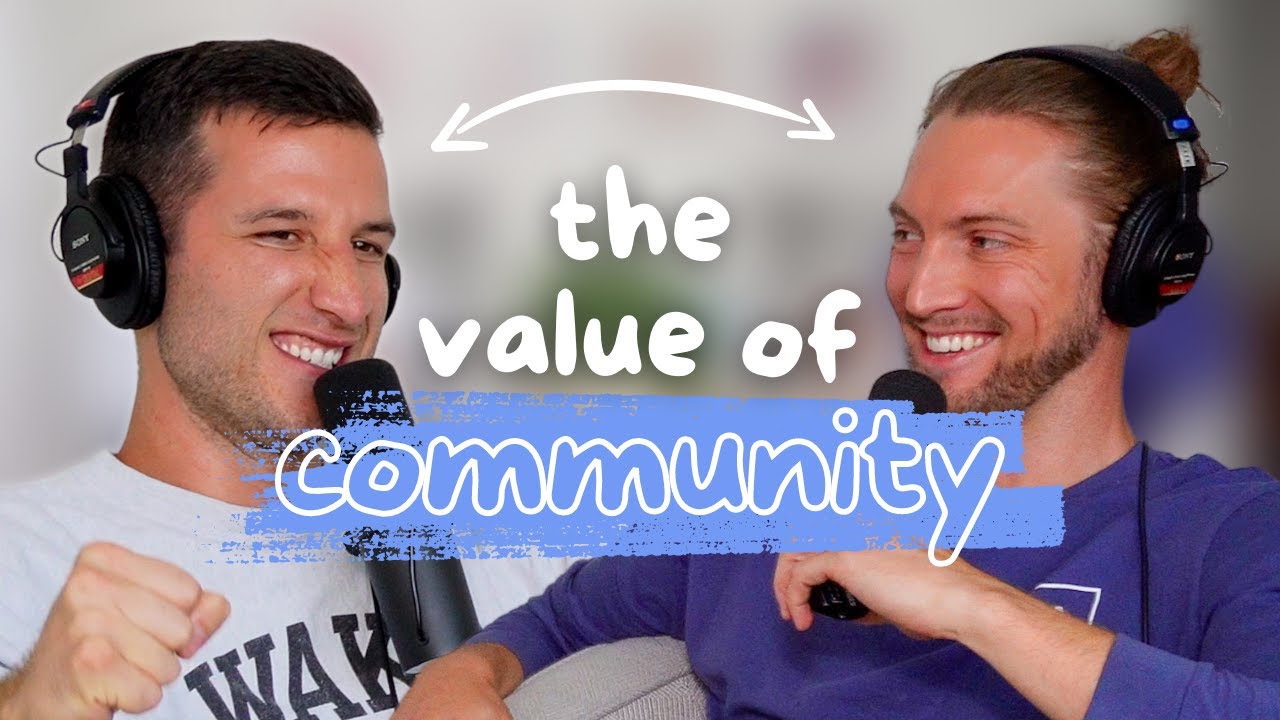







Ryan Walker is a friend and the Executive Director at Pioneer Ridge Independent Living. He is an active member of Morning Soccer Pickup (MSP) and a fan of people, cinema, and chicken pot pie.
We live in an increasingly isolated world and Ryan is a great example of someone who is bucking that trend. With an analytical approach, he reverse engineered what he needed in his life and the answer was community. He showcases curiosity and intrigue with the people around him (which is one of my favorite traits that humans have).
Community matters, and it has leveled up his life just like so many others'. This was a super fun episode. We laughed, theorized, and even came up with some pretty good conclusions regarding AI's impact on human interaction.
In this episode we talk about:
- the power of self-deprecating humor
- why you should use the triple filter test
- one indicator for a happy relationship
- what to do when you feel burdened by curiosity
- the moment Ryan decided to find community
- the power of critical thinking
- what we would do if we met Messi
- how to respond to apathy from others
- AI's impact on building relationships
- where we see technology impacting our social world in 10 years.
Thanks for listening. You rock more than granite or limestone!
Below is a blurb that I had ChatGPT write. It contains a ton of keywords, so you can skip it! - it's just hanging out for the SEO machines:
The Talk to People Podcast is a resource for personal development and building meaningful relationships. In a world grappling with the loneliness epidemic and friendship recession, we are here to guide you on a transformative journey towards overcoming isolation and cultivating a thriving social circle. With different guests, we explore the art of building relationships and mastering communication skills, providing you with actionable tips to become a better communicator. Through insightful conversations and fun solo episodes, we uncover the secrets to making friends and overcoming loneliness. Listen to feel better approaching conversations with confidence, even with strangers. Discover the power of asking better questions and gain valuable insights into how to navigate social interactions with ease. Through our storytelling episodes, we invite you to share your experiences and connect with our community. Together, we aim to overcome social isolation and create a supportive network of individuals seeking genuine connections. Tune in to "Talk to People" and embark on a journey of connection & community-building.
An easy way to send me a message? Click the link here.
Have you enjoyed the podcast? If so, follow it, rate it, and share it with three people:
- Follow on Apple Podcasts
- Follow on Spotify
- Follow on Instagram
- Subscribe on YouTube
If you want to share feedback, have a great idea, or have a question then email me: talktopeoplepodcast@gmail.com
Produced by Capture Connection Studios: captureconnectionstudios.com
Ryan: There was times where I'm sitting here going, why? Why am I so miserable? Because I know I'm personable, I know that I'm social, but I remember going, this just isn't aligning. I can't figure out why I'miserable what's broken. And there was a time where I'm like, you know what, I'm gonna sit down. I'm gonna start writing things like to get this, how do I acquire that? Okay, how do I acquire that? How do I acquire that? I just kept going back and back and back for breaking it down and down. And there was two times where I did that separately, and at the end, it was community. Wow, that word.
Chris: Welcome to the Talk to People podcast. My name is Chris Miller, and each week I get to sit in this house at some random place, be it the dining room studio or the living room studio, and I get to talk to a new person about how to improve your life with relationships, conversations and community. The world is becoming an increasingly isolated and lonely place, and it's not your fault. There's technology that encourages us to stay inside, work from home, increased mobility, and what it results in is less social interactions, less time spent together, and more time spent alone. From recent research, we know that relationships is the number one indicator for a happy life. We also know that if you are socially connected with others, you are less likely to develop heart disease, to develop stress, to develop depression, to develop anxiety, and the list goes on. So what we aim to do with the show is get different guests on to help you improve your social connectedness and ultimately become a socially fit person. This week, I had the privilege of talking with Ryan Walker. He's the executive director at Pioneer Ridge Independent Living, a local organization that he gets to lead. We discuss what it's like to be lonely, and Ryan talks about a moment where he was very lonely and what it took him to go from being someone who was very lonely to someone who felt socially connected.
Ryan: Whenever it goes away, whenever I change, I go somewhere else. It just falls apart because it could reality of it and, uh, not getting down about that, because life is always changing, and ultimately almost everything in my life is up to me. When it's gone, what do I do? Only find something else, go through the whole process all over again. And that I, uh, need to be okay with that if I don't want to lose connection.
Chris: The thought is that you are officially live. Welcome to the living room studio. You made it.
Ryan: So we have I'm famous. I'm leaving now.
Chris: Yeah, you're like to your tens and tens of viewers. There's this really popular podcast blowing up right now. It's Bobby Altoff. Have you heard of her?
Ryan: Uh, no.
Chris: So she has this podcast called The Very Good Podcast, and she's been doing it for a few months. There's this viral video going around of her. She recorded a podcast with Drake, and they're in, like, a California big. Yeah, they're in a California king bed, and they're laying down. She's on one side, he's on the other, and she's got this dry humor that's hilarious. But in her podcast description, she says, I am an expert at interviewing people, pulling from six weeks of experience. I am so happy to have 90 followers on social media. And my husband says, I'm one of the top podcasters. So it's all self deprecating humor. And it's really encouraging to me because she's made it to the top by making fun of herself and having fun. And you don't have to be like this warrior.
Ryan: I was just having a conversation about self deprecation as a humor, as a coping, uh, mechanism in some way, shape, or form. And I think self deprecation is awesome. I do it myself. But there is a fine line to toe with it, depending on how you're utilizing it. Uh, because I think that it is so self deprecating humor is a good way of bringing yourself down to other people's levels. Comforting other people whilst comforting yourself. It just can be manipulated and utilized in so many different ways. However, depending on how you truly feel about yourself, it's a very, um, incognito way of speaking, how you truly feel about yourself. Just like any craft, you got to fine tune it, and you just got to be honest with yourself as to why you're saying it.
Chris: Like negative self talk could bleed through.
Ryan: Absolutely. Uh, but I was just having a conversation about that, because that's one thing where I use it a lot, too, but when I'm doing it, I also, depending on what I say, sit there and go, how much did I mean that?
Speaker C: Yeah.
Ryan: Do I really believe, uh, that? Do I really believe that? Or if I did mean that, is that okay? And if it's not okay, what do I do about it? And then, of course, I'd probably just spiral out of control in my brain. And then people go, hello.
Chris: Yeah, are you there?
Speaker C: Yeah.
Chris: Imagine the person who's, like, doing what he thinks is self deprecating humor, but really, everything's true.
Ryan: Uh huh.
Speaker C: Yeah.
Ryan: I feel like this is an SNL skit to a degree.
Chris: Ah, I'm so late all the time. Uh, and everybody's like, you are.
Ryan: You really are.
Chris: Yeah. So that's the same thing with sarcasm, is sarcasm can be really pernicious and bitey, but then the people who do it well, like Ryan Reynolds, um, they're on a different world. Wizard. Yeah, a wizard. Because I was learning. Humor is one of the best signs of intelligence. Mhm getting people to laugh and then knowing how to manipulate the social fabric in a way that makes people chuckle. There's a lot of work there with the comics and the people who are.
Ryan: Super hilarious I mean, you really got to know what you're talking about to hit home on a really good joke. Uh, not to jump into something heavy, but free speech the last bastion of it being comedy. And I think it's pretty well understood by a lot of people that when comedy is no longer okay, that's when we're genuinely screwed, uh, because comedy is there to address a real situation. Man, comedy is so great how it allows you to talk about really tough things and make fun of yourself at the same time, but also just figure out a solution at the expense of I mean, it's okay to do things at the expense of others. Sometimes sounds like it doesn't sound good when you say it, but as long as you operate yeah, but you get to throw yourself in with them. And that's usually where the punchline is in a lot of jokes. It's like you're having fun at the expense of others. And the punchline is I'm the others too.
Chris: Oh, right.
Ryan: You know what I'm saying? Yeah. So I don't know, maybe that was confusing for people, but well, I know what I mean and it's okay.
Chris: One of the quotes that I heard, though, was and this is Peterson said, the Jester is the canary in the coal mine. Ah.
Speaker C: Yeah.
Chris: When the King's court decides to get rid of the Jester mhm, that is the foreshadowing.
Speaker C: Yeah.
Ryan: That's when everything's going out the window.
Speaker C: Right.
Chris: Yeah. Because the Jester is the symbol of having that freedom to explore and express.
Ryan: So this Bobby lady, she has honed her craft of self deprecation. So well, she's now laying in bed with Drake.
Chris: Laying in bed with Drake and then being dry. So the comments are like, I can't believe you made it all the way to get Drake on your podcast. And then you're this know, you're not fangirling, you're not expressing this big admiration, even though he's obviously an, uh, expert at his craft and a big icon.
Ryan: And that's probably a reflection of her comfort and confidence.
Speaker C: Right? Probably. Yeah.
Chris: Uh, and it's really cool to see people be themselves whenever they're in situations where it'd be easy to not be yourself.
Ryan: Do you ever think, I have only met a handful of famous people? One, but, uh, I often think I mean, we see people messy, we'll just go straight to the top. There Michael Jackson, people fainting at the concerts, people just losing their minds.
Speaker C: Right.
Ryan: And then I sit here and always go, what would you know?
Speaker C: Right.
Ryan: I know what I want me to do in that situation.
Chris: What would you want to do?
Ryan: I would like to think I just treat them like a normal person. Because in my mind, I know that that's all they really want. And if I can be the one that's helping them attain that in the midst of the rest of the craziness that is their life and their fame, then I almost feel obligated to do that for them.
Speaker C: M.
Ryan: Mhm. There is one guy who kind of affiliate or he's been around just due to where I work and who he's related to. And I've seen him a handful of times in the building and I just shook his hand and we talked for like 15 minutes about his dogs. Mhm, right. It's one of those moments where you know they're normal people, but until you have that conversation, like, oh, they're like they really are just normal people. But anyways, do you ever wonder how you would handle something like that? I do. What do you think you would do if you ran into Messi? It's a great question.
Chris: Yeah, I would probably be surprised by how tall he is or how not tall.
Ryan: He is tall.
Speaker C: Right.
Chris: His stature. Because I know he's short, but I think I'd be surprised by how short he actually is.
Speaker C: Mhm.
Chris: And then I would love to get a picture with him. Yeah, right.
Ryan: I don't know that that puts you in the crazy category though, right?
Chris: I would love to get a pick, but one of the things I've been thinking about with these high profile individuals is the pictures I want to get with them are candids. I don't want it to make it look like I asked to get a picture. Like, if I can get a picture of Messi and I and I'm making him laugh.
Speaker C: Yeah.
Ryan: Like you're having a conversation.
Chris: Yes. Capturing me connecting with others is kind of something I'm really into. So if I could get that but it doesn't seem like it's staged with.
Ryan: Messi is pulling off in your direction.
Chris: And he's know and his bodyguards have their arm. Yeah. So I want to avoid that. So due to that, it's kind of like you can't really stage that. And Messi, I would probably try and smile and say hey, and be like, super excited to see you in Miami.
Speaker C: Mhm.
Chris: You know, like yeah, that's what I would do right now. Probably more than likely that's not going to be the case because everybody's going to want to talk to him and they're going to be less worried about making a fool of themselves.
Speaker C: Mhm.
Chris: And they're not going to have those boundaries, so they're going to try and grab his jersey and it's going to be a weird thing.
Ryan: And so the same people don't even get a yeah, yeah.
Chris: It's the squeaky. The last week, though, I was part of a podcast with one of the, uh, women who just won a, uh.
Ryan: Gordon Ramsay TV show.
Chris: So I'm sitting there and I'm able to listen to her and she works with Gordon Ramsey all the time. She just came into Kansas for a couple of days and there was part of me was like, OOH, I really want to get a picture. Because for me it was like, I want to make sure I put it up on social media because I want people to see me as a producer because that'll help me get other clients for production. So like thinking about it in the business sense, but I do wonder how much of that also is connected to my ego or sense of self worth.
Ryan: I was about to ask, is there any part of that operation that bothers you or feels like it's changing you? Or are you nervous at all about changing as a person as you start to evolve into what you need to be for what you are desiring to work? Yeah, I think that made sense.
Chris: No? Maybe as the podcast grows or as I adjust to someone who I think I need to be for the podcast to grow, do I get nervous about how I change or how I'm changing? M, and I don't initially like when I hear that question, my initial response is no. But there are things that I have recognized in my life that do make me a bit nervous. For instance, social media. Social media and analytics. The way that those two things are operating with my brain, I want to be able to see that the podcast is improving. So if you go and you look at my dashboard, you'll see all my analytics and you can see in April how many times the podcast listened to May, June, July, and whenever you have a month that goes down, m, it's.
Ryan: Really like a punch gosh right, what's happening? Is this the end?
Chris: Is this the end? What am I doing wrong? Am I wasting my time? And there are so many answers to those questions that could bring me back, shake me back, and be like, hey, come on bro. Uh, but there are a lot of moments where, um, I get stuck in that and I don't like that. I hate seeing that. So I have to make boundaries for myself. And one of those boundaries that I've been making lately is I don't know if I'm going to have much of a personal social media presence. I think it's going to be more podcast related. It's like right now I have an Instagram account that's talk to Chris Miller and then I have a talk to people podcast. There is a big argument to have a personal social media presence because I would love to consult, help organizations or individuals reach whatever they want to reach. And if my expertise is going to help them get there, I'd love to offer that service. I'd love to do speaking gigs like Give Keynotes or go show up to organizations and help them by delivering a message. And then I'd also want to be a podcast guest or want to be a part of different content that's being created. And if you have a large, uh, social media following or if you have an individual brand, it's easier for people to reach you rather than your podcast is real big, then they have to figure out, well, who's this host again? And all of that.
Ryan: Do you have anything in the works cooking in the Hopper, uh, regarding any of those? Well, just like branding yourself, I do.
Chris: It's Talktocrismiller.com. And it's a whole website that'll have or that has currently places to access the podcast, the newsletter that I write, all of the social media that I have. And then there's a button there where you hit it and it automatically composes an email. And then I'll have a little blurb on there and I wrote it today, and the blurb says, I've realized that humans are or I realize it's human nature. Or I realized, oh boy, I wrote it today. I wrote it today. And it says, I realize that it's human nature. Or I realize that humans are social beings. And that loneliness is a symptom of a lack of connection. And then I start to talk about like, graduate of Mike Forrest. But that's the headline because to me, we need to put in front of loneliness. Everybody's like, loneliness, loneliness, loneliness. It's like, yeah, loneliness isn't good. But what we need to focus more M, on is why does loneliness exist? And the reason why is because it's a symptom. Because people don't have meaningful connection in their life. So then we need to put more M power on that.
Ryan: There was a time in my life, I mean, there still are times, but there's a really low point where I was very alone, very lonely mhm. And I've always felt like I was a pretty social person. I feel like I'm pretty personable. I love talking to people. I probably love to hear my voice a little bit, things like that. And there was times where I'm sitting here going, why am I so miserable? What was wrong with me? What's wrong with me? Because I know I'm personable. I know that I'm social. I'm not a crazy extrovert by any means. Uh, I was never a party person, anything like that. But I remember going, this just isn't aligning. I can't figure out why I'miserable what's broken. And there was a time where I'm like, you know what, I'm going to sit down, I'm going to start writing things like to get this, how do I acquire that? Okay, how do I acquire that? How do I acquire that? I just kept going back and back and back, or breaking it down and down. And there was two times where I did that separately and at the end it was community. Wow, that word, community.
Speaker C: Yeah.
Ryan: And I think the reason I did it a second time is because I didn't like that. That was the answer.
Chris: You're like, I must have done it wrong.
Speaker C: Yeah.
Ryan: I must have done it right. I didn't carry the one. Uh, but I think the reason I didn't like that answer is because it's uncomfortable. And you've talked about things, you've touched on these, but you got to put yourself out there. That's uncomfortable. I love staying home at the same time.
Chris: You're a homebody.
Ryan: I think I'm both. I think it just depends. I think I'm 50 50.
Chris: But you're amphibious. You do.
Speaker C: Both.
Ryan: I want to be good at everything. I want to have said I've done everything. But like I said, there were several times this was years ago, and I'm sitting here going, Community, dang it. Okay, yeah, let's do that again. Community. Okay, fine. Let's do it again. Let's do it. But sometimes also, life takes over. And it's not so simple as to just jump into things, whether it's your job, personal life, whatnot, and that's okay. So I kind of was just biting my time. Sure.
Chris: Why were you lonely, though?
Ryan: There just wasn't any connection. There was no connection?
Speaker C: Yeah.
Ryan: With just people.
Chris: Um why.
Ryan: Not? I wasn't exposing myself.
Chris: What were you doing with your time rather than connecting?
Ryan: Uh, let's see. There were times where I was just watching movies. I love cinema. I would just watch movies every night. That's what I did. I watched movies. Um, I grew up with a close group of friends, but they all liked to do things. That the big things. Social, gatherings, parties. I'm not a partier. So when it came to those just hanging out, big groups of people, I never really got to experience it because I would remove myself from it because I had issues with what was taking place. And so I think maybe there was some element that conditioned me to react and behave certain ways also. But really, I think, man, what was I doing with my time? It's kind of funny, because now while I'm talking in the back of my head, I'm going, what were you doing with your time?
Chris: Uh, oftentimes we think about connection. It is something that we literally have to like, for instance, you show up to soccer, right? Morning, M. Soccer.
Ryan: That's been a godsend, by the way.
Chris: Praise God. Shout out to whoever made that. But you invest your time in doing that. And whenever I hear people say that they don't have connection, one of the biggest things I think of is reach out, show up, mhm, replace and recover. And replace m means go in and look at your agenda or your schedule, and you need to replace maybe one of those movie nights with showing up to the same place every week and potentially putting yourself in active interaction. You know what I mean?
Ryan: Yeah, definitely. I mean, I've had no issue with that, with wanting to do that. With soccer, the problem has obviously been the time of day, early in the morning. I'm not a morning person, so that's been the obstacle. But, uh, whenever it goes away, whenever I change, I go somewhere else. It just falls apart because it could. That's the reality of it. Uh uh, enough people stop going, and then it's like, all right, what's next? What's next? And not getting down about that. Because life is always changing and ultimately almost everything in my life is up to me. Mhm when it's gone, what do I do? Only find something else. And then I just have to go through the whole process all over again and I need to be okay with that if I don't want to lose connection and be lonely again. But yeah, uh, community super important. It's, uh, been awesome maturing too. Uh, I love analyzing things and figuring out I enjoy calling myself out on my own BS. I really do. When I'm having conversations with.
Speaker C: People, I.
Ryan: Don'T know how good I would be at calling myself on my own BS if I was just talking to me. Mhm but when I'm talking to people, I feel more accountable for what I'm thinking and saying.
Chris: Why do you think you like calling yourself out in your own Vs?
Ryan: I think because I think I have a sense of I'm growing.
Chris: It's like self improvement.
Ryan: Yeah, it's self improvement. And I do like the idea of being I don't love being flawed, but I like being flawed because we're all flawed. And so if I get to admit whether it be through self deprecation, but if I'm admitting my flaws to people, I know that it's also helping them see that it's okay to admit their flaws. I'll say something and I love going, yeah, I take that back. I don't think that's true. Mhm and uh, there's something about catching yourself, being honest with.
Speaker C: Yourself.
Ryan: I feel like I have this duty to do it for not just myself, but for the world around me.
Speaker C: Yeah.
Ryan: And I think that's what a lot of the chaos in the world, a lot of that derives out of that or the lack of it.
Chris: Mhm, that's good.
Ryan: That's real too.
Chris: Yeah, we need to be real.
Ryan: Yeah. So I try to be very real with.
Speaker C: Myself.
Ryan: Um, I probably have really high expectations for others and that's where me as an individual, I have to cut back and say, hey, you can be hard on yourself, but you need to chill out with others.
Chris: You're pretty self critical, you think?
Speaker C: Yeah.
Ryan: Not in a down sort of way, just in standards.
Speaker C: Yeah.
Chris: Do you ever have to turn the self analytical switch.
Speaker C: Off? Yes.
Ryan: And I think that's why I watch movies.
Speaker C: Yeah.
Ryan: I don't know that I can do it without something else doing it for me.
Speaker C: Yeah.
Ryan: So I used to analysis paralysis, that's for sure. Something that I have suffered from probably will some time in the future too. My brain is always going, Go, go. So, uh, I definitely have to watch movies or music will do it for me. Soccer, engaging with that's. Another thing that's good about community too, is it shuts your brain off sometimes or it shuts you up. Mhm so letting other people occupy that space in your head is very healthy in a lot of ways.
Chris: It gets you out of yourself.
Speaker C: Yeah.
Ryan: I don't know how people hermits or just people who live out in Alaska doing nothing. It sounds very and depending on how I'm feeling, I'm m like, uh, loneliness, being away from people. Heck yeah. And then my brain goes, wait, how long have they been doing it? Yeah. No, they know there's screws loose up there for sure. I think so. But it's good that we got places for those people to go, guess. Mhm you know, I've never really thought of it that way.
Speaker C: That's true.
Ryan: I'm glad we have Alaska so that.
Chris: People can go there if they want that.
Speaker C: Yeah.
Ryan: And be away from everyone.
Chris: True.
Speaker C: Solitude. Yeah.
Ryan: Think about how miserable they'd be if they're here, if that's how they operate.
Chris: It's fascinating, though, because you can be around a ton of people and still feel super lonely.
Ryan: Mhm yeah. I mean, you talk about big cities mhm. Where people are just stacked on top of each other.
Chris: Whenever I was traveling a lot, it was so thought provoking to recognize I was in a city that I'd never been in before. Shopping in a grocery store. I don't know anybody here. I don't know where anything is. I get in a rental car that I've never driven before. I check into a hotel that I've never slept at before. And that night I have people 1215ft, however far away, sleeping next to me. In the room next to me. I have people above me, I have people below me, yet I feel completely lonely.
Speaker C: Yeah.
Ryan: Uh, there's an image I saw one time. I can't remember who it was, but it was a row of houses with a street. It was nighttime. And cookie cutter houses. And you just saw a glow from all the living rooms. Whoa. And everyone's just in their box. That's another thing that's kind of scary about the times, is you have like, Fahrenheit 411, fahrenheit 451.
Chris: Is that what it is? Something like that.
Ryan: Ray Bradbury is the author.
Speaker C: Right.
Ryan: I really enjoy that book, when Paper Burns.
Speaker C: Yeah.
Ryan: Uh, you got Brave New World, 1984. You could just list off all of those. I don't want to get all controversial or conspiracy, but I mean, that stuff's happening. It is.
Chris: What do you think about the Apple provision?
Ryan: Do you think that's part of know? I think I heard you mention that not too long ago, and I was like, I don't know what he's talking.
Chris: So still the same.
Ryan: I don't know what you're talking about.
Chris: Yeah, it's the new thing that Apple's working on.
Ryan: So they postpone is this like an Oculus thing or like an Oculus thing?
Chris: They call it spatial computing. You can look through it and see a screen and it goes around to where it hits your so you can go and with your eyes select things, scroll, do all that stuff. But then there's a feature to where you can see through it, to the actual outside being around you. So it's this synthesis of and they call that like augmented reality, right?
Speaker C: Mhm.
Chris: Like synthesizing what's really happening and what's happening in the projection and the commercial that Apple put up. It's like a guy and he's in the living room and he's getting work done and then he switches to a movie and then he's playing games and he doesn't have to move at all. He's just chilling.
Speaker C: Yeah.
Chris: And it's funny because on this podcast I talk a lot about how we are moving more towards a frictionless society. Sedentary sedentary. And the points that I make are like, we don't even have to leave our house to get work done. We can move from our bed to the desk, and then we move from our desk to the bathroom. Now with the Apple vision pro, you don't even have to move from your bed to the desk. You can just watch the movie, turn the work on.
Ryan: Man, that sounds miserable to me.
Chris: It sounds tough, but I, uh, wonder what it'll be like with it on. Are you interested in trying it?
Ryan: I'm one of those people that's more skeptical and nervous about all of that AI, all the chat GBT stuff. I try to stay away from it. And some of that's more just personal beliefs. I, um, know what I don't want to turn into, so I don't want to entertain it. I'm nervous about doing too little once. I like being active, I like moving around. Uh, I also maybe think when everything blows up and everyone's been doing that for the last 20 years, I want to be the one that's still fit.
Chris: Who knows how to cook a meal.
Ryan: Hey, I just want to be that guy that can outrun everybody else, that can provide for myself. Mhm? And I think that I'm not a doomsdayer. I don't have any bunkers with canned goods in it or anything. Yeah, I don't have any of that going on. But, um, I also think there's something about growing and persevering and going through the physical trials of sports, lifting weights, um, just manual labor, whether you're doing landscaping, uh, I always talk about so there's, uh, the pavilion. They have the indoor track. And on the wall it says Virgil said it, but it says the greatest wealth is health. And I hate running. It's weird. I can play soccer and run all day long, but if I'm just running, it's the worst time of my life. I don't know what that's about.
Chris: It's like movies for you. It distracts you chasing the ball.
Speaker C: Yeah.
Ryan: And I don't know, maybe my brain's not engaged enough when I'm just running on a sidewalk. I don't know. But I feel like my body breaks easier when I'm running on a sidewalk too. But I remember I used to run around that track when it was winter and every time. I'd come around the corner dying, I look up, greatest wealth is health. Greatest wealth is health. But, uh, one, uh, thing that I worked out, maybe this was to help me get through it. When I was training for a five K one time, I kept thinking about that and the greatest wealth is health. And I was like, what is health? And I broke it down to there's spiritual health, physical, uh, health, and mental health. And I was like, running, uh, sucks because it makes you tap into all three of those. I go physically, uh, it sucks for me mentally, um, I'm just trying to keep doing it. And three, I'm praying the whole time, uh, God makes this not suck anymore. So what is health? To me? It's not healthy. Laying in bed with this piece of plastic on your face, um, eating too much junk food. I don't know. Yeah, totally feel like I'm just preaching.
Chris: No, you don't want to. Like you said, I feel this way about talking to people. So I feel like we will get to a point to where we interact with these language models more than we actually interact with humans. And then we begin to forget how to interact with other humans. That's one of my kind of, uh, Sci-Fi hunches. And I do think about that though, because OpenAI, the firm who founded Chat GPT, they are dumping a ton of money into their research and development. And a big part of that is figuring out how humans connect to one another. Because if they can get that essence and infuse it in whatever language program they create, then we're going to be hooked. Mhm right. This thing connects with us really well. And man, I love talking to Ryan because he laughs at all my jokes. Well, he's not available tonight, but Chad GPT tells me this one will connect me.
Ryan: It laughs too. It doesn't sound as great as when Ryan does it, right?
Chris: But it'll laugh whenever I want someone to laugh. And it will make me feel funny, and I identify as funny. So that'll reinforce my identity and feel really so like, if OpenAI, I don't know if you can figure out this is the essence with human connection. Like, this is what it is. Maybe it's like emotion. Right. Yet I know that there's a ton of money going into studying human communication and what makes people tick. And the more and more that is infused with our technology, then the more opportunities we're going to have to communicate with it. And it's going to replace us talking to people. So we need to make sure that we don't forget how to talk to people. Which seems funny me saying that right now.
Speaker C: Yeah.
Chris: But I do think that that is.
Ryan: But five years goes by, i, um, think that there's a lot of good that can come out of it. I don't know definitively what it is, but I don't want to neglect that outcome or refuse to accept it. I'm sure there'll be a lot of good things. Um, but I don't see the pros outweighing the cons with it, with AI at all.
Speaker C: At all.
Ryan: And so you're talking about the essence. I mean, I'm going, yeah, the soul, right?
Speaker C: Yeah.
Ryan: What is a soul? Can AI acquire it? That's all going to be dependent on probably your personal beliefs more than anything. But I was listening to someone talking about AI not too long ago and they were talking about forgiveness. They were talking about it in relation to humans ability to forgive and whether or not it would be able to do it or not. I remember the other person said something along, well, yeah, you can basically instruct it to forgive. Mhm, I go, but if you're instructing it to forgive, is it forgiving? Or is it just doing what it's told? It's following order.
Speaker C: Yeah.
Ryan: But then again, I'm an idiot. I don't know a whole lot about.
Chris: So and it makes me wonder, it begs the question then, can it be.
Speaker C: Offended?
Ryan: If it can? That's not good. Uh, there's a funny I do this thing with my I don't ever use Siri on my phone and that's more so just because I've seen it go Awry for so many people. There's hilarious clips out there of horrifying things happen to people. I'm glad it's happening to them because it's funny for me to watch. But man, if it were happening to me, uh, I'd stop going to community things. But uh, every time I guess I do talk to my phone, I'll say like, hey, what's the capital? Or what's this? Times this? Or things like that. But I used to use Siri and I used to always say, thank you, siri. And I'd always joke, I'm like, I'm saying, thank you, siri. That way when they take over, she's like, oh he's cool, don't kill him. I say that half as a joke. And then, you know, terminate Skynet.
Speaker C: Who knows?
Ryan: I don't know. And maybe I'm just having fun with it. More than anything.
Chris: Your social credit score goes up a little bit with the AI.
Ryan: Uh, yeah. You say the social credit score. And that reminds me, I'm sure you've seen Black Mirror and all their a lot of their stuff. If you haven't, you got to watch well, make sure you're in a healthy place, right? Yeah. Because if you're not, then it's only going to make it worse.
Chris: It's very much like a psychological thriller in a sense.
Ryan: Yeah, it really is. Which is fun.
Chris: Uh, but in Black Mirror there's those moments with the social credit score all.
Ryan: Goes down to the score. Man, that stuff is so heavy when you're watching it. Um, and to a degree that's already happening with the social credit scores. I mean, that's where all the debate was with what was it YouTube? Took the likes was it YouTube?
Speaker C: Dislikes.
Ryan: The dislikes. Maybe it was yeah. I, uh, think there was a time when Instagram was planning on removing the like, portion on man.
Speaker C: Yeah.
Chris: And so what would I get my value from people? Right.
Speaker C: Yeah.
Chris: That's so hard.
Speaker C: Yeah. I don't know.
Ryan: I just know that's been a topic of discussion for a while. And then, of course, now you have all these CEOs and famous people that were asking for a halt on AI. Research and engineering, uh, the pursuit of it, which I find very bizarre, because I think they said, let's hold off on for six months. I'm like, six months. Yeah. I'm like that's.
Speaker C: Nothing.
Chris: It's like clear heads. Six months.
Ryan: But of course, any halt is not really a good idea because there's somebody somewhere in the world that's not going to abide by that rule. And there's always geopolitics and whatnot. I always wonder how much we really know about what's going on across the sea in a different country, in a lab.
Chris: Don't or we don't.
Ryan: Yeah, we don't.
Chris: We definitely don't. But there may be people who do. I was thinking as far as you talking to Siri and you avoiding talking.
Ryan: To should now that I just real quick, I should probably make sure she knows I still care about her. But go on. Because I need to remember that later. She is listening.
Chris: Yeah. You may get ads that say, do you struggle with how you talk to Siri? That may be my new communication angle. I get ready to talk to people, talk to AI.
Speaker C: Mhm.
Chris: And it's all about how you can talk to Siri better. And we have that now with OpenAI, it functions off of prompts. So you put a prompt in there which will then determine what it spits out. And there's, uh, a lot of work going into how to make the best prompt for the stable diffusion, which is you type in a prompt, and then it creates an image there's, like, people who are artists with that because they're so good at typing in the prompts that it puts out something that's like, whoa.
Ryan: Well, you sent me those pictures.
Chris: Were those good pictures of me?
Ryan: Heck yeah, man.
Speaker C: Yeah.
Ryan: How much of it was you, though? Right.
Speaker C: Yeah.
Chris: And he's referring to, uh, on TikTok, this trend of, like, I got this perfect LinkedIn photo from these selfies and it's funny because whenever I did it's, that word of, uh, like, it may be able to pass, but there's something.
Ryan: That doesn't look think you're talking about the uncanny valley.
Chris: The uncanny valley.
Ryan: So, like in CGI?
Speaker C: Yes.
Ryan: They refer to that as the uncanny valley.
Chris: Yes.
Ryan: Because our brains are so good at, uh, picking up the tiniest of details as far as, like, oh, uh, that's OD, that the head shifted that way. That's not how I'm used to seeing for the last 20 years or whatever it is.
Speaker C: Right.
Ryan: The brain is scary awesome. It is scary awesome.
Speaker C: Yeah.
Chris: So the uncanny valley, looking at the AI, it'd be like, you have a bigger nose. So we're going to extend your jawline just a little bit to make your nose a bit more proportionate because it's bigger than average. And then there was one where it made my forearm gigantic and it looked like I had this.
Ryan: Vein. When you sent those to me, I was sitting there going, wait, is that his actual body? And it wasn't, uh, it was just your face. Yeah, it was just your face. Because I was like, I mean, he's in shape.
Chris: Uh, and the face was fake too.
Speaker C: Yeah.
Ryan: I mean, it almost looked like it was you younger, right. And more attractive.
Chris: That's what people do, though, is they want to use it.
Ryan: You take the picture to your plastic surgeon, hey, could you do this?
Chris: I want it just like this. Do this, but better.
Speaker C: Mhm.
Chris: And then I go back to AI and said, hey, this human did better than you. And then I get put and then it breaks. Yeah, and then it breaks. But you said Siri will sometimes do stuff that people don't want. There's these funny TikToks where someone is like, hopping in the shower and their hands are they turn on the shower and some water gets on their hands and their hands are wet and they don't want to touch their phone because it goes crazy. And they're like, hey, siri, could you just tell, uh, my friend James, uh, that I'll be there in 15 minutes? And it'll be like, texting your boo now. And then it's like, I'm going to leave you.
Speaker C: Send.
Ryan: And it goes like your ex. And it's like, how have you and.
Chris: They'Re no, no, but their hands are.
Ryan: Wet, so they're.
Chris: Trying so that's what made me think of that.
Speaker C: Yeah.
Ryan: See, I like to remove those things as much as possible from happening. So, uh, yeah, I don't know. It just all kind of terrifies me. Um, I don't know that Arnold will turn into a good guy in the know. If the Terminator reference for anybody cinema.
Chris: Is your favorite, could you share with me three movies that if someone's listening to this, you think if they watched these three movies, it would improve the quality of their life?
Ryan: Oh, okay. Uh, Terminator.
Speaker C: Yeah.
Ryan: Uh, no, uh, the first one that comes to mind is Secret. I think it's the secret life of Walter Middy with Ben Stiller.
Chris: Carell.
Ryan: No, it's got Ben Stiller.
Speaker C: Yeah.
Ryan: Um Kristen wiggs in it, actually. But it's about this business going under and they're firing everybody. And this guy's been with this company forever and he goes on a final mission to complete his final task. So he can say that he did his job, basically. But it's about a little bit about the dehumanization of people almost by the corporate world. Um, but he goes off on this grand adventure and it just leaves you feeling like, man, there's a life to live out there.
Speaker C: Again.
Ryan: That kind of ties into the synthetic world that we're becoming more and more a part of. But there's mountains out there. There's animals out there. There's o, Sean Penn's in it too. Uh, he's kind of crazy, but he's a great actor. But yeah, it just left me wondering or feeling, dang, I need to live life more. And it's not that hard. It's just making those decisions that are contrary to what we're used to doing because we all get into the grind, right second M oh gosh, I don't know what other ones there would be off the top of my head.
Chris: Secret, uh, Life of Walter Midi is a great one though.
Ryan: Yeah, that's a pretty big go to for me when talking to people about, hey, you got to check this movie, know, and some people aren't going to like it and that's okay. But objectively, it's the best movie.
Speaker C: No?
Chris: Uh, how do you feel about The Gladiator?
Ryan: Like Russell Crowe.
Speaker C: Fantastic.
Ryan: Mhm um, that's kind of funny jumping over to that because yeah, you should go check that one out. It'll make you feel great about life. But, uh, I love a hero story. Uh, I like a realistic hero story. I kind of struggle with Marvel movies. It gets a little too wacky and, um, out there. But I love stories about persevering and standing up for what's right and sacrificing the things you don't want to sacrifice to make it happen. Okay, so anime, I'll, uh, be a little nerd for a moment, but anime is really good at giving you a hero to root for. And I think anime is almost better at expressing human emotions than humans are.
Chris: They're better at doing nuance.
Ryan: Yeah, there's so much that they can do with it.
Chris: I heard that since it's Eastern, like typically Japanese, right?
Speaker C: Yeah.
Chris: That it doesn't really subscribe to the Western storytelling and more nuanced.
Ryan: I mean, for anybody that grew up watching American cartoons. Like for me, I remember Courage, the cowardly dog. Dexter's laboratory.
Chris: Um, dragon tails.
Ryan: I wasn't going to admit that one. Uh, but I will admit Powerpuff Girls was awesome. But just cartoons, it's just so different. The mean, uh, Japanese culture is so drastically different as far as how they just perceive the world too. I'm not going to go a whole lot into that because I don't know a whole lot. But I do know that, um yeah, sorry. Those movies I don't know, uh, the Secret Life of Walter Midi is one that's really good. I mean, do you have any that I don't know? That you're a huge movie guy?
Chris: That is one of the differences between my wife and I is she grew up watching a ton of movies. M did you with your family? Would you all have movies?
Ryan: Really? I'm kind of one of those people where I struggle watching movies with people more than, uh because I don't feel like they get appreciated by the people I'm watching them with or they are a distraction from this experience for me.
Chris: Did you watch the movie her?
Ryan: I haven't seen that. With Joaquin Phoenix. Yeah, I think Scarlet is the voice. Um, no, I have not. That's one of the ones that I've been meaning I mean, it's kind of relevant too, in a lot of ways. Not kind of it is relevant, but, uh, I need to watch that one.
Chris: It's so fascinating because he has a stressful day at work. Nobody asks him about it. Then he goes home and he logs into the portal and Scarlett Johansson's voice goes, you seem off.
Ryan: How was work?
Chris: And it's like, boom, thank you for asking me. And it unlocks that expression and it makes this big argument about how see.
Ryan: Here'S something I was listening to somebody talk about the positions we put ourselves in. So somebody asking you how your day was. Someone asking how you're doing? Like, hey, you seem out of sorts. Is everything okay? I'm here for you, sort of thing, right? What sucks is that people who are suffering from depression, mental illness, what have you, right? They sit there and think about how nobody cares about me. Well, and, um, let's remove the mental illness part, because that's complicated. But I mean, depression is complicated too. But if someone's starting to wonder why no one asks about me, that's where I think it's important for people to practice putting themselves in difficult situations and calling themselves out on their own BS. Because what they really need to be asking themselves first and foremost, is what am I doing about it? And what I mean by that is, am I putting myself in a position to even be asked mhm by people? Because, say, I'm feeling miserable and I'm like, man, nobody asks about me. I'm like, But I'm home watching movies by myself all the time, being able to give yourself a reality check. And that kind of ties back into the community.
Speaker C: Thing.
Ryan: Uh, I think one of the most difficult things and as you're existing in the world and you see all the hurt and negative things going on in the world, is what do I do about it? How do I fix? I mean, nowadays, the thing I struggle with the most is seeing people who are asking for money and panhandling begging and this and that. I don't trust any of them. I wish I could, but what are they going to do with my money? And so a long time ago, I said to myself, I'm never really going to give money to anybody that needs help, but I will offer to acquire things for them that will be beneficial. Because if they really want it and if they really need it, they're going to say yes to that. What's an example. Well, I, uh, don't do this all the time I'm not sitting here going to say I'm an awesome person. One time I took a guy to the grocery store, I was like, hey, what do you need? Let's get you some stuff rather than cash. I'm not going to give you $50.
Chris: Mhm, but I'll get you because I.
Ryan: Don'T know who you are. I don't know what you're going to do with it. I mean, you know, my dad, he was involved, uh, with drug and alcohol rehabilitation. So I know how mhm addiction making decisions that just, you know, you're making the bad decision, yet you make it anyways. There's just so much going on around us mhm. That we're okay with ignoring and we shouldn't be.
Speaker C: Mhm.
Chris: Yeah. Increased mobility. People are moving a lot more often. M working from home less, people are socializing. And I lately have been thinking about it this way. There's a lot of things that are changing a lot faster than we're changing. So we have to be really intentional and do as much as we can. The big thing, whenever I hear about addiction and when I hear about going to jail, those are two things that remove you from your community. And no matter how hard you tried to build your community, no matter how great your network was, if you do fall into both those things, then it will remove those. Now, community largely is this holistic thing. Whenever you did your exercise and you reverse engineered what you desired and you got back to community and you mentioned those three wellnesses for when you're running the mental, spiritual, physical. My grad school had these banners up and they had like seven different types of wellnesses. They had like, the financial wellness. They had the social wellness. It was emotional, a whole bunch of different ones. So it's all holistic and collected, uh, depending on how your financial health is. If you're in financial debt, you're going to be stressed out, which is going to be hard for your physical health. So your financial health begins to operate and impact your physical health. And then if you're stressed out and your physical health isn't good, you're not going to feel up to, uh, interacting with people. So then your social health is being hurt. So as we talk about how things are looking bleak and AI, uh, and social media, it's also really good to put the spotlight on how we have a lot to do about it. It's empowering.
Speaker C: Yeah.
Ryan: It's not game over.
Chris: By any means. Not game over.
Speaker C: Right.
Chris: And it's this idea of you can level up, you can work on all these things. This podcast is about your social health. But we touch on all those other things because they're interdependent on one another.
Speaker C: Yeah.
Ryan: And I will say when it's not game over, it'll never be game over. As long as humans live, we don't quit. Yeah. One thing we had talked about in the past, or I also had heard you talk about it with somebody is going beyond, like, for example, soccer. So for me, I think I talked to you, I was like, hey, let's try to get a group of people together for, um, bonfire or something like that. But that's not the easiest thing to do. I think you were talking to that one guy is amri is that what his name? His name was and he was saying to you, sometimes people don't want to do anything more than just, I'm here to play soccer, bro. Yeah, stop talking to me. I'm here to talk with the ball in the foot. And now when they say that, okay, cool, no worries. But for me, I think one of the hardest things with community, if it's something like that, is going ahead and put how to be intentional beyond that. And I guess I'm bringing this up for us to try to figure it out a little bit.
Speaker C: Yeah.
Chris: Because we need to do.
Ryan: Better. What's next? Let's just use the soccer thing. And I think part of it is maybe worried about rejection or, uh, that's maybe something I would worry about more is like, hey, everyone, come over to the house for a bonfire and one guy shows up and it's like the guy I was maybe hoping didn't come. I'm like, oh, cool, okay, well but really there's an opportunity there totally not to make too much light of that.
Chris: But that's the funny thing, though. The people who need community the most oftentimes don't have the best social muscles. So it's incredibly awkward. Yeah. So you really have to fight because you have to work out your social muscles. And oftentimes when you put events on that, you invite a whole bunch of people, then it may be really awkward. But it's like, man, I am doing my duty to make sure their social muscles get better. So it's hard at first, but it's.
Ryan: So rewarding too, though, when you are doing that and you see them start to blossom or whatever and you're going, man, I'm so happy for them.
Speaker C: Because.
Ryan: What'S the rest of their life going to look like now unlock yeah. Compared to what it was going to be. And so I think that's something where we definitely need to and maybe I'm saying we need to do this when really it's I need to go ahead and just throw just throw something out there.
Chris: Pick a date and a time, then say, hey, bonfire at my house. Yeah, bring your favorite beer. Yu GI oh card. Yu GI oh card. We're going to burn it. Uh, bonfire at my house.
Ryan: You got to move on, bro.
Chris: Quit being a kid. Bonfire at my house. Date and time. Mhm looking forward to you all. Send it. Schedule it a week out, then the next couple of times at soccer.
Ryan: Hey, are you coming?
Chris: You coming?
Speaker C: Yeah.
Chris: Uh, talking to them in person and.
Ryan: Then seeing I would like to see you there. It'd be cool if you came, man.
Chris: I'd love to see you there.
Speaker C: Yeah.
Chris: Let's talk a little bit more about what you're talking about at the bonfire. Right? Ah, i, uh, think picking a date and a time, the hardest thing is being the social entrepreneur. So actually creating the thing because it's risky because nobody can show up. I remember whenever I did it with soccer that first day.
Speaker C: Lasl yeah.
Ryan: What was the first day like? Was I there?
Chris: Uh, you weren't there. Lawrence adult soccer sent it out and then a few people showed up, but people were messaging me and guess what? People were asking how many people typically come? Mhm, and that grinded my gears.
Ryan: I remember when that was happening.
Chris: Yeah, that, uh, grinded my gears because.
Ryan: I was watching a couple of messages get passed around like, OOH, getting spicy in here.
Chris: What it communicated to me was unless there's a certain amount of people, I'm not showing up. Mhm, and that shouldn't necessarily grind my gears because people can have preferences. Like, hey, I only want to play soccer if it's full field. Cool, that's fine.
Ryan: Have you could just be a preference?
Chris: Yeah, but I think I attached it to like, hey, I'm working as hard as I can and I'm going to show up regardless of how many people are there. So if you're a fair weather fan, uh, if you're only showing up whenever we get to play full field, don't even come at all. I shouldn't be like that, but there's.
Ryan: Zero guarantee about it. And I think some of the sentiment that was being expressed is if you're not showing up because you don't think it's going to happen, then that's for sure. One less person that's going to make it right, that's going to keep it from happening.
Chris: And if you're not showing up because you don't think it's the cool party, lean into the uncertainty. If you're interested, show up. And I think the culture that I was trying to create with the soccer and people would be like, bro, you're overthinking it's just playing soccer. But I would respond by saying, no, I'm actually trying to create a culture that people can be a part of. And the culture that I was trying to create was, we're here for soccer, but we also really value the people. So it doesn't matter how many people show up, it just matters whether people are showing up, you know what I mean?
Speaker C: Yeah.
Ryan: I do think though, in, uh, that situation though, there is probably something where, again, because like I was saying, people are just showing up and nobody knows each other. So there's probably a lot of assumptive thoughts going on about I would say you're probably like, I should have not done what I did there. And so that like, hey, I don't know what it's going to be like, but if you show up, that's one more that might help it happen, I suppose. Um, anyways, it is what it is too. You can't always I mean, that's just something that can't be controlled.
Chris: Uh, and it's a knowledge gap on my end because I have all this thoughts and opinions and then sometimes I'll think, like, why isn't this other person thinking like that? Mhm when they're just trying to play ball? You know what I mean? And they have a busy day, they have a busy life, they have their social fulfillment, other places they're literally showing up just to play soccer.
Ryan: Yeah, you're a big question asker. Do you ever feel like you're burdening people with all your.
Speaker C: Questions? Mhm.
Ryan: I'm asking because of a way I feel about myself.
Chris: There have been moments where I've felt like that. And I think let me think here. Do I ever feel like I'm burdening someone with the question?
Ryan: Well, here I'll talk about me a little bit then to maybe help. So I'm one of those people where I, uh, think I come off aggressive most of the time, but I'm like, hey, you doing okay? I'm fine. I'm like, well, that response doesn't seem like you're fine. What's going on? Uh, I'm fine. I'm like, okay, come on now. And so I'll start to do that or say someone says they just give me an answer. I'm like, well, why didn't you think about this? And it's like, I don't know, I don't think that way. And then I'll be like, well, don't you think you should think that way? And so I want to break everything down. I'm okay with you not landing where I'm at, but I'd like to go through this whole process with you. Totally.
Chris: I will sometimes feel similarly. I think I recognize that we can't control I can't control you can't control how other people process things. And whenever we talk to somebody, this sounds reductionist, me saying this, but it's new data coming in, m? And the way we process new data coming in, it's different for everybody. But there are moments where when people make me feel like I am being a burden by asking questions. I think I've gotten to the point to where I kind of check out and I think to myself, man, there must be something OD with that person. So that's kind of like a self protective.
Speaker C: Mechanism.
Chris: But for the most part, it's like there's no need to be rude. Like, if people are really being what's that? Ah like addicted or like stonewalling me. I think I'm growing in my confidence when it comes to this. But there have definitely been moments where historically I've been like, bro, uh, why do you always ask questions? And my dad asks a ton of questions, and I've heard people criticize him.
Ryan: For asking so many questions.
Chris: Asking so many questions, and you ask so many questions.
Ryan: So I definitely don't you want to figure this out?
Speaker C: Yeah.
Ryan: Don't you want.
Chris: To know why you feel this way. And another side of the house, though, is I also understand the importance of reciprocity. Mhm, so whenever I find myself asking questions, yet nobody is asking me questions, then I'll think about that and I'll probably try and dial it back. And I tell this to people for dating. Whenever you're dating and you're trying to find a romantic partner, if the person doesn't ask you any questions, that's a red flag, mhm.
Ryan: Right, absolutely.
Speaker C: Yeah.
Chris: Like, you want to ask questions, but you have to intentionally be silent. And maybe the person's not asking you questions because you're not giving them, um, time to ask you questions. So it's like be silent, let them ask you questions. But whenever you're being silent, if it's awkward silence, then maybe give them another date or a couple more dates. Maybe they're truly socially anxious, but if they're not expressing interest in you yeah.
Ryan: That was just being, I guess, vulnerable or just sharing something from my past with dating apps, like years ago, that was something that I struggled with, mhm.
Chris: Because you're so inquisitive.
Ryan: I'm so inquisitive.
Speaker C: Right.
Ryan: Well, not just that too, but at the same time, I'm trying to make a connection here and I'm like, okay, so ask, question, answer. Okay, where do I go now? Question. Again, answer. And then I'm like, man, they're not asking questions. And then of course, there's just a spiral. And then, I mean, simping I guess you could say it starts going in that direction sometimes. But that is, uh, from my experience, 100% accurate. If someone's not asking questions now, well, I don't want to say it's 100% the case. Uh, everyone's different.
Chris: Just give me a favorable statistic. Maybe like 99.9. Very precise man over here. You got to leave the 0.1%.
Ryan: But if you're intrigued by something, you're going to inquire more. Yes, you are. So if there's no question being asked, put that energy into a different know. Right?
Speaker C: Yeah.
Chris: There's this concept of the parasocial relationship. The idea is that one person knows a ton about the other person and the other person doesn't know any about the other person. So this is common with, like, Justin Bieber, right? Oh, I know Justin Bieber's from Kansas.
Ryan: I know everything about him. He knows nothing about me.
Chris: He's on my wall. I know he dated Selena Gomez and he married.
Ryan: I'm really curious how many facts you're going to throw out about him right now.
Chris: And I'm like, and you know all of this, but Justin Bieber doesn't know you. Mhm and it's this parasocial relationship to where you think you know this person and you think they're interacting with you, when really they're not. And in dating relationships, if you ever find yourself in a position to where you know so much about this person or this person knows so much about you and there's no reciprocity there, there has to be two things conversational turn, taking and reciprocity. All that being said, a really good indicator of someone who you should probably look further into potentially pursuing a relationship is if you all get lost in conversation. Uh, because if you all get lost in conversation, what that indicates is that the time passing is secondary to how fascinated you are with what's going to be said next.
Speaker C: Yeah.
Ryan: Uh, you stopped wondering about where you.
Chris: Needed to be, everything, what you had to do. It's all what's going to come out of this next person or what's going to come out next out of this person's mouth. And that's beautiful because regardless of how much money you have or whether or not you get fired, you're going to find yourself in the living room on the couch and guess what? You're going to have to talk.
Speaker C: Yeah.
Ryan: I remember running into an old high school friend once at a coffee. Well, I think we were like, hey, let's meet up and talk, just catch up. And we met at a coffee shop and we talked for 6 hours. And I just remember just being floored by that much time going by and just being just shocked. I think that was one of the few times where I was like, wow, that's crazy that that happened. I get into conversation with people a lot, but it's really something special. And this wasn't somebody who I mean, we weren't trying to engage in a relationship or anything like that.
Chris: But it's platonic.
Ryan: Yeah, but it just flowed.
Speaker C: Mhm.
Ryan: It felt good. Uh, and I haven't seen that person since. And that was years ago. It's a very fond memory of mine.
Speaker C: Yeah.
Chris: How cool is that?
Ryan: Yeah, it was very cool.
Chris: And you time traveled with that person.
Speaker C: Yeah.
Chris: Because in that moment, you lost track of time.
Ryan: Yeah.
Chris: Go ahead. No, you go ahead. What are you trying to do?
Ryan: Well, I was going to ask how isolated, I mean, is there anything about this venture for you that is isolating? Yes.
Speaker C: Okay.
Chris: I spend a ton of time reading about how ironic.
Speaker C: Right.
Chris: How ironic.
Speaker C: Yeah.
Chris: I spend all this time filming videos and reading about the importance of human connection. By yourself? By myself. And I will have moments where I feel overwhelmed and I feel at capacity. So then I don't plan meetings and I don't reach out to people. I mhm have to be really intentional about going, what's that overdrive? Like overdrive with my social health and my mental health. And one interesting thing is my wife, who's incredible and I'm so incredibly grateful for her. And none of this would exist if my wife weren't here. So to those watching, thank you Annie Miller, for everything you've done. But there will be moments where I am so drained from talking to everybody else that my wife gets like, my leftovers and it's like, what the like.
Ryan: Come home and you're a zombie.
Speaker C: Yeah.
Chris: Come home and you're a zombie. And I hate that. So I have to be really intentional about doing things like washing the dishes or trying to make this world and when I say this world, I mean this house a better place. So whenever she comes home from work, she can relax more or do things like that. So it is isolating. Another thing that's isolating about this is you can talk to a lot of people, but it's hard to find people who will be like, yeah, that makes sense. How'd that be hard? Or it's hard to get people to feel the feelings you feel about something you created, mhm. And, uh, I think that's with anybody, if somebody creates something, it's like when you work for a business, you're kind of sad if you lose a customer. But if you're the one who founded the business, mhm, you're really upset if you lose a customer. Uh, so different levels of that was.
Ryan: My blood, sweat, and tears to get.
Chris: That person to walk in here.
Speaker C: Yeah.
Ryan: And I let it slip away.
Speaker C: Failure.
Ryan: What am I doing wrong?
Chris: I hired the wrong person.
Ryan: Oh, my gosh.
Speaker C: Hiring. Oh, yeah.
Ryan: It was one of your second podcasts or something like that. I don't know if you remember me telling you about this, but so you're talking to someone about management and asking them what the hardest part about it? And so Mike said something great about what I learned is that just because someone is likable doesn't mean they're capable. And I was like, okay, pause notes on my know, save that, remember that. So, uh, um, I don't know why I wanted to say, but because you're.
Chris: An organizational leader, and we haven't even scratched that at all. And it's one of those things. It's like, do we even hop into it? But you are running the train, uh, at some capacity. Bringing people on, letting people go, having to deal with a big organization that affects more than just you. And that's pretty impressive.
Ryan: Yeah, well, sorry, not yet. Yeah, it is impressive. It is, uh it's a lot sometimes. But that's purpose in life, that's one thing I struggled with a lot. And I think everyone will and does. And if they don't, they will again, 100%. But finding purpose I can't remember who was talking about this, but I remember hearing someone saying, the only way that you're going to give your life more purpose is by giving yourself more responsibilities.
Chris: Yeah, responsibility. That's a peterson thing.
Ryan: Was it really big about he would say something like that, and I was like, Dang, that is so simple and accurate. And I was like, okay, I got to find a way to give myself more responsibilities. And I think it's like a dog.
Speaker C: Yeah.
Ryan: In fact, uh, that's one of the reasons I did get a dog, is to add another living creature as a responsibility to myself.
Speaker C: Partially.
Ryan: It's like preparing for a kid or something like that, too.
Chris: Uh, I feel like a dog is.
Ryan: A good segue or a good starting point at least.
Speaker C: Yeah.
Ryan: Um, first yourself, then an animal, then other humans and whatnot. But I do remember giving yourself more responsibilities. It's also scary too, giving yourself more responsibilities or being responsible for other human beings. So with my job, which is working at a retirement community, helping people live out the rest of their life the best way they can. By doing that, I'm giving myself I mean, I'm getting so much out of it, on top of giving so much to other people. Hopefully, to have an impact on others with all of that stuff, you need to start with yourself. I mean, kind of going back to JP talking, know, clean your mhm know, why are people trying to fix the world when they don't have a clean room? Clean your room, clean your house, clean your yard, clean your car. Mhm be a clean person. Whether it be literally like tidy or just the way you behave and interact with people at work, I mean, it's just like anything, if you want to be good at it, it takes practice. And so you have to start with something that is manageable. You got to reduce the percentage or the ability, um, to fail because you need to succeed in order to even tackle something else. Failure is good. I think people who aren't failing at anything aren't doing life right.
Chris: Mhm so stack your successes, they'll grow.
Ryan: Yeah. And people talk about failure quite a bit and talking to you, but if you aren't failing anything, you aren't doing it right. Doing life right. Mhm but, um yeah, I don't know, I think I went off the rails.
Chris: A little bit right there. No, you're good. One of the things I like about you is that you're an organizational leader and you could make a way bigger deal out of that. Yet you don't use it as your calling card. Like you've been on this podcast and part of it is the line of questioning and kind of how we were riffing.
Ryan: We're just talking about what we want.
Chris: To talk and we're comfier with each other, so we can do that. But you could use that as your calling card and be like, oh, I do this and I do that. It feels weird to do that.
Ryan: Good.
Chris: Yeah, good. And I think that's a good thing because there is way more humanity than a title.
Speaker C: Titles.
Chris: Shout out to the titles. Shout out to all the titles out there. I hope you're listening.
Ryan: Um, another thing, since you're saying titles, like, one of my titles is director. Uh, I think on my name badge it says Executive Director. But break that down and it's ed. And I'm like, OOH, I don't like that.
Chris: You don't want to be talking about yeah.
Ryan: So I don't talk about my title a whole lot.
Chris: The only reason why is because it's synonymous with erectile dysfunction.
Speaker C: Yeah.
Ryan: I wasn't going to say the words. I was going to let the people.
Chris: Figure it out, but let the people know.
Speaker C: Yeah.
Chris: Shout out to all the people. All right, give me a final message. What's one message that you would like the world to hear?
Ryan: Um, actually, I just said oh, no. And then something just came to me, which is great, thanks, brain. Well, I'll say there's two things. One thing I'm trying to work into my life more constantly and also at work is I think I'm going to go back to the stoics or the philosophers. Um, I think it was Socrates. One thing I was talking about recently, I heard this a long time ago, and it just came back not too long ago, but there's like a triple filter test, I think. There's a story of one of his students coming to him, wanting to tell him something, gossiping, and he has these three questions. I think they were something along the lines of, well, one, is it true? Do you know if it's true? And I think the student was like, uh, I'm not sure. And he said, Is it kind? Or something like that? Uh, no. And is it useful for me to know something along those lines? I, uh, maybe butchered it, I don't know. But I think everyone gets the idea and it's like, okay, so if you don't know if it's true, it's not beneficial for me to know, and it's not kind, then I don't want to know it. And I think you can take that and turn it around on yourself and say, well, then I don't want to say it to whoever. I fail at it miserably every day, but it's my goal. Mhm. And actually, this will segue over into the first thing that came to mind. The reason that I want to pursue that is because I think this one might have been Marcus Aurelius. Again, don't know. Don't quote me something along the lines. Know the obstacle is the mhm.
Speaker C: Where.
Ryan: I might be regurgitating something I heard somebody else on this podcast say. But basically, where there's fear, you know, that's where you need to go mhm. What scares you is where you go m. Um, and you can break that down into it's, the obstacle. And unless you get over that obstacle, you're not going to see what's on the other side. You're not going to know what you had in you, like what it took to do it. So just whatever's uncomfortable is probably going to help you turn into a bigger, better person. Even though it's uncomfortable. Start practicing confronting small obstacles and just that's what life is. It really is. And I think that that's where it becomes beneficial and fun for you, is knowing what you can and can't overcome. Well, you can overcome most things, but just triumphing. Whether it's small or big, it doesn't matter. Just triumphing, growing, learning. So the obstacles away and triple filter test. Try to be a good human. I love that because it's all Team Human.
Chris: Thanks for being here. I appreciate you and your willingness to.
Ryan: Sit down and I'm famous now, so thank you.
Chris: Share. Um, I hope that you are a good steward with your fame.
Ryan: Okay.
Chris: I'm going to be watching I'm going to be watching how you steward your fame from now on. And it's been a blast.
Speaker C: Yeah.
Ryan: Heck yeah. Thanks, man.
Chris: I appreciate it. No problem. All right, folks, we'll see you next time. And that's it for this week's episode of the Talk to People podcast. If you haven't already, leave a review wherever you're listening. If it's Apple podcasts, you can do five stars. I mean, however many stars you want. If it's spotify, you can also rate it on YouTube. You can type a review, whatever that looks like. It's going to help the show, because as people decide whether or not they want to listen, if there's more reviews, they're more likely to listen whenever guests come on. If there's more reviews, they're more likely to want to be a guest. And it goes on. If you're watching the 4K version on YouTube, be sure to click subscribe. And I'll see you next time, folks.