
What Happens When You Finally Let Other People In, ft. My Mom | Ep. 30
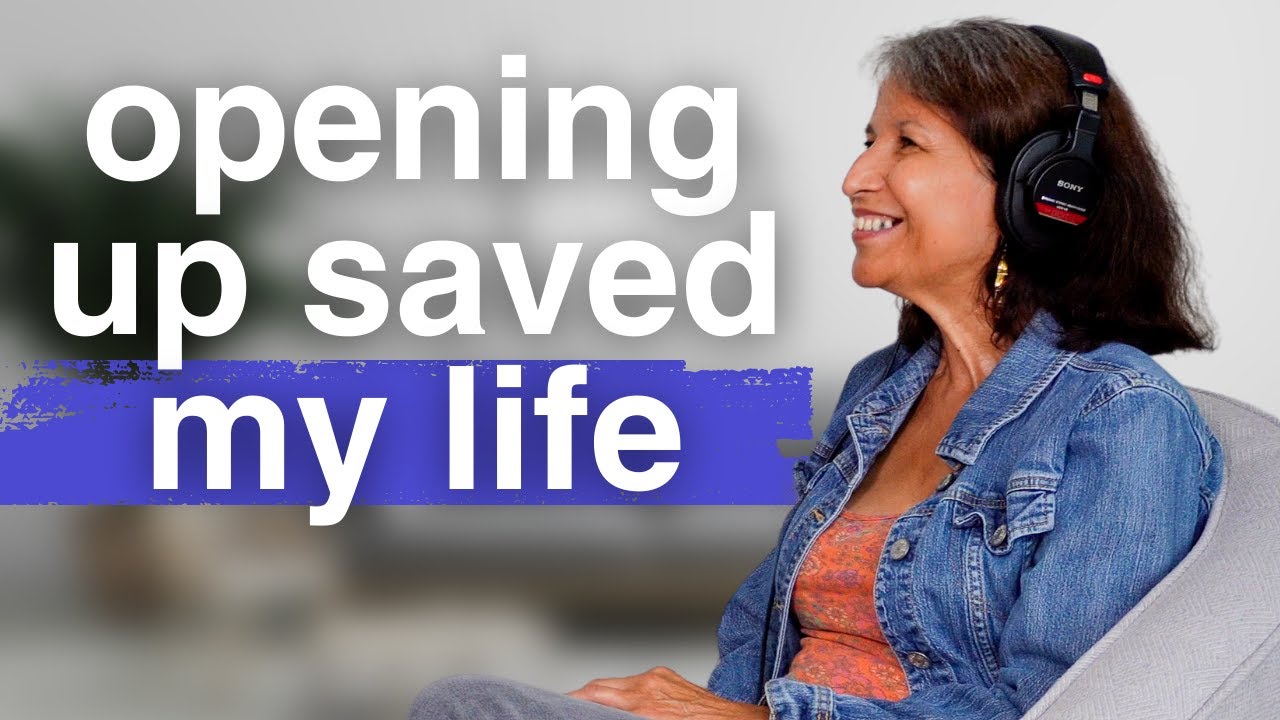







Allow me to introduce you all to one of my favorite people, my mom (Kim Miller).
If you want to hear someone who is a paragon of kindness, wisdom, and endurance, then you came to the right place. My mom has exemplified work ethic, determination, and imagination. But, one of the things we focus most on in this episode is how she showcased to me the importance of living your life with supportive people around you.
Kim is an active member of Al-Anon, NAMI, and Breast Cancer Support Groups. When I was a kid, I saw her choose to spend her time going to groups. Choosing to spend time around people definitely rubbed off on me.
The past year has been quite tough for our family, especially my mom. In January we learned that she had cancer in several parts of her body, including her skull. It's been incredibly scary, draining, and overwhelming. But it's given me motivation to work on the podcast because she listens to it while she's resting. And if I can't be there in person to comfort her then the least I can do is be in her ears.
In this episode we talk about:
- the power of support groups
- how to grieve as a family
- my mom's reaction when she was diagnosed with cancer
- why talking about bad news is a tricky thing
- what I think about AA and Al-Anon
- our experience with schizophrenia
- why friends and family of alcoholics need community
- how wrapping words around cancer helps everyone involved.
Keep your head up. If your family is currently navigating hard news, get together and take it day by day. Breathe. Talk about it.
Below is a blurb that I had ChatGPT write. It contains a ton of keywords, so you can skip it! - it's just hanging out for the SEO machines:
The Talk to People Podcast is a resource for personal development and building meaningful relationships. In a world grappling with the loneliness epidemic and friendship recession, we are here to guide you on a transformative journey towards overcoming isolation and cultivating a thriving social circle. With different guests, we explore the art of building relationships and mastering communication skills, providing you with actionable tips to become a better communicator. Through insightful conversations and fun solo episodes, we uncover the secrets to making friends and overcoming loneliness. Listen to feel better approaching conversations with confidence, even with strangers. Discover the power of asking better questions and gain valuable insights into how to navigate social interactions with ease. Through our storytelling episodes, we invite you to share your experiences and connect with our community. Together, we aim to overcome social isolation and create a supportive network of individuals seeking genuine connections. Tune in to "Talk to People" and embark on a journey of connection & community-bui
An easy way to send me a message? Click the link here.
Have you enjoyed the podcast? If so, follow it, rate it, and share it with three people:
- Follow on Apple Podcasts
- Follow on Spotify
- Follow on Instagram
- Subscribe on YouTube
If you want to share feedback, have a great idea, or have a question then email me: talktopeoplepodcast@gmail.com
Produced by Capture Connection Studios: captureconnectionstudios.com
Kim Miller: When you go to the support group and you're reaching out and you're talking to people, you're helping other people because they hear your concerns, your fears, and your your strengths, your bravery. It helps when, you know, we all get together and talk and share our concerns and what we're going through.
Chris Miller: Hello, and welcome to the Talk to People podcast, a weekly podcast where Sonny and I here's. Sonny he's on the screen currently get to sit down with a variety of people to talk about how they got from where they were to where they are now and how they used relationships, conversations and community to build a better life. This week, I'm going to be talking to one of my favorite people of all time, and that's my mom. Now, my mom has been going through a lot this past year, and frankly, it's been really hard to produce a podcast that relies on creativity and having a positive sentiment. Whenever you're dealing with cancer, we talk about a lot, including the importance of a support group, why it means so much to belong, how alcoholism, schizophrenia, uh, cancer can all be scary words, but whenever you get to wrap words around them and be in relationships, it makes those scary experiences a little more bearable. This is something that's been really important to me and that has been we all deal with crap, and I mean a ton of crap. Some people deal with a lot more than others, yet at the end of the day, if you have good people to walk through it with, it's going to be a lot less crappy.
Kim Miller: I'm just super thankful that God gave me the drive to want to be successful in having relationships and belonging to my support groups and belonging to my family, and it wasn't easy.
Chris Miller: Before we hop into this episode, I just want to say thank you for listening. It has been a lot of fun to run this podcast, and I'm excited for the future of it. I know in this particular episode, my mom and I talk a lot about hard things, yet I always talk to people about cancer, and it seems like it affects a lot more than it doesn't. So what better way to talk about it than with someone who's dealing with it? Thanks, you all, and we'll hop into the episode. All right, you are officially live in the living room studio. No longer the dining room studio. You are a VIP.
Kim Miller: I'm so glad to belong in the VIP club.
Chris Miller: You definitely belong in the VIP club. And whenever I was thinking about we're hosting you in Kansas this week, right, Annie? And I the queen of hospitality, annie herself. And when I was thinking about that, I was like, I want to have something a bit more intimate rather than the dining room studio. Now, we love the dining room studio, right?
Kim Miller: Yes. That's where you started.
Chris Miller: That's where we started. And we'll go back to it, but we also have the living room studio and I'm an amateur when it comes to this stuff, so you've been quite gracious with your patience as I toil around. But how has your day been?
Kim Miller: My day's been really good. Um, Annie hosted a really nice breakfast for us and, um, I got some sketching in and I went to lunch with, uh, you and Annie at, uh, Mama's. And we had tostadas and guacamole and chips.
Chris Miller: We love mamas.
Kim Miller: Yeah.
Chris Miller: So how has your year been?
Kim Miller: My year has been good. I've really felt the love for my family. Uh, I have, um, had a change in my journey of cancer. Um, I found out this year that, um, the cancer that I've been battling for about twelve years had mastized to my bones. And so I've reached out, um, to God and um, Jesus Christ, my hope and my, um, savior. And he's really helped me face this, um, news with loads of support and friends and prayers. Um, I really have to say that I've taken the bad news and I have to say I'm blessed.
Chris Miller: Yeah. So some people hearing that you saying that you have cancer that's metastasized to your bone and then you're saying you're blessed, and they may be like, what?
Kim Miller: Yeah. Thank you God, for cancer. Yeah. That can sound, uh, confusing, but it's the norm. I mean, when you hear that word, um, it's normal for you to get afraid and it's normal for, um, people to just want to turn the channel, um, uh, or just not face the challenge of the news.
Chris Miller: How would you respond to someone who said if God were real, then he would cure you of your cancer?
Kim Miller: Well, God is real and I do believe in healing, um, and I do believe he does heal people with cancer. Yet God's, uh, his ways are not like our ways. He doesn't think the way we think. We think God is like magic. And really, he's not magic, he's majestic and he takes, uh, different circumstances that we're in and he makes them real. Like a journey to get to be a better person.
Chris Miller: Mhm, so I know that whenever I heard the news, I was pretty sad. What was your thought process whenever you had gone to the emergency room and they told you, hey, we think that you have cancer and it's in your skull?
Kim Miller: Yes. Well, my thought process was I didn't want anybody to know. I didn't want anybody to know. I didn't want my family to have to go through the fear of cancer, the fears of it. Um, and for me it was easy to minimize what was going on.
Chris Miller: Yeah, that makes sense. And I can't imagine how you felt because you had had a headache for a while and you weren't feeling well for months. Really. Did you think, uh, you were just tired from work?
Kim Miller: Well, uh, I really felt like I wasn't feeling good and I needed to take some time off for me and really go to the doctor and, um, find out what I needed to do to take care of myself. And that's what I did. I was able to, um, leave graciously, uh, from my job and I started, um, going to the doctor. But yeah, it was scary at first because I did not want to really didn't have time. I really felt I don't have time for this. Mhm, I've got things to do.
Chris Miller: Yeah, you're busy, I'm busy. You got kids, you got grandkids, you got great grandkids. Yes, I have things to respond to and then you get the news. Now we were talking prior to this, right, and doing tongue twisters and trying to arrange the room and figure out exactly what goes where. And one of the things I'd asked you was, what do you want to talk about? Because one of the questions that I always am trying to answer is what could I talk to you about that I can't get from anybody else? And one of those light bulb moments in my head happened. And something that you're able to talk about is what it's like to have cancer, yet be optimistic and be alight. Because there are families, anytime that I talk to anybody about cancer, uh, all of them will either say there's somebody in my immediate family or I know someone very close to me who has either died from cancer or fought cancer or just got diagnosed with cancer. And it's one of those things that's everywhere, yet we don't really talk about it and it's hard to deal with. It's kind of scary to deal with. How do you grieve whenever someone's dealing with cancer? Because it's not like they're still alive, and yet we know that we don't want a loved one to have cancer. So it's like, how do we grieve from cancer? Uh, and there's so many different questions about that.
Kim Miller: I had in 2011, I was diagnosed with breast cancer, and at that time I was fortunate to have a, ah, support group. It, um, wasn't a breast cancer support group, it was, um, um, a support group that, um, I'd been going to for a few years prior cancer. And, um, I had a really good friend there and she was so honest to me because I've always, um, been the type of person that wanted to keep my life private. And when I would talk to her, she would draw those private things out of me. And I, um, mean, like, telling somebody that I had cancer, to me, that was taboo. I mean, no, you don't tell people you're sick. I always felt like I was supposed to be the super person and, um, I always wanted to belong. So if I was sick or had any type of points, um, about me that, um, were negative, um, I wouldn't express that. So talking with my friend. She was like, oh, well, you need to tell people that you have cancer. And I'm like, what? And, um, she says, yeah. And she realized that I wasn't going to tell anybody. So she asked me, can I have permission to talk to tell, um, people that you have cancer? And I thought about it for a while, and I like, okay. I felt like, well, maybe she could do it better than I could. Yeah. Um, she was at one of our meetings, and she just, uh, told everybody that I had cancer, breast cancer. And so from then on, it was wonderful because people really wanted to help me, and I was ready for that help. And I had a mastectomy, and I had, um, implants. And, um, they didn't find any more cancer. So they put me on a hormone therapy for five years. And I, uh, felt like, okay, my journey is done. So I was free from cancer until 2018. And then I found a lump in my neck. And, um, when it was taken out, they found cancer. So that was my, uh, at that time, 2018. I was, like, a little angry. I was angry. It was like, okay, I thought this was over.
Chris Miller: Yeah, you thought you had done it.
Kim Miller: Yes.
Chris Miller: Or you had learned what you needed to learn from cancer.
Kim Miller: Yeah, I felt like, okay, this can't be. Uh, like I said before, I'm too busy for this.
Chris Miller: Wow. And I'm trying to think of what was happening in my life at 2018. I moved to North Carolina in 2017, the summer of 2017. I am starting grad school, or I'm in my first year of grad school in 2018. But I remember the first time. When were you first diagnosed with cancer?
Kim Miller: In 2011.
Chris Miller: In 2011. So then that means that I graduated high school in May of 2013. So that means I would have been do you remember the day or the month that you were diagnosed with cancer?
Kim Miller: Um, it was like, in April.
Chris Miller: April, okay. Uh, so I'm in 10th grade now. I remember eating cereal. I don't know if you recall this. Maybe you do, and maybe I wasn't even eating cereal. But in my memory, I'm eating cereal in the dining room at the table. And this is when I would walk around the house shirtless, because I felt like I was Arnold Schwarzenegger. When really, when I go back and I look at the pictures of me in high school, I was quite thin. I wasn't Arnold Schwarzenegger. But I remember sitting at the dining room table, shirtless, and I have a bowl of cereal, and you tell me that you want to talk to me. So I'm like, sure. And I remember you telling me that you had cancer. And I started crying. And it was a bad experience. Now, you had mentioned you didn't want to talk to other people about it because you didn't want your family to have to deal with that. How does someone navigate that? Because you need to tell people. But then whenever you do tell people, you make them cry. And that probably feels terrible. But like, as I'm saying this, I have to note the reason I was crying wasn't because I was mad at you, but it was an indication that I loved you and I had love for you. And in the moment, you envision everything that's associated with that dying negative, uh, like, it reducing the quality of your life. Not being able to be there for key moments, like all these different things. Sonny, our therapy dog, is approaching us now that we are talking about feeling sad. But what's your thoughts on that? How does one navigate that? Because this whole thing is about talking to people, yet it can be hard to talk to people whenever the news isn't cheerful.
Kim Miller: Right. And I know the key to getting through the cancer was talking to people. Even though my natural, um, senses didn't want to tell anybody. Um, I did have, ah, my good friend that helped me in 2011. Um, and I had good doctors, a good primary doctor, and I had good, uh, surgeons, and I had a good oncologist. And, um, they were able to navigate me through the journey that I was going through. And, um, I remember I was working at the time and I was working in a private dining, um, with a private dining company. And, um, the chef that I was working for, he came up to me and he's like, uh, is there something you need to talk to me about? And I'm like, well, no. Um, but he obviously was picking up that something was bothering me and he wanted to know what it was.
Chris Miller: How do you think that is?
Kim Miller: I don't know.
Chris Miller: Do you think he could just tell you you carried it into work emotionally?
Kim Miller: Yeah, I think he did, because I had worked for him a long time.
Chris Miller: So he knew you had a cheery disposition, typically. And lately you didn't.
Kim Miller: Right. He knew me as a person and, uh, a friend coworker. And I just like, oh, I'm fine, there's nothing wrong. But he says, you really need to talk to me. And that's when I told him. I said, yeah, they found cancer. Uh, the cancer that came back and they found it in my neck.
Chris Miller: What did he say?
Kim Miller: And I don't know, it was almost like there was like a relief that came over him, like, okay, I'm not crazy. Yeah, it was like, um, his response was, whatever you need help with, just let me know. Um, and he helped me with HR whenever I needed days off and, um, needed to go to the doctors. Uh, I was fortunate there, too. And I wanted to go to a breast cancer support group at that time. But I really wasn't ready. I wasn't quite ready. I knew they were there, but it just wasn't at the time. I wasn't ready.
Chris Miller: What made you think you weren't ready?
Kim Miller: Well, I was just busy and I knew that the, uh, support group was a good thing. And I, um, thought, well, one of these days I'm going to get involved. Yeah. I think you really have to be ready. And just almost hit bottom to get support sometimes.
Chris Miller: Yeah. Uh, was there something that happened that made you be like, I'm ready? Because you had already even hit by the truck of a cancer diagnosis. So you already knew that you had cancer. You knew that there was a support group, but you weren't ready for it. What took place to make you ready for it?
Kim Miller: Well, um, this was like 2018. 2019. I had already gone through, um, chemotherapy, uh, chemotherapy meds. And, um, I'd done really well on them. Um, so they stopped them and they said that cancer is in remission now. Um, so we're going to, um, just watch it.
Chris Miller: Um.
Kim Miller: I was like, all right, I can go on with life. And I did. I went to your graduation. When you got your Masters, you made.
Chris Miller: A big trek to North Carolina. Yeah, I made the big trek to train the automobiles. Seriously? Trains, planes and automobiles. You took all three?
Kim Miller: Yeah.
Chris Miller: And you sat by the beach?
Kim Miller: Yeah. I really enjoyed it. That was a know, that was really a blessing to be able to meet Annie and to, uh, be there at, uh, Wake Forest and see you graduate. When I got back, pretty, um, much soon after that COVID hit. And, um, again, feeling resilient, not really even feeling like it was that hard with God. Everything's possible. In, um, 2022, in April, um, I had felt a lump and I had it checked out by my breast surgeon. And we were talking, and, um, really good doctor. We were talking about my cancer. And, uh, I told him how it mastized to my neck in 2018. He looked at me and he says, kim, he says, you're a breast cancer survivor. And, uh, I looked at him like, I'm a breast cancer. I really never had thought of it as seriously as if he was telling me. I mean, he's looking at me, he says, Kim, you're a breast cancer. Uh, I'm like, you know, that's the first time somebody's ever told me know, everybody's watched me, but nobody's ever really a you're a survivor.
Chris Miller: Yeah.
Kim Miller: So that really hit me. For some reason, that really hit me. And, um, we had had a C scan and they had found cancer in the rib, but somehow there was a mistake. And the oncologist told me that it wasn't cancer in the rib.
Chris Miller: What did she say it was?
Kim Miller: It was a fracture. They said it was a fracture. M. So I was like, well, here I go again.
Chris Miller: Because one physician told you, hey, it's cancer. But then later on the oncologist called you and said, hey, it's a fracture. And then it's like, we get to breathe.
Kim Miller: Yeah.
Chris Miller: And I'm in the Charlote airport. Behind me. I have the moving walkway sitting in a white rocking chair in front of a store that I wouldn't shop at. But they sell suits to people. If they want to buy a suit in the airport, then that's why they're there. And you had called me and told me that, and I was so happy and grateful. I went to the little gas station, even though it's in the airport, no gas, the convenience shop. And I got a Hershey's chocolate milk. Milk, uh, chocolate with almonds bar. And I ate that in celebration. I wanted to get a Shake Shack milkshake, but the line was so long, and I waited through the whole entire line. I got to the desk and they told me, we're not doing milkshakes right now. I was like, you're Shake Shack. So I had a almond milk chocolate bar sitting down, eating that, while celebrating the news that you actually just had a fractured rib. Praise God.
Kim Miller: Yeah.
Chris Miller: Okay.
Kim Miller: I remember you sending me the picture of the candy bar.
Chris Miller: Yes. Keep going.
Kim Miller: So, anyway, um, now I can get back to where I was, where, um, um, they found this cancer, uh, in the scalp.
Chris Miller: Um, because this was big news for you, because this whole time it was a fracture.
Kim Miller: Yeah.
Chris Miller: Right. What do you mean? I got cancer in my scalp?
Kim Miller: Yes.
Chris Miller: Right.
Kim Miller: And so then there was series of tests, scans, and it was just another, uh, time of, okay, God, I'm going to do this, we're going to get through this again. I really appreciate your support, because I remember you came to me and, uh, helped me with, um, some medical, uh.
Chris Miller: Business issues, and I was grateful that you were talking to us about it.
Kim Miller: Yeah.
Chris Miller: And I find myself mimicking that idea of let's keep it private with some of the stuff that I go through. So whenever I see you, I know it can be difficult for you to open up, particularly with bad news. Yet you were letting us in, and I got to drive to Oklahoma, and I got to be there for you. And we have our support systems. It's the family. And I, thankfully, had a great, uh, support system in Oklahoma, like, friends that let me stay at their house right. And be there with you. And I do recall you had just left your work, so you didn't have insurance. So we had to figure that. And then there was the drama with the oncologist who said, it's a fractured rib. And then a year later, it's actually severe cancer. So navigating, all of that. And that was so tough. But I remember driving down to Oklahoma and being like, oh, man, is she about to die? This know, thinking thoughts, like and, uh, we didn't have any clarity, though. We didn't have any answers. We just had a diagnosis. We really didn't even have a diagnosis. Right. Um, yeah, this is what you have. But staging hadn't been done. We didn't know anything like that. So it was just a pool of uncertainty. Yet we knew it wasn't a good pool. And in my head, it's me going through all of the potential outcomes and how severe they could be. So sitting there with you and crying and thinking about like, oh, man, that is something you don't forget.
Kim Miller: It's a journey. God's been with you through this, teaching.
Chris Miller: You, and he's been with you. And it's funny because it's not even this is the weird thing about life. Whenever we deal with terrible things in our life, we don't want to tell people. Yet we should. And then oftentimes, whenever we tell people, we feel like we need to console them because we feel like we burden them with bad news, when really we are the ones who actually receive the bad news because it's happening to us. We need comfort, yet we prevent ourselves from actually receiving comfort because we so avoid feeling as if we're burdening someone else with the truth. And it's not like we're lying. You weren't lying. Like, oh, no, this thing popped up. Oh, just kidding. It's going to go away. But it's probably, in that moment, tempting. Would you ever imagine not telling anybody because it would be easy, er, to not have to deal with that social anxiety or that nobody has to know?
Kim Miller: Oh, yeah, I was definitely tempted because I, uh, don't like to be the bearer of bad news. Um, but I also have learned that you're as sick as your secrets. And yeah, I've learned that, um, being lonely with your secrets is not healthy. So that's when I decided to join a breast cancer support group. I remember going there, and they were so kind, they were so welcoming. And, um, I thought, well, you know what? I want to belong here. And it was hard at first, because a lot of the ladies, they knew their diagnosis. They knew exactly what was going on and the medical terminology and I was basically, oh, well, I have cancer. Breast cancer. I really hadn't focused on the medical terminology or the stages, but I decided, you know what? I'm going to hang in there. And they were really, uh, kind to me. I kept on going. And I really hadn't met anybody with mastetic breast cancer. And I remember, um, going to the, uh, they had a Christmas party, all of us, we all got together and we were talking. And I started talking to this young lady that was right beside me. Young lady, we were talking and she told me that, uh, of, uh, her masthetic breast cancer diagnosis. And I'm like, oh, well, I have that too. Masthetic breast cancer. And she says, oh, well, we have a masthetic breast cancer support group. So I was able to start going to that and just being able to listen to other ladies. And when you go to that support group and you're reaching out and you're talking to people, you're helping other people because they hear your concerns, your fears and your strengths, your bravery. It helps when we all get together and talk and share our concerns and what we're going through. And, uh, I'm thinking, wow, if that lady can do this, if she can go through all that, um, uh, treatment, maybe I can maybe I can, um, do the radiation and the chemotherapy, um, and face losing my hair and all the, uh, side effects that go with it. The chemotherapy and radiation. Uh, yeah. And, um, whenever I reach out to them, they're always willing to say, hey, well, it's good to hear from you and let's get together and talk. It's been good for me because it's brought me out of myself. I'm thankful that I have my God and my family through this. He knows how to care for the ones for his children. He knows how to care for them. So, uh, when I start worrying about, oh, well, what are people going to think? I can just pray for those people and just go on with my life. Some people can accept the diagnosis of cancer. Some people choose to turn their back. Some people choose to even end their own lives because it's hard for them to face. But I decided I'm going to choose life.
Chris Miller: Uh, wow. Praise God.
Kim Miller: Yeah.
Chris Miller: Something struck me that you said whenever you're in that support group, you said that you opening up helped the other people because they got to hear you. And they got to be like, oh man, I'm not the only one who's going through this. And we don't think about that oftentimes. We think if we open up, then we are making other people work. They have to listen to us. I don't know if you've ever said this, but sorry, you have to listen to all of this. But that process of showing up to a support group and sharing what we are dealing with, it helps other people. And I'm really glad you did that because you showcase to me the power of getting a group whenever you need to walk through something. I haven't touched much on that in this podcast and all this is number 30. Shout out Miss 30 Steph Curry. All right, with the 30. And we haven't talked much about that. We talked a lot about mental illness whenever I, uh, had Rick Kagan on. You listen to that. And you are also quite knowledgeable as far as mental health support groups go. But this idea we need people in our lives, regardless if you want to overcome an addiction, if you want to improve your life, if you want to have behavior modification, having people around you are going to help you get that energy, help you maintain drive and help you not quit. In addition to that, if you are approached or approached is too gentle of a word. If you are brought in the middle of, uh, what should be a nice season, completely shaken with something like a cancer diagnosis, then you also need a support group. And you showcased to me the importance of that group, because ever since I was a kid, you've always been going to support groups. Right?
Kim Miller: Yeah. There's power in, uh, people, in groups of people.
Chris Miller: There's power in groups of people. Amen. So how did that start? What was the first support group for you?
Kim Miller: My first support group was Al Anon. Um, it's a group that supports families of, um, alcoholics. They're families and friends of alcoholics. And, um, there was alcoholism, and there's alcoholism in my family, and it was affecting me. So I started to go. And it was another, uh, journey of learning to belong, because I really didn't want to be there, because I wanted to be busy. I didn't want to be sitting around a table. But there was a lot to be learned in the support groups that people give you time to talk. They take, um, a few moments to listen to you. And there's so much power when somebody takes the time to listen to you talk. And, um, there's no judgment. It was no judgment zone. And, um, so experiencing that support that I got from, um, eleanon, I realized that being around people with, uh, the same problems or the same issues, there's a, um, strength there.
Chris Miller: You said that you were too busy to be in the support group because to you, it probably seemed like a waste of time. Right.
Kim Miller: Right.
Chris Miller: Why sit around this table and talk to these people whenever I could be working for money or going to the park with my kid or planting something in my garden that'll be able to see blossom and then I can sketch it later?
Kim Miller: Right.
Chris Miller: I'm glad you said that, because a lot of people would agree with you. It is a waste of time. We're just going to sit around a table in a climate controlled room and talk about the same stuff for an hour. Right. And do this week in and week out. What's the point? Why do that? And the challenge is, how do I I say I it's not my job, but I ask myself this how do I reveal to them the power and the importance of talking to people, the power and the importance of being in that support group? What could we do? What would you tell the person who was in your shoes prior to you joining the support group who's saying to you, it's just a waste of my time. Why would I join this group?
Kim Miller: I think I would share with them my story. I would try to connect with them in, um, what they said, why they.
Chris Miller: Came, why they showed.
Kim Miller: Up in the first place, why they showed up in the first place. And, um, if I had, um, a similarity, a time in my life that was similar, I would bring that up and, um, say, hey, this is what happened to me, this is why I go, if you could just try it like five more times, just come back five more times and see if, uh, it helps you. Because it's really helped me a lot. Uh, I get along better with my family members, um, I take better care of myself.
Chris Miller: Mhm, you know, with Al Anon, you would always say the Serenity Prayer at the yeah.
Kim Miller: Yeah.
Chris Miller: Do you have it memorized?
Kim Miller: Yeah.
Chris Miller: Could you say it?
Kim Miller: Yeah. Um, it's a prayer. God, grant me the serenity to accept the things I cannot change, the courage to change the things I can, and the wisdom to know the difference. That always wakes me up whenever I say the Serenity Prayer because it reminds me there's things I cannot change. And I've spent so much energy in trying to change things that I cannot change and, uh, people that I cannot change. But slowly, God has given me the wisdom to change the things I can, which is me. I can change myself, I can change the way I look at life and I can develop a peace about the things I have.
Chris Miller: Wow. That's one of the main principles of Al Anon, right?
Kim Miller: Yes.
Chris Miller: Is you can't change them, but you can change you.
Kim Miller: Right.
Chris Miller: Have you been able to tell that that's the truth?
Kim Miller: That is the truth. Um, being able to, um, not worry about, um, your loved one could be your, um, son, your spouse, your grandmother, um, being able to let them go and live their life. It's their journey, it's not yours. Their journey is not mine. To, um, try to change the serenity comes when you're like, okay, let that person go, trust God, pray for them. And, um, I know it sounds really selfish, it sounds like you're giving up, but you're not. You're just giving them over to m, your higher power, which I choose to call God. And you're giving them over to somebody who has power to help them through their journey and giving yourself space to grow and be a better person. And when you become a better person, that's when you're able to be an example of joy and happiness to others.
Chris Miller: Mhm, so I remember whenever I was a little boy and you would go to Al Anon, which is for families and friends of alcoholics, you would be in the meeting and then I'd be playing at the playground across the street. Right. Or I'd be with my older brother and we'd be playing around, but sometimes I'd sit in and I recall the chips. Right?
Kim Miller: Yes, the birthday chips.
Chris Miller: The birthday chips. So I know that for AA, uh, Alcoholics Anonymous, they also have chips to celebrate sobriety.
Kim Miller: Yes.
Chris Miller: Right. So what are the chips for? Al Anon? Is that to celebrate showing up and being a part of the support group?
Kim Miller: Yes. That's where we get our sobriety, is we show up and we keep coming back and, uh, we keep working what we call working the program, the, uh, twelve steps and the same twelve steps that the AAS use. We keep coming back and keeping our serenity. That's our sobriety is our serenity.
Chris Miller: Wow.
Kim Miller: Yeah.
Chris Miller: That is so insightful, showing up. I wish we had chips for just about the majority of our social structures. Like, hey, you get a chip for showing up to morning coffee for a year because it's hard and we don't want to all the time. Right, right. So getting that chip. And then also with Al Anon, when you show up, you get a sponsor just like AA.
Kim Miller: Right.
Chris Miller: What's the power of a sponsor in your mind?
Kim Miller: It's great. It's great to be able to have somebody that you can talk to that doesn't judge you for, um, your life experiences. And a, um, lot of times the sponsor you have has gone through the same things you have, just maybe at a different level or a different time of life. They have wisdom and, um, a lot of things that we go through are just, are mostly human being life issues. Maybe sometimes a sponsor will say, well, uh, when I went through that, I did so and so. Um, and they don't really tell you what to do. They just give you peace about that. What you're going through is not fatal. It's something you're learning and you're going through. And, uh, you may need to ask help. You may need to pray to your higher power, which I call God, to help you in that situation. And you might want to talk, uh, to your sponsor, say, oh, well, I feel like hitting so and so in the face. And that's the best time to have sponsors is, um, you have this outlet where when you have, um, those times when you want to act out, you want to try to fix it, prove things. And, um, sometimes the way we want to fix things is not good. Um, so that's what a sponsor is for is you call them at that time of need and say, hey, I feel like hitting this person in the face. And, um, your sponsor can listen to you and talk to you about it and give you some ideas and hopefully tell you, well, that's not really a good idea.
Chris Miller: I feel like one of your sponsors may have been like, I'm going to go grab you a glove, then let me go get you a boxing glove. I'll be over there in a second. I want to watch you hit them. Right. What's it like being in a family with alcoholism?
Kim Miller: Well, it is scary. Um, the disease is baffling. Um, it starts out very simple, uh, and innocent. But it tears down trust and, um, it causes fear. And you, uh, want stability. And there's no stability. Especially when the alcoholism is full steam ahead, when the drinker drinks too much, and, uh, that's all that counts. Sometimes it gets to the point where the family is not, um, neglected. When there's neglect in the family, that's when, um, it really hurts. It hurts the children. Um, it can become very violent. Um, a lot of our families in our country, this wonderful country we live in, are affected by the disease of alcoholism. And so I am so thankful that we do have Alanana AA available, because there is a need out there. And, uh, that's why I keep on going, because there's so many young ladies like, I was, um, when I was in need, that I would get up in the morning after a huge fight with the alcoholic that evening before, and I would just be exhausted. My brain would be like, I felt like I was the one that was drinking.
Chris Miller: You had a hangover.
Kim Miller: Yeah, I had a hangover. And I want to be there, um, for those ladies that are going through that, and they come, they find out about Elon, they come, and I want to be there to help them.
Chris Miller: Mhm, and you mentioned it being a disease. Now some people may hear that and be like, it's just a behavior. And alcoholism would be too much of the behavior. So all I need to do is modify my behavior, not drink as much, and then I'll be good. I don't have a disease.
Kim Miller: Well, um, it has been proven to be a disease. And you can, um, get help from your insurance. There's rehabs and counseling you can get.
Chris Miller: From, like, the insurance company classifies it as a disease.
Kim Miller: Yes, it's classified as a disease. And it is an allergy. Um, there are some people that are allergic to alcohol, and they start drinking and they don't stop. And, um, it's more than just being able to tell your brain, stop. Uh, it's more than that. Psychiatrists can't really figure it all out. They don't have it figured out. But it is a, um, progressive disease. It just gets worse and worse if it's not treated.
Chris Miller: Yeah. Would you say AA is the best form to treat alcoholism? Like the twelve step program.
Kim Miller: I can't say that, um, I can't say that it is, but I can say that it is very, um, um, beneficial. And I have seen a lot of people, um, families, couples, benefit from the programs of AA.
Chris Miller: Me too, and I've heard a lot about it too. And I've heard about, you know, DAX Shepherd. He's an actor, he has a podcast. And he is a big fan of the Twelve Step program because he was an addict and now has really valued sobriety. And he talks a lot about it. And he was talking about research on his podcast that said the twelve step program compared to any other program, um, has the best results. Now, it's not 100% right, but the act of showing up, being a part of community, being honest with yourself, and then working through that waltz sweat structure, there's something there. I think there's a reason why we have chapters in every country in the world. I don't know about every country, but the majority of countries, every state in the world, basically every city is like, getting that group, getting that structure and going through that program with your higher power, and it means so much. And you talking about the other women, younger women who may be 22 years old, and then going through something and they don't have anybody. And then you show up to the meeting and they have you.
Kim Miller: Right.
Chris Miller: How does that make you feel?
Kim Miller: It makes me feel great to be able to, um, be available to help, uh, somebody in that time of need.
Chris Miller: Uh.
Kim Miller: They'Re out there. You go to your, um, look it up online, Alanon, and, uh, you can find a meeting close to you and, um, give it a try. If you have a boyfriend that drinks too much or a mom that has a problem with drinking, anybody in your family that has a problem with drinking, you or ah, affected by it. Even though you don't want to be if you live with that person, if you love that person, you are affected by it.
Chris Miller: Yeah. And I saw men there too, right?
Kim Miller: Yes.
Chris Miller: Male, female.
Kim Miller: Yeah, exactly.
Chris Miller: Older, younger.
Kim Miller: Yeah. Rich, poor, everybody nondiscriminatory.
Chris Miller: Uh, right. And addiction doesn't care either.
Kim Miller: No.
Chris Miller: It doesn't care how much money you have, what race you are, whether or not you live on that side of the street or this side of the street.
Kim Miller: Right.
Chris Miller: It's like, hey, who's up next?
Kim Miller: Right.
Chris Miller: The other support group. You go a lot?
Kim Miller: Yes. Yeah. And the support group I went to, um, with Nami was another blessing because I have a son with schizophrenia.
Chris Miller: Ah.
Kim Miller: And when he was becoming, um, sick, um wow. I was so confused. I didn't know what to do. And, um, being able to go to a support group and talk to people, there was people there that had sons with schizophrenia, daughters with depression, people in a family that were bipolar. And we all got together and talked about, um, why we were there. And then the leader would give us different resources that she knew about. She would lead us to different resources. Like, some people are looking for, um, shelter. Some people are looking for a psychiatrist, some people are looking for what to yeah. What next to lot of support. I still get a lot of support from Nami.
Chris Miller: Me too. Uh, even moving to Kansas, I was able to connect with people who are part of the local Nami chapter, national alliance on Mental Illness. They have what connections, which is people who are struggling with mental illness and then Family to Family, which is families with someone struggling with mental illness.
Kim Miller: Yes.
Chris Miller: So the different types of groups and the consistent theme in all of this is groups.
Kim Miller: Yeah.
Chris Miller: Right.
Kim Miller: They have groups for, um, veterans, uh, veterans. Ah, yeah. Frontline. I think it's called workers. Workers. A support group for them.
Chris Miller: Um, what was that like? I know I have my experience, but you're talking about your son having schizophrenia, so that'd be my brother. Right. And I remember going through some of that and also not having a clue of what was going on and seeing the stress it put on you and dad, like, what do we do? And you all handled it differently. Right.
Kim Miller: Right.
Chris Miller: You had your support groups, and I think he puts a lot on him to try and figure everything out. But with that, you can't really screw in some, like, tape something up or prop something up, and then it's fixed like a car. Right.
Kim Miller: Right.
Chris Miller: You can't do that. And we were trying to find a fix. It was tough. Like, I remember just watching you all have a really hard time.
Kim Miller: Yeah.
Chris Miller: What was that like?
Kim Miller: Well, um, it was really hard when I started, uh, the support group. I, uh, took classes and became educated, um, in the fact that, uh, when somebody's mentally ill, sometimes people think, oh, well, just go get a job, and and, you know, start working, and you'll start feeling better or, um, you know, get a hobby or, you know, people want to minimize. And it's just because you want to. It's just like you feel like it's the only way. Just hide this and, um, get a job or find a heart. Just get busy and and you'll start feeling better. And and, um, I saw that with my, um I saw my husband. He felt like that was the answer, and it wasn't working. And his frustration, it wasn't easy. Um, it was very hard for him. Yet, um, me going to support groups, um, some of it was able to trickle on him. He was able to see from my.
Chris Miller: Example that, yeah, he would get the residual effect.
Kim Miller: Yeah.
Chris Miller: You know what I mean? And I feel like that is probably the truth for a lot of families, as one person in the family will go do something, and then that person comes back to the home with the language and with the concepts and with the knowledge and with the strategies of what to do. And the other person may not even be trying to hear what's going on, but they will. And it's a good encouragement for people who are like, should I go to this thing alone? Will it change what's happening in my family if I'm the only one who goes? I think hearing you say that is a good reminder. Like, yeah, it'd be best if everybody shows up, but if you show up, you're still going to be able to help your family out.
Kim Miller: Right. Yeah.
Chris Miller: Which you do. You're the boss at that because I went with you to a couple of meetings, but for the most part, I wasn't there. Right. And you're still doing it. You're still showing up.
Kim Miller: Yeah.
Chris Miller: Mhm. That's one of your superpowers.
Kim Miller: Still talking to people.
Chris Miller: Yeah. Right. Uh, there's a reason why I'm here sitting talking to a whole bunch of different people. And one of the large reasons is because you do it and you do it so well. Right. Like, schizophrenia is a scary thing and there is no golden formula for what to do about it, how to talk about it, how to process it. Cancer, scary thing. There is no formula for what to do, how to talk about how to process it. Alcoholism, scary thing. Like all these things are scary things. And whenever we run into the scary things, we don't know what to do about them. But there is one thing that we can do, and that's meet with people about them. Right.
Kim Miller: Yeah.
Chris Miller: I feel like a broken record saying that over and over again. But it is just so apparent to me, and I hope that people who listen to this, if they're considering going to a support group for something, that we push the needle a little more towards the show up. Just try it.
Kim Miller: Yeah. Just go a few times.
Chris Miller: A few times?
Kim Miller: Five or six times.
Chris Miller: Five or six times.
Kim Miller: Give it a chance.
Chris Miller: I, uh, like how you say five or six times, because to some people that's probably like, oh my gosh, that's so much. But that would be ideal to show up five or six times. Because if you just show up once, then that one person may show up, but who doesn't show up. You have to show up a few times. That way you can figure out the group dynamics.
Kim Miller: Right.
Chris Miller: And then you can figure out whether or not you're truly a good fit.
Kim Miller: Right.
Chris Miller: Yeah. So you're on the podcast. You've been listening to all of the podcasts?
Kim Miller: I have.
Chris Miller: Um, you're one of the biggest fans.
Kim Miller: I am.
Chris Miller: So let's talk about it. What have you thought about the podcast so far?
Kim Miller: Well, it's great. I'm proud of you. It's much needed, people reaching out to others. We need each other, um, in our society, um, is just becoming so well, it's causing us to be so recluse and, um, there's so many things to focus on besides each other, our relationships. It takes us away from having true relationships.
Chris Miller: Yeah. What's been your favorite episode so far?
Kim Miller: Okay, I'm going to have to think about that one. I really like the guy that sold snacks.
Chris Miller: Oh, keante? Yeah.
Kim Miller: At school.
Chris Miller: Yeah. What did you like about that?
Kim Miller: Uh, I really respected his, um I guess his entrepreneurs.
Chris Miller: The entrepreneurship.
Kim Miller: Yeah.
Chris Miller: The drive.
Kim Miller: The drive he had. Yes. To, um, uh, achieve his goals, um, and not be, um, uh, imprisoned by the fears of, uh, poverty and reaching out using what he had to achieve.
Chris Miller: Yeah, and it was funny because he was selling so many snacks that the school started getting onto him because people weren't going to the vending machines and the school would make their money from the vending machines. So they said, we need to put a kibosh on this guy in his snack business. So then he started showing up to school even earlier. That way he can circumvent the school from shutting down his snack business. But he is an inspirational individual. So what's something you've always wanted to talk about on the podcast? Um, I know you mentioned belonging. The power of belonging.
Kim Miller: Yeah. I'm just super thankful that, um, god gave me the drive to want, um, to be successful, um, in having relationships and belonging to my support groups and, um, belonging to my family. Um, and it wasn't easy. It was not easy because I came from a family of where I didn't belong.
Chris Miller: Why didn't you belong in your family?
Kim Miller: Um, I was adopted, and, um, I was from, um, a family that was torn apart by alcoholism and, um, divorce. And my mother was a single mom, and she really didn't have the time to give me the self esteem, those character building traits. Uh, she was so busy trying to survive and help us, uh, feed us, um, and just dealing with her own issues. There was a lot of, um, anger, uh, in her life. Um, I carried that with me, uh, for a long time, trying to belong and, um, hanging around with the wrong crowd and, um, having an attitude and that angry attitude. Uh, it took a while for me to learn that, um, I can belong. I can belong to my family, I can belong, uh, to my community and, uh, uh, have a positive role.
Chris Miller: Did you want to go find your biological family whenever you were younger?
Kim Miller: Um, yeah. I've always, um, wondered about my biological family. Um, I am an artist at heart. And I always think about, well, what kind of artwork did they do? Because I know this didn't come out of thin air. I know that there was, um, in the genes. Uh, um, that's another thing on my, um, bucket list, is, um, to find out more about my biological family and the artwork of the past. Um, something to look forward to.
Chris Miller: Wow. What do you want to eat for dinner?
Kim Miller: Oh, uh, man something with protein.
Chris Miller: Protein?
Kim Miller: Yeah. I'm on the salad.
Chris Miller: And protein because dealing with cancer right now, do you feel like you need to eat a ton of protein?
Kim Miller: Yeah, I do.
Chris Miller: Because you're low in energy. You feel.
Kim Miller: Um, the doctor took me off some medication, uh, that just really my body did not like. And so I'm still dealing with, um, some blood counts that are low, which causes fatigue. Um, so the protein, uh, the beef and the spinach and the kale and the grains. All the is good for healing. I like burgers.
Chris Miller: Yeah. Hey. You're from Oklahoma?
Kim Miller: Yeah.
Chris Miller: You got to get yourself a good burger, right?
Kim Miller: Exactly. It's a culture.
Chris Miller: It's a culture. Same thing here in Kansas. We love a good burger. But I feel like there's a million and one things that I want to talk to you about, and at the same time, what's the best thing to talk about? There's this thing I was listening to about a farmer's market, and they had a jam stand. So this stand, one day, they had 30 different types of jam there oh, wow. Apricot, BlackBerry blueberry, jalapeno, spinach, like, all of this stuff.
Kim Miller: Wow.
Chris Miller: And then the next day, they only had four choices. They had the grape, the strawberry, the peach, and the apricot. And whenever they only had four choices, they sold so much more than when they had 30 choices.
Kim Miller: Oh, wow.
Chris Miller: Yeah. And there are studies about people who are in the aisle at the grocery store, and if there's 30 options of toothpaste compared to three, they actually have a worse experience when there's 30 than when there's three. Because we have to, in our head, trying to figure out, should I get the BlackBerry jam or should I get the triple berry jam? We have the FOMO. Like, if we get this, then maybe we'll miss out on this. And then we also have the buyer's remorse or buyer's regret. Like, dang it, I shouldn't have bought that. I should have bought this. When there's very few options, we don't have that. And whenever I'm sitting down and talking with you, there's a million things to talk about. So it's like trying to figure out what the best thing to talk about is. And, uh, I've already kind of resolved in my head that I may not find the best thing, because I don't know what the best thing is. But what I do know is I'm really grateful to have you here, that you have been such a great example for me. And I think about you often, and it's a dream come true to be able to have you on the podcast that you have largely inspired. Uh and one of my motivations for creating the podcast is knowing that as you are dealing with adversity and sadness and feelings of stress and being overwhelmed and helplessness if you're getting cancer treatment, if you are sitting down, and feeling low and fatigued. There's one thing that you don't have to have a lot of energy to do, and it can keep your mind busy. And that's listen to a Podcast.
Kim Miller: Right.
Chris Miller: So you are one of my motivations to be like, hey, you better get a podcast. Stop. Um, and you need to make the last one. You can go listen to yourself. Do you think you'll listen to yourself?
Kim Miller: Yeah.
Chris Miller: Good. That's great.
Kim Miller: I'm looking forward to, um, your podcast.
Chris Miller: Yeah. It's going to sound so good. I get nervous listening to the podcast that I'm a guest on. I don't have that hard of a time. Whenever I listen to the podcast, I'm creating. But we were listening to that podcast in the car the other day, and I was nervous starting it oh, man. Uh, because I'm much more critical of the way I sound whenever I'm a guest compared to whenever I'm hosting. So I'm proud of you. Oh, thank you for being like, yeah, I'm going to check it out. I'm excited. I'm proud of that. But you are one of the biggest inspirations for the podcast, so thank you, son.
Kim Miller: I'm so glad I could be here, and I love how you draw out, um, the depths of my heart.
Chris Miller: They're beautiful.
Kim Miller: Thank you.
Chris Miller: We got to get in there. We got to bring them to the front more often. Breaking news front, news of the newspaper. Your family loves you. We're very proud of you, and we are going to be there for you. Okay.
Kim Miller: That's great.
Chris Miller: And I love you.
Kim Miller: That's great to hear. Thank you.
Chris Miller: You bet. All right, well, how do you want to sign off?
Kim Miller: Oh, uh love you. And thanks, everybody, for listening, and come back and listen as much as you can to Talk to People podcast with Chris Miller.
Chris Miller: Hey, well done. Okay, folks, we'll see you next time. I hope you.
Kim Miller: I hope you don't I want you. I hope.